Why falling AI token prices aren’t the negative for AI providers one might assume

Falling AI token prices need not hurt AI providers because cheaper tokens make more uses worth paying for, Yardeni Research said, pointing to Anthropic’s third-quarter revenue of $16.96 billion, up 47% from the second quarter.
The usage-weighted Silicon Data LLM Token Expenditure Index, which tracks what customers pay per million tokens, fell more than 40% between June 30 and early October.
Yardeni said the decline reflects price competition and a shift in usage toward cheaper models.
Anthropic priced its newest premium model, Fable 5.2, at $8 for input and $40 for output, down from $10 and $50 for Fable 5.1.
Google’s first-party models were processing nearly 32 billion tokens per minute by its October 28 earnings call, up 40% in a quarter and more than fourfold from a year earlier.
Anthropic’s third-quarter revenue rose 1,127% from a year earlier, outpacing a 382% rise in its compute and infrastructure expenses.
Quarter to quarter, profit fell. Anthropic swung from a $974 million operating profit in the second quarter to a $567 million operating loss in the third, citing $5 billion of costly short-term compute and a $2.0 billion non-cash donation-matching charge.
Excluding that charge alone would leave an operating profit, though the charge may recur. Compute and infrastructure, including training, took about 58% of revenue, versus 48% in the second quarter.
Other costs are climbing. DRAM contract prices rose nearly 80% in the second quarter and 40% in the third, TrendForce reported.
Median on-demand GPU rental prices rose 9% from a year earlier, and H100 prices 24.7%, according to GetDeploying’s November 9 tracker.
AWS raised prices on most new Nvidia Capacity Block reservations from October 7, with increases of at least 15% on seven instance types, according to TIKR.
Productivity is the providers’ offset. SemiAnalysis measured roughly 14 times more throughput from one Nvidia chip generation on software improvements alone. Anthropic says Opus 5.5 cut customer costs per task by about 40% compared with Opus 5.
Anthropic’s repeat customers generated about nine times their year-earlier quarterly revenue in aggregate. Yardeni said it is unknown whether they would keep spending in a recession, and that the test is rising profits, not rising volumes of tokens sold.
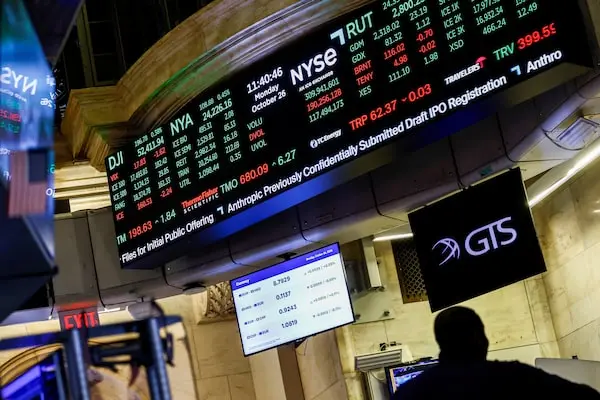
Should investors be keen to buy Anthropic stock? The IPO is enticing – but oddly timed
AI mania has faded in recent months, with the tech-heavy Nasdaq lagging behind sectors such as utilities and consumer staples

Anthropic IPO news: Valuation slips to $1.5 trillion as AI Bubble Index rises
Anthropic's IPO faces major headwinds, with the company expected to go public at a significantly lower valuation than initially anticipated amid the ongoing jitters in the artificial intelligence (AI) industry. Anthropic IPO Could See a Valuation Cut to $1.5 Trillion It has been a tumultuous period for companies in the artificial intelligence industry, with many of them seeing their valuations dive. Nvidia stock has moved into a correction after falling by double digits from its all-time high. The same is happening with other popular names like AMD,...
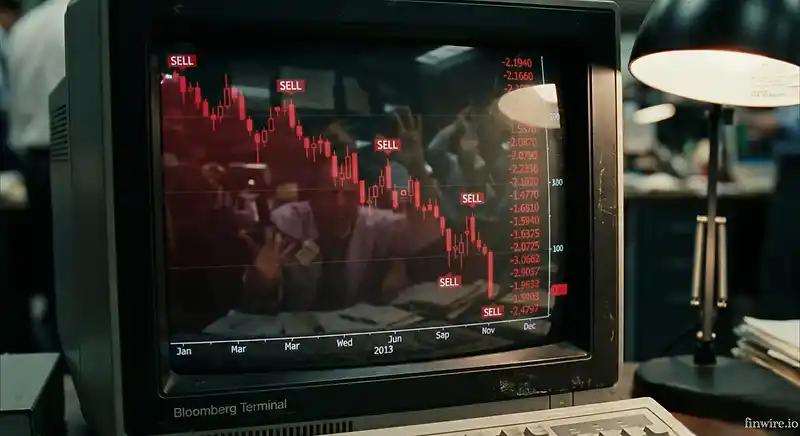

Anthropic’s IPO Puts the Entire AI Boom on Trial
Market Analysis by covering: . Read 's Market Analysis

Could the AI sell-off put Anthropic’s IPO timing and valuation at risk?
A sharp selloff in technology stocks could threaten to derail one of AI's most anticipated public listings. Anthropic's proposed $100 billion IPO, which was expected to value the company at around $1.5 trillion, is reportedly facing growing uncertainty as prospective investors question whether the artificial intelligence startup can proceed with its planned roadshow next week and complete a November listing. The IPO is reportedly also facing growing resistance from prospective investors demanding a lower valuation. Investors are seeking a more...