Fraud is on the rise. Should you spread your investments around?

I almost got scammed this month.
Frazzled by a busy day at work, scrambling between cleanup and our nightly routine of failing to get the kids to bed on time, I got a call from what appeared to be Google, warning of a security breach to my account and recommending urgent action.
I was seconds away from approving a log-in request when my wife, a certified fraud examiner who is certifiably sharper than I am, told me to hang up. (For the record, Google will never call you about account security.)
So I was particularly interested in a reader’s recent question. To guard against fraud, does it make sense to diversify not just your investments, but also the institutions holding them?
On its face, this makes sense. We diversify our investment portfolios to reduce our exposure to risks from any one company, sector or geographic region. But if hackers gain access to a brokerage account holding our entire portfolio, the consequences can be devastating.
The risks are rising, with artificial intelligence tools making it easier than ever for scammers to prey on victims.
Even just a year ago, fraud-prevention education focused on telling consumers to look out for font irregularities and spelling or grammar mistakes, said Jenn MacDonald, director of fraud and security at credit union Vancity.
That is no longer the case. AI agents have been “a complete game changer” for fraudsters, who can use them to both find vulnerabilities and convincingly impersonate companies and people, she said.
The damage is sobering. The Canadian Anti-Fraud Centre, which gathers intelligence on fraud across Canada, processed more than 40,000 reports of fraud in 2025 with losses totalling $704-million – and that’s just what was reported. A 2024 survey by the Canadian Investment Regulatory Organization, or CIRO, found that 22 per cent of Canadians reported having been presented with some form of potential investment fraud.
Given the risks, why put all your eggs in one institutional basket?
Diversifying across multiple accounts or institutions may give the impression of a layer of protection, but it isn’t itself a guarantee that your investments will be safer, said Jacky Ip, founder and financial planner at InGauged Financial in Vancouver. In fact, it can expose you to other costly risks.
Sure, you’ve reduced the risk of hackers gaining access to your entire portfolio, but you’ve significantly increased your administrative overhead. Mr. Ip said clients “inevitably overlap” investments over multiple accounts, leading to over-concentrations in companies or sectors. Many people with multiple TFSAs forget how much they’ve contributed and end up overcontributing, incurring penalties, he added.
“When I advise my clients, I actually ask them to consolidate their TFSAs and RRSPs, rather than having so many different small accounts, and the reason for that is for management and tracking,” he said. Having more accounts creates more opportunities for forgetting your login credentials.
And don’t even think about reusing passwords.
One exception may be for couples or families, he said. If each partner uses an account at a different institution, this can introduce an element of resilience if one is compromised. But for most Canadians, good security practices are more effective than institutional diversification.
“Diversification itself is not the same thing as fraud protection,” said Ms. MacDonald. While she said keeping your money in different accounts could help to contain “the blast radius” of a security breach, using more than one financial institution should not be your main fraud-prevention strategy.
Joanna Nicholson, a CIRO spokesperson, said that one of the most important things investors can do is pause and verify before acting. Be particularly careful if someone is creating a sense of urgency or asks for personal or financial information, she said.
Several people I spoke with mentioned using strong and unique passwords – consider using a password manager app – and multi-factor authentication. Keep an eye on your accounts for unusual activity and verify website addresses before you provide any information or try to log in. CIRO’s Office of the Investor offers resources for recognizing fraud, protecting investments and learning how to raise concerns.
Ms. MacDonald acknowledged that the responsibility shouldn’t be solely on consumers. “There’s definitely room for financial institutions to play a role. I think the challenge can become figuring out what’s legitimate and what’s not legitimate.”
For both financial institutions and individuals, there is always going to be a trade-off between security and practicality. The present reality is that the burden is primarily on individuals to protect ourselves from fraud as best we can, said Mr. Ip.
Rather than incurring the administrative headache of using multiple institutions, take a moment to pause before acting. Or ask your better half.
E-mail your questions to agalbraith@globeandmail.com. I’m not able to respond personally to e-mails but I choose certain questions to answer in my column.
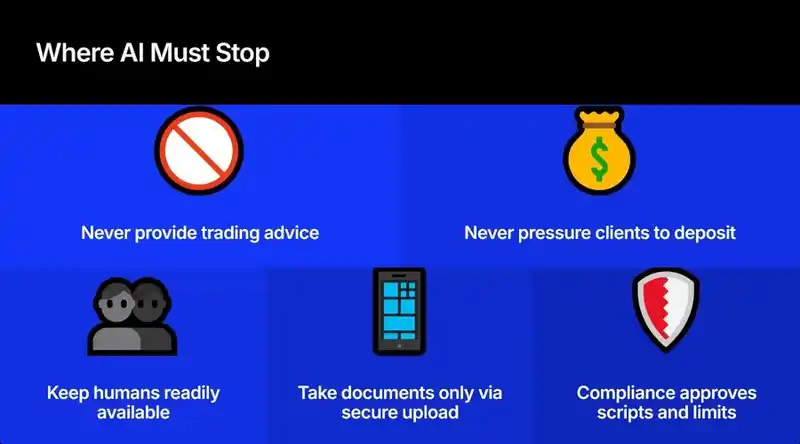
AI Voice Agents Can Call Forex Leads, but Should They Handle Client Trust?
A phone rings at 7:02 am. Ava (AI): Good morning, this is Ava from [Broker X]. Before we go any further, I should say that I am an AI. CLIENT: Great. So you know where gold is going? AVA: No. Nobody does, including the people on social media who say...

How to invest when markets get spooked
In keeping with the Halloween season, this week we’ll address some scary headlines about the stock market

Do billion-dollar crypto hacks threaten the industry's mainstream ambitions?
Cryptocurrency has spent the past few years making considerable progress towards institutional acceptance. Bitcoin exchange-traded funds have opened the market to traditional investors, banks are exploring digital-asset services, and governments have begun establishing regulatory frameworks for parts of the industry. But a series of increasingly expensive security breaches at major exchanges is raising questions about whether that progress is translating into broader confidence. The latest incident involved Binance, the world's largest cryptocurrency...

Market Factors: Morgan Stanley makes the case that AI stocks are oversold and it’s time to buy
Plus, seven surprising data points about the current market
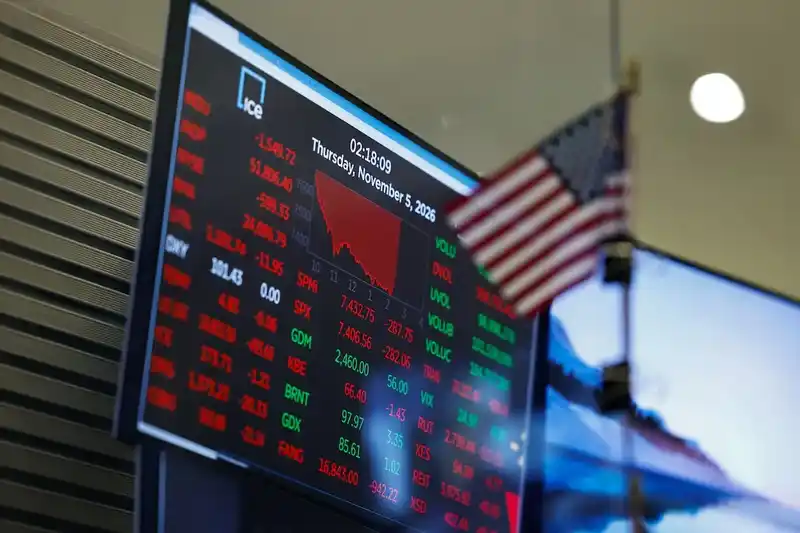
‘I suspect the sell-off is overdone’: Analysts and investors react to AI market rout
What observers on the Street are saying