‘It’s actually a bit of a disaster’: Analysts and investors react to AI market rout


What observers on the Street are saying
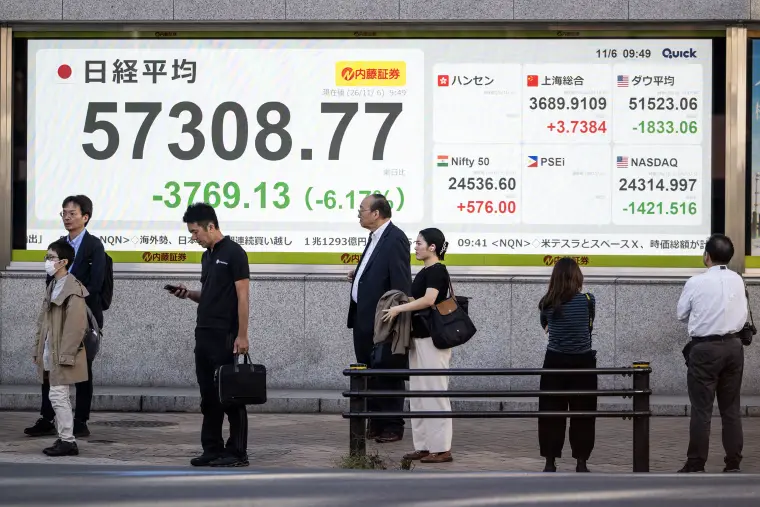
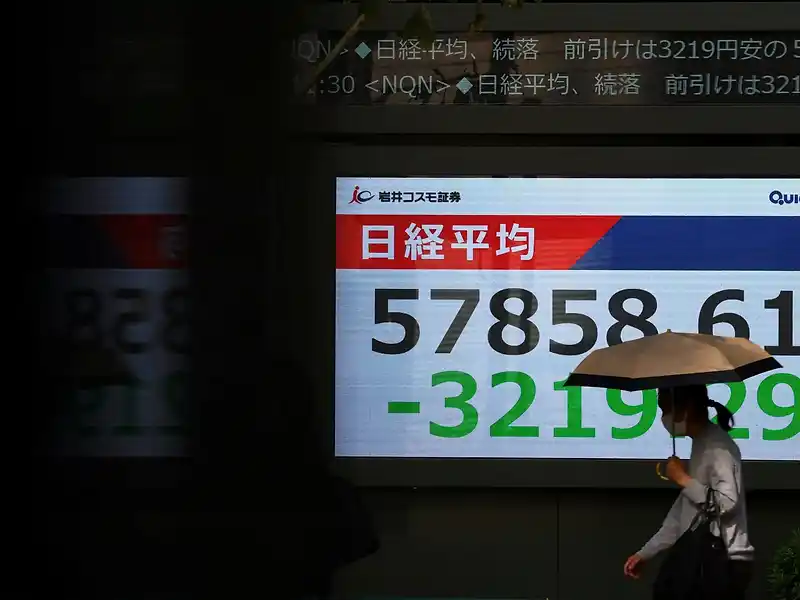
Stock markets were tumbling as fear gripped investors that the Democratic sweep at the midterm elections would lead to regulation and a slowdown of the AI boom that has been propelling computer supply chain stocks all over the world.
The Nasdaq fell 5.5 per cent on Thursday in the biggest drop since the tariff-triggered “Liberation Day” rout in 2025.
On Friday in Asia, South Korea’s KOSPI slumped 6 per cent and Taiwan’s benchmark slid 4.5 per cent to notch its largest weekly fall for more than two decades.
Here’s what market participants are saying:
CHRISTOPHER FORBES, HEAD OF ASIA AND MIDDLE EAST, CMC MARKETS, SINGAPORE:
“It’s actually a bit of a disaster.
“(Clients) were long index, long stocks, and they all got carried out.
“All night, all day – we had client margin calls, client complaints, ... because it’s a very emotional thing, right? People are wedded to their positions and views on a stock or outcome and you’re telling them, look, you’ve just lost money.
“And it’s not just a slap in terms of valuation. It’s basically a whole policy and six-year structural shift that says we’re now going to pause, we’re now going to cool AI, we’re now going to cool data centres, approvals and equity capital markets.”
DONG BAOZHEN, CHAIRMAN, LINGTONG SHENGTAI, BEIJING:
“The selloff shows that AI stock prices had been built on rosy illusions about the future, and now that illusion is gone,” Dong said.
“The US stock market has been the standard-bearer and backbone of the global AI bull run. Now that backbone has snapped. Can AI bull markets elsewhere hold up on their own?”
JASON LUI, HEAD OF APAC EQUITY DERIVATIVES STRATEGY, BNP PARIBAS, HONG KONG:
“We are actually receiving more inquiries about looking at China onshore, because what we have noticed is that over the past month or so, the Chinese policymakers have stepped up on their stabilization measures.
“Clients tend to view the China onshore trade as a potential diversifier from their global portfolio that tends to be more driven by US AI.”
ALLEN HUANG, VICE PRESIDENT, MEGA FINANCIAL HOLDING EQUITIES TRADING DEPARTMENT:
“Today we are bound to see further liquidation of margin accounts, which suggests we are likely in the final stage of capitulation.
“Even TSMC hit its daily limit-down circuit breaker at one point, which typically marks the tail end of a downturn. When TSMC gets sold off, that means all stocks have been thoroughly dumped.”
STEVE SOSNICK, CHIEF STRATEGIST, INTERACTIVE BROKERS, NEW YORK:
“Investors had already begun to question whether all the copious AI spending would reap sufficient returns to justify billions in debt and equity capital.
“When a group of stocks is heavily owned, priced to perfection, and critical to the bull market’s thesis, there is not much room for error if their fundamentals appear threatened.
“After damage like the sort we’ve been facing, it is difficult to think that we simply can bounce from here. We may be oversold in the short term, but the underlying questions and causes can’t simply be wiped away.”
SHANE OLIVER, CHIEF ECONOMIST AND HEAD OF INVESTMENT STRATEGY, AMP, SYDNEY:
“Investors are trying to grapple with what the Democrat win might mean and they don’t fully know yet. It attests to the broader concern that tech and AI-related trades were trading on relatively high multiples and that left them vulnerable. That concern had been building for a while now, and you could argue that the midterms provided the trigger for a pullback.
“It’s too early to say the markets have bottomed, but providing the economic outlook is unaffected, it’s probably going to be more of a correction than a bear market.”
GEORGE BOUBOURAS, HEAD OF RESEARCH, K2 ASSET MANAGEMENT, MELBOURNE:
“The AI and tech selloff, which began a few months ago on both valuation metrics and impact to free cash flow, has now accelerated on the prospect that the US data centre rollout will be impacted by the change in the Senate and House following the midterms.
“The significant data centre rollout is now anticipated to be scaled back. The unknowns will continue to create uncertainty for markets.”
CHARU CHANANA, CHIEF INVESTMENT STRATEGIST, SAXO, SINGAPORE:
“I would caution against interpreting this as the Democrats putting an end to the AI boom. AI leadership remains a strategic priority for both parties, particularly in the competition with China. But there is a difference between supporting AI leadership and allowing the infrastructure buildout to proceed at any cost or pace.
“There is also clearly an element of panic in the selling, and positioning is making the adjustment much more violent. When investors begin unwinding these positions simultaneously, the selling can become self-reinforcing, particularly if leverage and forced liquidations are involved.”
MICHAEL MCCARTHY, CEO, MOOMOO AUSTRALIA AND NZ, SYDNEY:
“It’s pretty clear there’s been a real shift in sentiment.
“Market turning points are often accompanied by strong disagreement, and that shows up in the market by huge swings in either direction. And that’s what we appear to have — and last night’s emphatic sell-down suggests that is the direction that we’re now headed in.
“It’s quite possible this could be a significant turning point for the US market ... I think a lot of the bigger players in the US have declared, in last night’s action, that the music has stopped. It’s game over.”
MARK FUCHS, CIO, FUCHS CAPITAL PARTNERS, SINGAPORE:
“The Democrats had come in with a more circumspect view on data centres and AI ... so there’s the broad picture which is probably a little bit of a spending reduction, by virtue of higher bars on data centres generally.
“Asia tech, broadly, is getting further repriced downward on expectations that the demand would be somewhat more constrained ... as well as markets pricing cost of capital higher since the Fed started raising rates in September.
“The more important thing, if you take the newer factor of Democrat data centre constraint off the table, (is) the reality is that this sector had been repricing downward for well over a month.
“We are preferring more non-AI-related sectors and countries that offer higher nominal GDP and durable domestic growth stories like domestic India, while hedging the currency and index.”
Related Articles
- Stock Markets News
Analysts and investors react to AI market rout
- Economy News
Stocks tumble as AI panic sweeps markets, bonds draw haven demand
- World News
Global market rout deepens after midterms intensify AI fears
- Business News
AI firms hit in worst stock market crash for 18 months
- World News
Tech stock rout, driven by US AI fears, continues in Asian trading