Market Factors: Morgan Stanley makes the case that AI stocks are oversold and it’s time to buy


Plus, seven surprising data points about the current market
Morgan Stanley spent a lot of time and effort arguing for the sustainability of the AI investment theme this weekend and this edition of Market Factors plays judge and jury with the bank’s arguments. Section two described seven surprising data points about the current market and I commit heresy in the diversion. Quick hits is there as always.
Investment ideas
AI stocks oversold
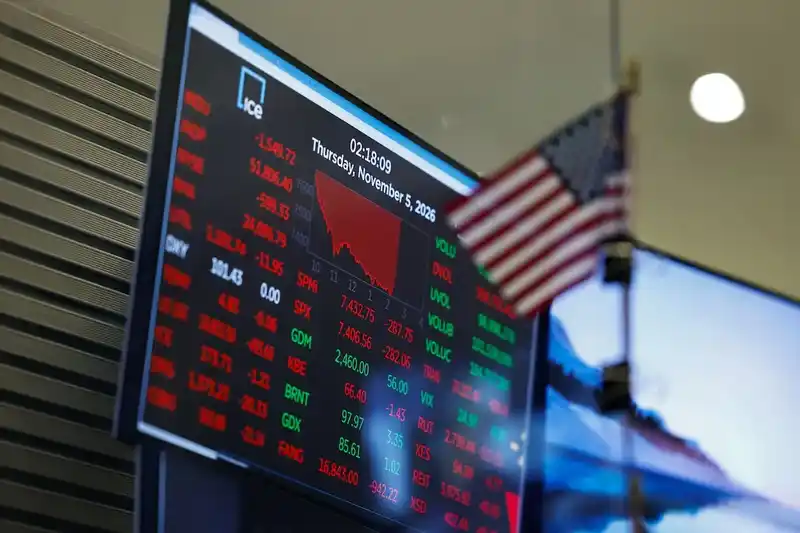
Morgan Stanley analysts led by Michelle Weaver and Stephen Byrd apparently spent the weekend defending the AI investment story with two in-depth research reports. The case for the defence includes an elongation of the data centre-related capital expenditure cycle and the ongoing, quantifiable adoption of AI by ex-tech corporate America. Let’s be the judge.
For the opening statement, 14 analysts are credited on a Sunday research report identifying “multiple buying opportunities among AI enablers, infrastructure and adopters” amid a selloff the analysts described as unwarranted.
Morgan Stanley believes that some data centres scheduled for completion in 2028 will be delayed until 2029 but their overall projections for hyperscaler spending - US$2.4-trillion combined for 2027 and 2028 - are unaffected by the midterm elections.
The analysts see positives in an elongated investment cycle as it will alleviate equipment bottlenecks and credit concerns. Data centres in place by mid-2027 will become more profitable due to computing power scarcity. Mr. Byrd estimates a 30 per cent return on invested capital (ROIC) for data centres so far and this provides an incentive for further spending.
As for top stock picks within the theme, analyst Brian Nowak in the same report suggested some of the usual suspects - Amazon.com Inc. (AMZN-Q), Meta Platforms (META-Q) and Alphabet (GOOGL-Q). Software analyst Adam Wood likes Microsoft Corp (MSFT-Q). As for the data centre supply chain, Equinix Inc. (EQIX-Q), Bloom Energy Corp. (BE-N), Solaris Energy Infrastructure Inc. (SEI-N), Liberty Energy Inc. (LBRT-N), Nvidia Corp. (NVDA-Q), Broadcom Ltd. (AVGO-Q), optical equipment provider Lumentum Holdings (LITE-Q) and Coherent Corp. (COHR-N) are now the favoured stocks after the selloff.
Ms. Weaver attempted to quantify the adoption of AI in a separate Monday research report. Over the past 12 months, 44 per cent of S&P 500 companies reported at least one measurable efficiency resulting from new AI processes. This is up from 32 per cent for the previous period. Larger companies are the quickest adopters – 54 per cent of S&P 500 market cap are reporting higher profits because of AI. In addition, 22 per cent of S&P 500 companies reported labour force effects from AI.
The report features a list of stocks touted as AI Adoption leaders. Potential opportunities here include Procter & Gamble Co. (PG-N), Visa Inc. (V-N), RTX Corp. (RTX-N), GE Aerospace (GE-N), and Blackstone Inc. (BX-N).
My verdict here: hung jury. The reports did assuage a significant amount of my AI-related anxiety but I can’t find entirely for the defence. Just to push the metaphor completely beyond sensible parameters, I have reasonable doubt about the sustainability of AI and AI-adjacent market leadership. Investors can afford to wait for stability in the stocks central to the theme and see if they regain momentum in terms of price and earnings forecast momentum.
Insight
Seven surprising market facts
New York-based Ritholtz Wealth Management founder Barry Ritholtz used the selloff last week as a catalyst to describe seven surprising market data points he believes are most instructive now. The overall tone is one of neutrality, which is not surprising in light of Mr. Ritholtz’s disgust with market timing – he’s not that interested in tactical buying and selling opportunities.
The first data point is that Intel suffered its worst one-day decline in 52 years on Oct. 30. This time period includes 2000 when Intel was one of the Four Horsemen driving the dot-com boom.
Mr. Ritholtz is surprised by the extent of energy sector outperformance. He noted that the U.S. Energy iShares ETF (IYE-A) was up 55 per cent year to date, more than 40 percentage points more than the S&P 500.
He is also surprised that small-cap stocks are now outperforming the S&P 500 and the Nasdaq year to date. This is a potential sign of a market broadening out from technology to sectors more closely associated with Main Street.
The number of record S&P 500 closes this year is also notable for Mr. Ritholtz. So far in 2026, the index has closed at record levels 28 times compared with 39 in 2025 and 57 in 2024. Either the U.S. market is weakening or there’s a lot more record closes to come between now and New Year’s.
Median stock performance has not been good. Mr. Ritholtz calculates that between Aug. 13 and the record close on Oct. 6, only 128 of the S&P 500 constituents were higher for the period and the median stock dropped 6.4 per cent.
Consumer stocks have been very weak and this contradicts the possibility that strength in the small-cap Russell 2000 represents strength on Main Street. U.S. consumer discretionary stocks are down almost 4 per cent year to date, making it the poorest performing major sector.
Mr. Ritholtz’s final data point is that the equal weight S&P 500 is beating the conventional market cap weighted benchmark by roughly three percentage points this year. I interpret this mostly as a fallout from a correction in the AI-related megacap stocks that were leading the market for most of the year.
These seven factoids are indicative of a market that’s churning and in search of direction and leadership. The Federal Reserve hiking cycle and the subsequently higher rate environment implies that secular growth stories like technology, not cyclical stocks, will eventually take charge again.

Dado Ruvic/Reuters
Diversions
Social media can be useful to investors
I was all ready to heretically suggest that investors can benefit from Instagram and, while I can still make that argument, the inevitable then happened and my idea got drowned by conniving trash.
Over the past week I’ve found IG accounts offering terrific, quick explanations for important investing concepts. @the.data.lens describes Z-scores and skewness - the latter will save you from re-reading The Black Swan if you think about it long enough. Former U.S. investment banker @thewallstreetskinny brilliantly illustrates supply chains - I mean illustrates literally, she draws effective diagrams while explaining - showing how Nvidia doesn’t actually make semiconductors.
@quantfiancemadeeasy outlines options pricing and other investment tools. @statsmaniaofficial shows how data can be used to manipulate rather than illuminate. The best single post described the efficient frontier - it was from @quantfinancetogo. (I’ll return to this one eventually. I have real issues with how the methodology is applied in Canada).
The good characteristics of interaction algorithms was apparent. The more good accounts I found, the more the algorithm showed me. Things were looking up.
Then the con artists started appearing. “Buy these stocks and get rich, just like I did with a 426,000 per cent return in the past 12 months.” Things were going too well.
I still think there’s value in the accounts I mentioned. But investors trying them out will have to vigilant against fraudsters sneaking into their feed.
The essentials
Looking for our updates on market movers, analyst actions, stock technicals, insider trades and other daily, weekly and monthly insight? Click here to visit our Inside the Market page.
Globe Investor highlights
David Berman on how the Democratic sweep could be good news for wind and solar stocks
Andrew Galbraith warns there are trade-offs in market-linked GICs
Ted Dixon on the TSX energy insiders that bought the November pullback
Tom Bradley on why investors often die in the valley between a good idea and the payoff
Quick hits
RBC Capital Markets head of global commodity strategy Helima Croft warned clients not to expect a settlement between the U.S. and Iran just because the Democrats took control of Congress. Ms. Croft notes that the White House, aware the Iran conflict and its effects on gasoline prices were unpopular, attempted to lower the temperature on the situation ahead of the midterm elections. The elections are now over and Ms. Croft sees the potential for military escalation or a U.S. blockade of the Strait of Hormuz. The strategist is surprised by investor expectations for peace and lower crude prices in light of the pessimism she uncovered during a recent trip to the region.
Citi strategist David Chew is part of an analytical team that follows over 80 global investment themes and attempts to identify the most promising among them. Mr. Chew’s most recent update found earnings momentum improving for the oil and gas industry, which pushed it to the ninth more attractive theme, up from 60th last month. The health care sector was previously alone as generating strong earnings upgrades and it remains highly ranked. Cloud computing climbed fromninth to fourth most promising theme and data storage rose from 15th to eight. The top performing themes in October were software as a service, social vices, mental wellness and feminine health and femtech.
Elizabeth Warren is expected to be named head of the Senate Banking Committee and entertainment will likely ensue. The Wall Street Journal reported that Ms. Warren has described private equity as “looting”, proposed curbs for AI and demanded an investigation into Jeffrey Epstein’s ties with Donald Trump. The senator published a 41-page document last weekdecrying banking conflicts of interest with the White House.
Read this week’s earnings and economic calendar here
Related Articles
- Stock Markets News
‘I suspect the sell-off is overdone’: Analysts and investors react to AI market rout
- General News
Nasdaq, SMH: Have We Found a Major Top on the AI Trade?
- Stock Markets News
5 big analyst AI moves: Is the historic AI stock rout a buy opportunity?
- General News
Asia Open: Relief Rally Gives AI Another Day in Court
- Economy News
Global markets were already fragile. Big AI bets could break them