Protests erupt in Spain after train crash kills dozens
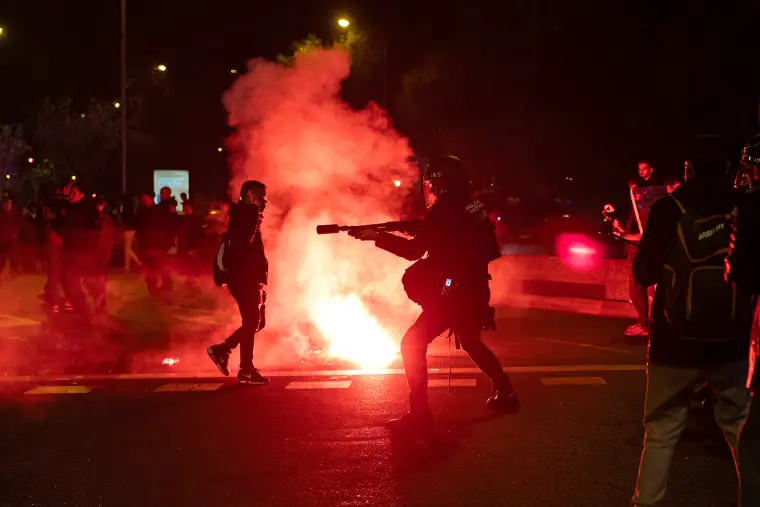
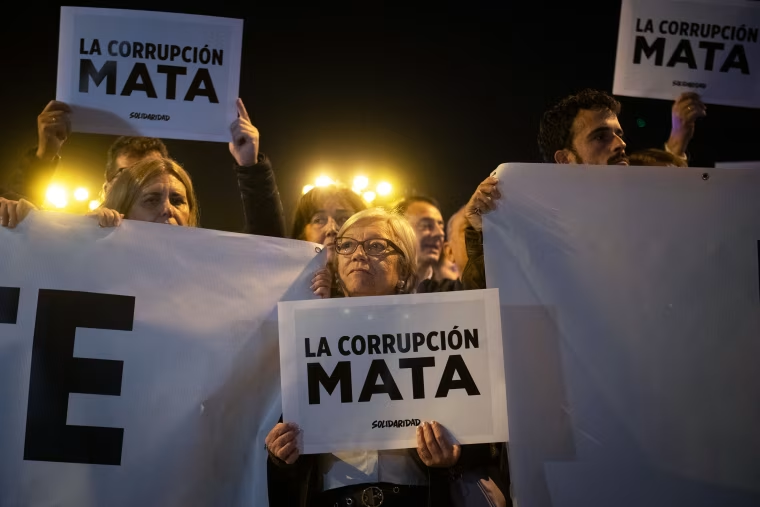
URDA, Spain — Spain began three days of mourning Thursday after at least 69 people were killed and dozens more were injured in the country’s deadliest train crash in decades. But anger is mounting about allegations of incompetence that allowed the accident to happen, and protesters clashed with police overnight outside the country’s Transportation Ministry in Madrid.
Once considered one of the country’s crowning achievements, Spain’s high-speed rail network had not endured a deadly crash since it came into service over 30 years ago.
After the second train accident in less than a year, the tragedy has deepened the feeling among many that there is something broken in the Spanish transportation system.
The crash follows weeks of protests connected to rising costs and a housing shortage, which have already triggered massive and sometimes deadly demonstrations across the country and piled the pressure on Prime Minister Pedro Sánchez.
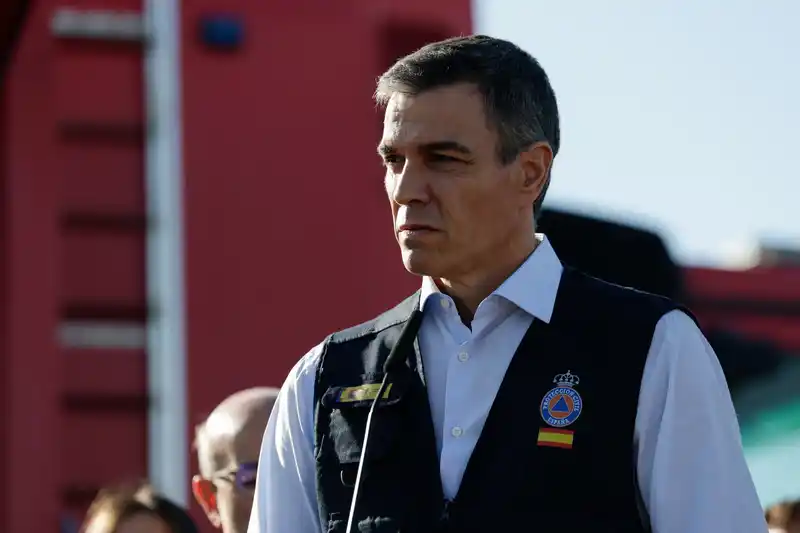
On Wednesday, four weeks before the country goes to the polls in a national election, Sánchezvisited the site in the central province of Toledo, where a quiet stretch of rail lined by olive groves had been turned into a scene of devastation.
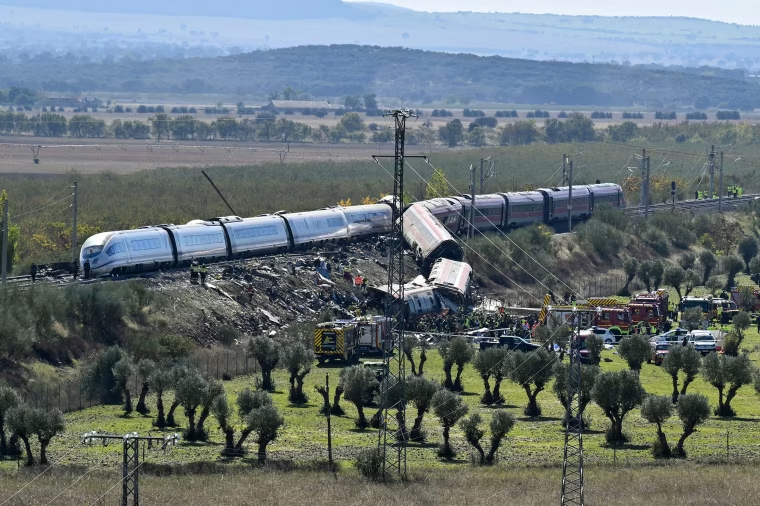
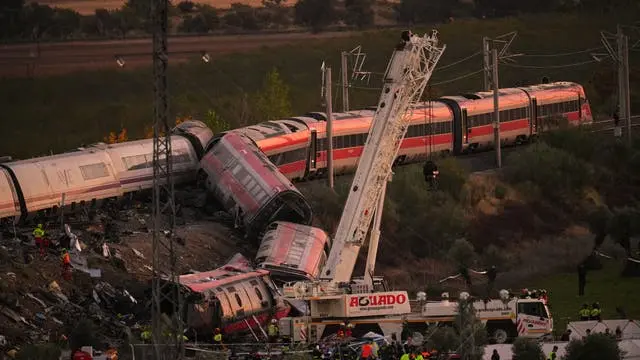
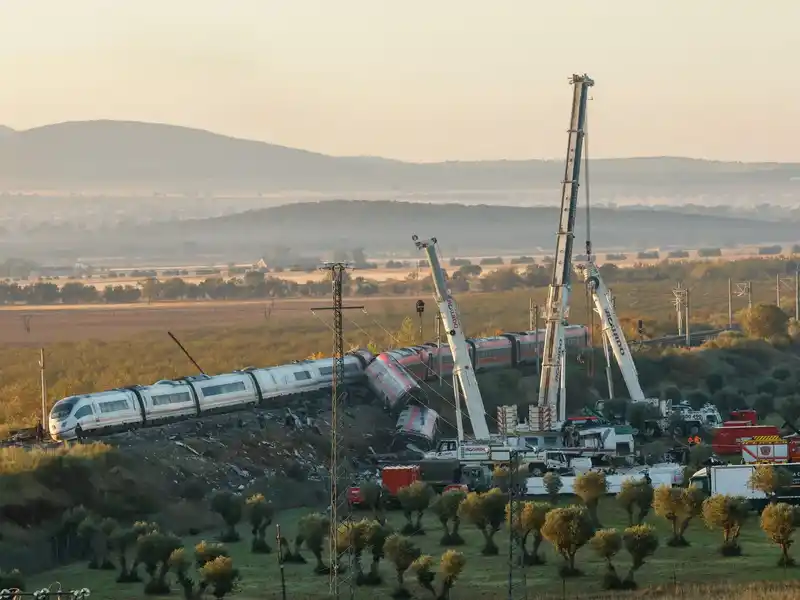
Pictures showed several carriages lying on their sides next to the tracks and others twisted at angles, their wheels sheared off. Debris was strewn around the scene of the accident, which happened after one train crashed into another that was stationary on the line.
More than 800 military and police personnel, over 200 vehicles, three helicopters, a mobile command post, drones, mounted units and search dogs were brought in to rescue survivors and recover bodies, the Interior Ministry said Thursday.
Regional leader Emiliano García-Page said that the death toll had risen to 69 and that human remains had been found during rescue efforts, which now involved crane operations, particularly on a carriage that remained overturned.
A judge in Toledo barred anyone not involved in emergency, security, healthcare or judicial work from the crash site with an exclusion zone of around a mile of it.
The Foreign Ministry said Thursday that 42 foreign citizens from seven countries were involved in the crash, of whom one was killed and at least seven were injured. Authorities said 57 of the injured remained in the hospital.
Several Americans were hurt, according to the State Department, which did not provide further details.
Jacksonville, Florida, firefighter Josue Garcia-Otero was on board with seven of his family members.
“We got to safety first, then began treating other patients that were critically injured,” Garcia-Otero said in a news release issued by the Jacksonville Fire and Rescue Department. “My wife is a nurse, and she was helping too.”
Pledging an investigation and improvements to prevent a similar tragedy in the future, Sánchez said, “It is clear that we need to reinforce the safety of our train service to rebuild the trust in our high-speed rail.”
Tangui Binier, who lives in Madrid, told NBC News that he was traveling with his father when their train stopped and was struck.
“We just felt this heavy like impact from the back,” said Binier, 22. “Everything flew forward.”
Passengers did not know what to do, and some were afraid because of visible live wires from the destroyed train cars, he said. Binier’s father managed to open an emergency door.
“When we got out of the train, we just looked backwards and just saw the complete mess and destruction that was behind us,” he said.
Still in shock, he and his father quickly moved to help people get off the train, he said.
“A lot of people laying on the ground, kind of disfigured. A lot of things that are, that are really, really hard to share and ... describe,” Binier said.
“I really don’t think it’s something you can prepare for,” he added.
Sánchez, the prime minister, said it was “not acceptable for a country like Spain to endure two high-speed train accidents in the same year.” In January, 46 people died in the south of the country after one train jumped the track and slammed into the side of a train going the opposite way.
Both crashes involved trains operated by the state-owned Renfe company and the privately owned IRYO.
Spain’s transportation minister, Óscar Puente, said the crash was caused by what he called the “inexplicable” order from a central command center to resume operations after a security system had failed.
Puente, who faces calls to resign, said the train engineers were not to blame. A security system had stopped working because of a computer malfunction, causing all trains on the line to stop at about 8:30 a.m. local time (5:30 a.m. ET).
Shortly afterward, he said, central command told the Renfe train to start running again without any speed restrictions, which never should have happened, and it ended up running into the stationary IRYO train at 8:53 a.m.
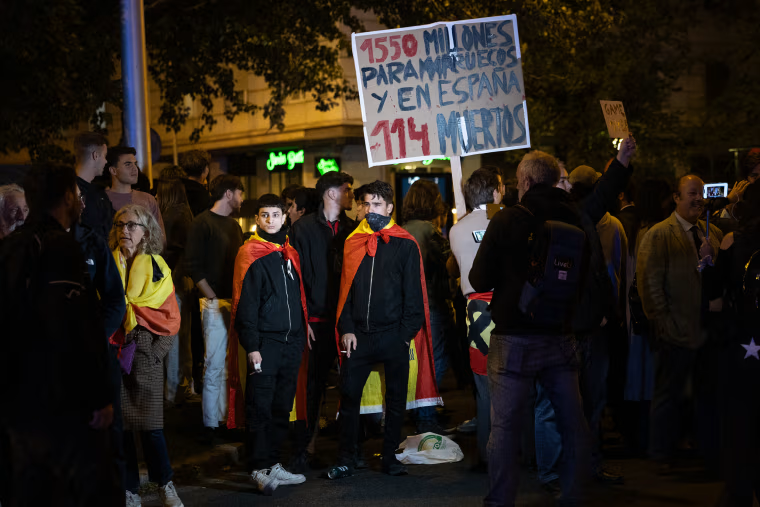
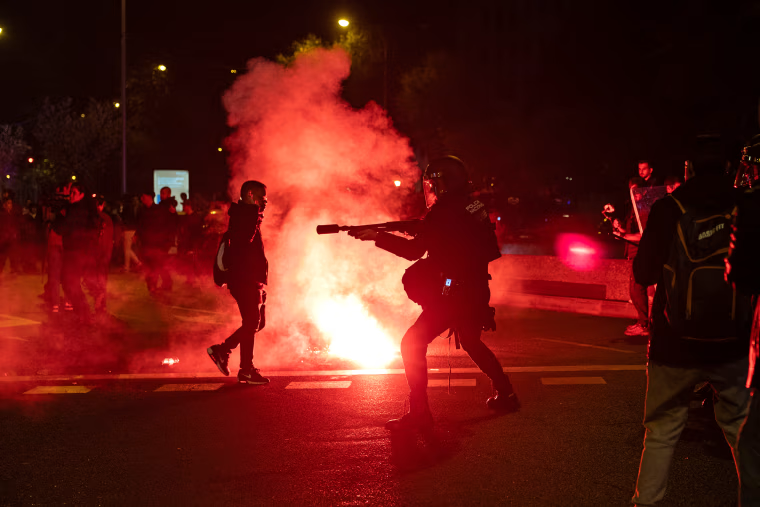
Riot police used tear gas outside the Transportation Ministry late Wednesday after far-right protesters gathered outside and pushed against a cordon set up by officers. Some threw flares and other objects as some chanted slogans against Puente and Sánchez.
Quite what effect the accident will have on Sánchez’s political ambitions remains unclear. He called a snap election next month after his Socialist Party suffered several defeats on legislation to address the country’s housing crisis.
Sánchez’s minority government had put forward two decree laws aimed at protecting tenants in the rental market after nationwide protests erupted following the eviction of an 87-year-old woman from her Madrid apartment. Maricarmen Abascal, who was in a wheelchair, was eventually allowed to return but died in the hospital before she could do so.
Sánchez, who took office in 2018, has weathered several crises, including the Covid pandemic and the global inflation rise.
But he has faced attacks from right-wing parties over his liberal migration policies and accusations of corruption against his party and his wife, which both deny. Polls show he faces an uphill battle ahead of the election next month.
Daniella Silva contributed.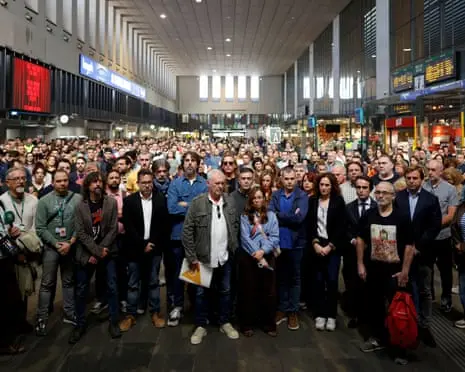
Spain begins mourning period as search continues for train crash victims
Emergency services, drones and dog unit continue to comb carriages as Civil Guard sets up clinics for relatives to provide DNA samples Spain has begun three days of mourning to commemorate the 69 people who died in a high-speed rail collision as hospitals continue to treat dozens of injured passengers and relatives wait for news of their loved ones. The trains – one from Spain’s state-owned Renfe...

High-speed train crash kills at least 68 people in Spain
The crash, between a moving train and another that was stopped further up the track, was caused by an "inexplicable" error, the transport minister said.
Spain reckons with 2nd deadly train crash of the year ahead of national election
Spain faces fresh concerns about rail safety after a second high-speed train crash this year killed 68 people
High-speed rail disaster in Spain: How it happened
Officials blame a control centre order for Wednesday's crash following a critical train signalling system failure.
Train drivers strike in Spain after 115 killed in two crashes this year
Renfe said 40 per cent of long- and medium-distance services had been cancelled, affecting 4,042 passengers