Landslide win beckons for centre-left candidate in Portugal’s presidential runoff

The moderate socialist António José Seguro appeared to be headed for a landslide victory in Portugal’s presidential runoff on Sunday, with two exit polls putting him in the 67%-73% range, well ahead of his far-right, anti-establishment rival, André Ventura.
The exit polls conducted for the television channels RTP, SIC and TVI/CNN placed Ventura at 27%-33%, still a better result than the 22.8% his anti-immigration Chega party achieved in last year’s general election.
Last year, Chega became the second-largest parliamentary force, overtaking the Socialists and landing behind the centre-right ruling alliance, which garnered 31.2%.
Despite his loss on Sunday, 43-year-old Ventura, a charismatic former TV sports commentator, can now boast increased support, reflecting the growing influence of the far right in Portugal and much of Europe.

Seguro has positioned himself as a moderate candidate who will cooperate with Portugal’s centre-right minority government, repudiating Ventura’s anti-establishment and anti-immigrant tirades.
The longstanding Socialist politician has won the support of other mainstream politicians on the left and right who want to halt the rising populist tide.
In Portugal, the president is largely a figurehead with no executive power. Traditionally, the head of state stands above the political fray, mediating disputes and defusing tensions.
However, the president is an influential voice and has some powerful tools at their disposal, being able to veto legislation from parliament, although the veto can be overturned. The head of state also possesses what in Portuguese political jargon is called an “atomic bomb”, the power to dissolve parliament and call early elections.
In May, Portugal held its third general election in three years in the country’s worst bout of political instability for decades, and steadying the ship is a key challenge for the next president.
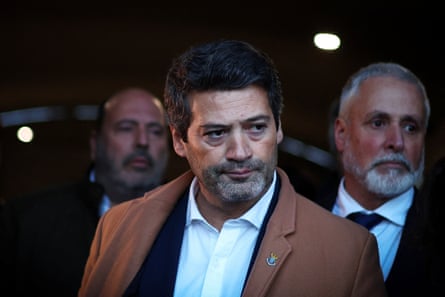
Ventura, an eloquent and theatrical politician, has rejected political accommodation in favour of a more combative stance. One of his main targets has been what he calls excessive immigration, as foreign workers have become more conspicuous in Portugal in recent years. “Portugal is ours,” he said.
During the campaign, Ventura put up billboards across the country that said: “This isn’t Bangladesh” and “Immigrants shouldn’t be allowed to live on welfare.”
Although he founded Chega less than seven years ago, its rise in public support made it the second-largest party in Portugal’s parliament in the 18 May general election.
In March, the winner will replace the centre-right president, Marcelo Rebelo de Sousa, who has served the limit of two five-year terms.