How ‘day zero’ water shortages in Iran are fuelling protests

Gripped by a terrible drought now entering its sixth year, Iran’s cities are on the brink of what its meteorological organisation calls “water day zero”: the boundary beyond which supply systems no longer function. This was crossed by Chennai in India in summer 2019 and is now threatening Mashhad, Tabriz and Tehran, where taps in the city’s southern districts had already run dry by early December.
Nightly “pressure cuts”, in which the water supply is halted to whole districts in the capital, have already become the norm. Protesters demanding “Water, electricity, life – our basic right” over the summer were already risking a clampdown.
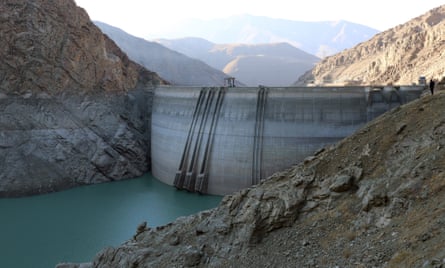
Middle East expert Juan Cole says in an article that the head of the regional water company was claiming, in early November, that the five main water supply dams to Tehran, the capital, were only 11% full, and criticising the government for its inaction. Tehran, home to 10 million people, has been threatened with the most drastic measure of all – evacuation. “If it does not rain in Tehran by December, we should ration water; if it still does not rain, we must empty Tehran,” warned the country’s president, Masoud Pezeshkian, back in November.
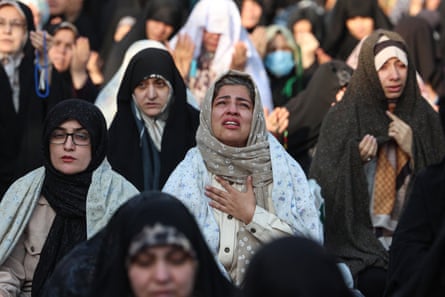
When the biggest demonstrations in Iran in years erupted a few weeks later, to be met with a brutal government crackdown, the fundamental insecurity induced by a lack of water was a crucial – but underreported – background to the upheavals that may yet topple the 47-year-old Islamic Republic itself. The immediate triggers for the protests were a combination of worsening government austerity and a dramatic currency crisis, the falling value of the rial ratcheting domestic inflation up even beyond the 40% it had reached earlier in the year. But this shock has to be understood as the final break after decades of cumulative failure.
For Iran, the evidence strongly suggests that climate change is the deep cause of its water shortages: average temperatures in Iran’s cities between 1990 and 2022 have risen about twice as fast as the global rate, according to research from Iran referenced by Cole. But the impact of those rising temperatures has been amplified by the mismanagement of Iran’s water supplies, in a decades-long failure under successive governments that long predates the 1979 revolution.
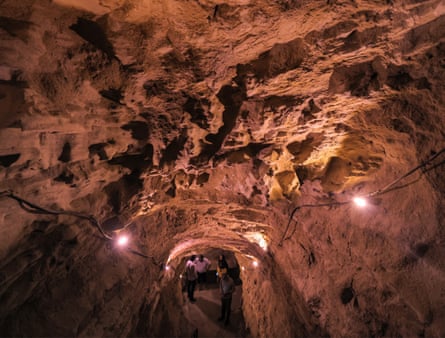
Spurred on by visions of national modernisation and self-reliance, both the Shah of Iran and the Islamic Republic have overseen the “abandonment” of Iran’s ancient qanat aquifer system. Consisting of about 70,000 tunnels dug into hillsides across the country to access underground water, most of Iran’s 250,000 miles of qanat tunnels are about 2,500 years old – supplying its cities and agriculture with freshwater for millennia.
Iran instead became one of the top three dam builders in the world over the last half of the 20th century. From 1962, under the shah, 58 dams were constructed across the country, holding around a quarter of the country’s total water resource, with the aim, primarily, of boosting the country’s agricultural output. But by putting major dams on rivers too small to sustain them, Iran’s authorities brought short-term relief at the cost of longer-term water loss: evaporation from reservoirs increased while upland areas were deprived of water, now trapped behind the dams. After the revolution, and the overthrow of the shah, the attempted shift to economic self-sufficiency saw efforts to maximise domestic water extraction, primarily via the increased use of groundwater pumps, with no serious attention paid to sustainability.
There is a critical international dimension to the shortages. Long-delayed by the country’s insurgency, Afghanistan’s Taliban regime finally oversaw the completion of the Pashdan Dan on the Harirud River, where construction had originally begun in 2011. The Harirud flows from Afghanistan over the border into eastern Iran, but the operation of the dam places the Taliban in control of 80% of the flow down the river, potentially deciding the water supplies to major cities including Mashhad, the country’s second largest.
Armed clashes between Iran and Afghanistan broke out over access to the Helmand River in the summer 2023, with casualties on both sides before a negotiated truce. Unlike Helmand, notionally governed by a 1973 treaty, Harirud has no formal agreement over water use in place, and rhetoric over access to it has ratcheted up over the last 12 months and more as the dam approached completion.
Meanwhile, Iran’s groundwater supplies have been squeezed almost dry over the last 40 years. Over 1m groundwater pumps have been installed, 90% for use by Iran’s agricultural sector, particularly when surface conditions have been arid. The ancient qanat system has been pumped dry, with most of the country’s tunnels now falling into disrepair – causing severe subsidence in Isfahan, a city once reliant for its water on the tunnel system. The result is a disastrous depletion of Iran’s slow-replenishing underground water supplies, with the majority pumped dry over the first two decades of this century.
Faced with soaring inflation, crippling sanctions, and the hefty costs of administering a complex system of “preferential exchange rate” subsidies for imported essentials, rising to $18bn over the last year, Iran’s rulers have attempted some familiar versions of “reform”, including dramatic spending cuts. It was pressure on government finances that pushed the government to try to end the preferential exchange rate system in early December, along with concern the system had become thoroughly corrupt, with relatively few well-connected importers enjoying massive benefits that were not seen by most consumers. The intention was to replace this subsidy for importers by boosting the existing system of direct payments, which is almost a form of basic income, starting from March next year.
But ending the preferential rates system threatened to raise the domestic prices of essentials, including food imports, further increasing inflation which was already running at over 40%, and 72% for food.
Inflation is one version of the chronic scarcity that is making daily life in Iran unbearable. Water shortages, where basic systems don’t work and access to water becomes a privilege for those who can afford bottled supplies, is another. In a world without climate change, Iran’s decades of water mismanagement may not have mattered quite so intensely. But coupled with the grinding impact of sanctions, the entire system has been tipped into a potentially terminal crisis.
We should expect more such climate unrest. One study from scientists at Pusan National University, South Korea, published at the end of 2025, forecasts that three-quarters of the world’s most drought-prone regions will be at risk of “day zero” by the end of the century, and a third of them will be hit before 2030. The failure of Iran’s water supplies is only the most dramatic example we have to date of how the climate crisis is threatening our most essential systems – and with them, political stability. It is unlikely to be the last.