EPA finds no elevated lead levels in drinking water following Iowa explosion
There are no indications of elevated lead levels in Iowa’s drinking water following the detonation of the nation’s entire stockpile of lead azide, a chemical used to make explosives, the Environmental Protection Agency (EPA) said on Saturday.
On 25 November, military explosive experts detonated degraded lead azide at the Iowa army ammunition plant in Middletown, Iowa.
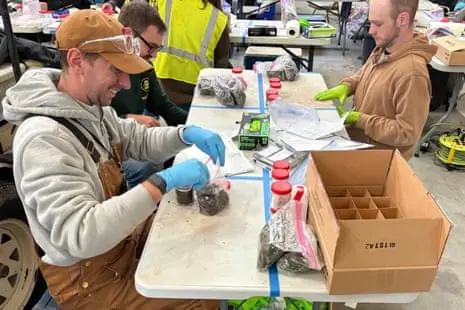
The EPA released initial drinking water lab results on Saturday, the latest public update on agency efforts to sample air, water, soil, and dust before and after the controlled detonation.
Initial lab results from the EPA’s post-detonation sampling show that the detonation did not result in an elevation of lead in water bodies that serve as sources of drinking water.
“EPA found no lead in the 38 water samples taken post-detonation at public water supplies, which included samples of finished treated drinking water and untreated water at the intake,” according to the EPA.
“EPA sampled 35 drinking water sources across Iowa, Illinois and Missouri before the controlled detonation to set a baseline.”
The EPA also monitored the air to detect airborne lead for 30 consecutive hours after the controlled detonation using Xact air monitoring systems.
Its statement comes after the acting secretary of the army, Adam Telle, along with the Republican governors of Iowa and Missouri, said the detonation appeared to be a success and that the explosion was well contained.
The US has phased out lead azide for munitions production over the last decade due to its extreme volatility, but in doing so it moved most of the nation’s stockpiles to the Middletown plant, officials say.
Army officials said the detonation was necessary because the degraded material risked exploding uncontrollably as temperatures were expected to drop.
However, some experts cautioned that it was too early to know whether communities were in the clear.
Maj Gen Eric Shirley, who led the army operation, said the risk was “reduced as close to zero as it’s absolutely humanly possible”.
A court ruling this week put the detonation, originally planned for last Friday, back on track. The army changed the date amid public backlash and to allow more time for safety measures and favorable winds, due to the risk of releasing plumes of toxic chemicals in a 100-mile (160km) radius.
Environmental groups who sued to halt the detonation said last week that legal action and public pressure forced the army to take more protective measures.
Had the blasts happened pre-emptively as originally planned, many safeguards along with clearer evacuation plans and expansive monitoring wouldn’t have been in place, they said.
“EPA is working diligently to expeditiously return post-detonation sample results from the laboratories. We will continue to communicate transparently with the public as more data is received and validated,” the EPA’s statement said.