Elon Musk can afford a little MAGA amnesia
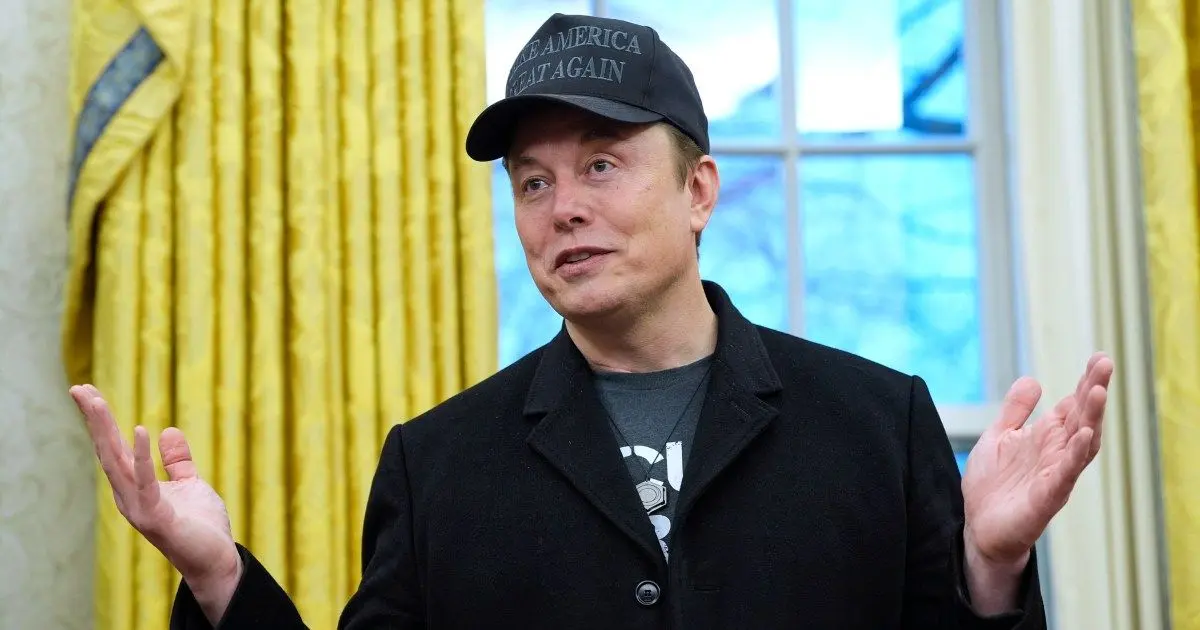
Following the dismal performance of the Republican Party in the United States midterm elections this month, the world’s richest person, Elon Musk, admitted that he felt “pretty foolish about having spent so much money” backing Republican candidates.
The CEO of Tesla and SpaceX dropped almost $500m on elections that saw Democrats sweep Congress. Granted, this isn’t exactly “so much money” for someone whose net worth hovers in the vicinity of $820bn.
Musk furthermore took the opportunity to announce that he is not, in fact, a disciple of US President Donald Trump’s signature Make America Great Again movement: “I’m not MAGA.”
This was a curious statement, no doubt, coming from a man who in very recent history has been known to sport MAGA hats and say things like: “I’m not just MAGA. I’m dark, gothic MAGA.”
Now, however, he has ditched the MAGA hat, explaining that he is not even “sure what MAGA means”. If it happens to mean a “sort of blind adherence to a set of policies by the Republican Party”, he remarked, “then I certainly don’t have that”.
Anyway, who needs “blind adherence” when you already have more money than anyone else on the planet?
To be sure, Musk has backed Democrats in the past, including former presidents Barack Obama and Joe Biden. During his brief but dramatic breakup last year with Trump – for whose 2024 electoral victory Musk claims personal credit – various members of the Democratic camp jumped at the chance to woo Musk and his money back to their side.
And the bipartisan commitment to plutocracy is something that won’t be defeated in any US election any time soon.
After Trump reassumed power last January, Musk was granted a post at the head of the Department of Government Efficiency (DOGE), where he promptly went about dismantling government agencies and seeing to it that masses of federal workers lost their jobs – all the while personally benefiting from his own companies’ government contracts.
In his post-MAGA political reinvention, Musk has spontaneously cast himself as “ideologically quite moderate” – which might be news to anyone who associates ideological moderation with ideas such as workers having rights and that the world should not be governed by a handful of zillionaire sociopaths.
As Jim Naureckas, editor of the New York-based outlet Fairness & Accuracy In Reporting, said to me regarding the basis of Musk’s business model: “Elon Musk has amassed unfathomable wealth by convincing people that his not very profitable companies would some day make insane profits.”
As Naureckas put it, Musk in turn used that fortune “to ally himself with the ugliest elements of national and world politics, taking an active part in the looting and corrupting of the US government”. But now that the movement Musk enthusiastically hitched his wagon to is in disgrace, “he’s frantically trying to rebrand himself” despite having been “Sieg-Heiling the second Trump inauguration” a mere two years ago.
By coincidence, Musk has determined that the Democratic governor-elect of the state of Texas, Gina Hinojosa, is “quite moderate” – just like him! – so hopefully they’ll find some way to coexist in harmonious “moderation”. Texas, of course, is where Tesla and SpaceX have their headquarters, and where Musk had thus directed a significant portion of his “pretty foolish” campaign donations to ensure continued friendly Republican dominance.
Trump, for his part, had a rather less apoplectic reaction than one might have expected to Musk apparently jumping ship, telling NBC News: “He’s a friend of mine.”
This was far more cordial, at least, than the presidential tantrum that transpired after last year’s falling-out, when Trump declared Musk “so depressed and heartbroken” at having lost his post at DOGE that he was even suffering from “Trump derangement syndrome” – whatever that means.
As for what MAGA means, Musk may claim to no longer understand the significance of the movement he aided and abetted, but Trump has it quite clear: “I mean, you have to ask—there are lots of definitions out there. MAGA, to me, means something very specific, and when people veer from it, they don’t do very well.”
Good to have that straightened out.
Musk is not the only grotesquely rich and influential person to distance himself from MAGA in the aftermath of the midterms. There’s also the likes of Alex Karp, the CEO of Palantir – the tech firm that has been fundamental to Trump’s deportation binge and other mass abuses – who is now claiming to be a “progressive”.
But as the post-electoral rebrandings and semantic acrobatics carry on, it’s worth recalling that, MAGA or no MAGA, the US has never been a place where humane ideals have been permitted to thrive. Basic rights to healthcare, shelter, and education are converted into prohibitively expensive luxuries while the military goes about terrorising other countries willy-nilly and sending billions of dollars in charitable contributions to Israel’s genocide in the Gaza Strip.
Meanwhile, Elon Musk is able to throw away hundreds of millions of dollars and then shrug it off as “pretty foolish”.
According to Musk, Republican midterm losses are an indication that “American elections are not just about money”.
But the thing about plutocracy is, everything is always about money. And whatever hat Musk decides to don next is not going to change that.
The views expressed in this article are the author’s own and do not necessarily reflect Al Jazeera’s editorial stance.