Why is Wingstop stock sliding today?
Wingstop stock slipped 1.2% in pre-open trading after Bernstein SocGen Group downgraded the shares from Outperform to Market Perform, setting a price target of $155. The move is notable because Bernstein had been one of the stock’s consistent institutional supporters, and the shift to a neutral stance signals that the firm no longer sees a near-term catalyst sufficient to justify a premium valuation.
The downgrade arrives in the wake of Wingstop’s Q2 2026 earnings report, released pre-market on July 29, in which the company posted adjusted earnings per share of $1.18 — beating the consensus estimate of $1.02 — but missed on revenue as softer same-store sales weighed on the top line. Management also cut its full-year 2026 domestic same-store sales guidance to a decline of 4% to 6%, citing ongoing macroeconomic uncertainty and spending pressure on its core customer base. A cluster of other Wall Street firms, including Morgan Stanley, Piper Sandler, RBC Capital, and DA Davidson, had already trimmed their price targets in the days following those results.
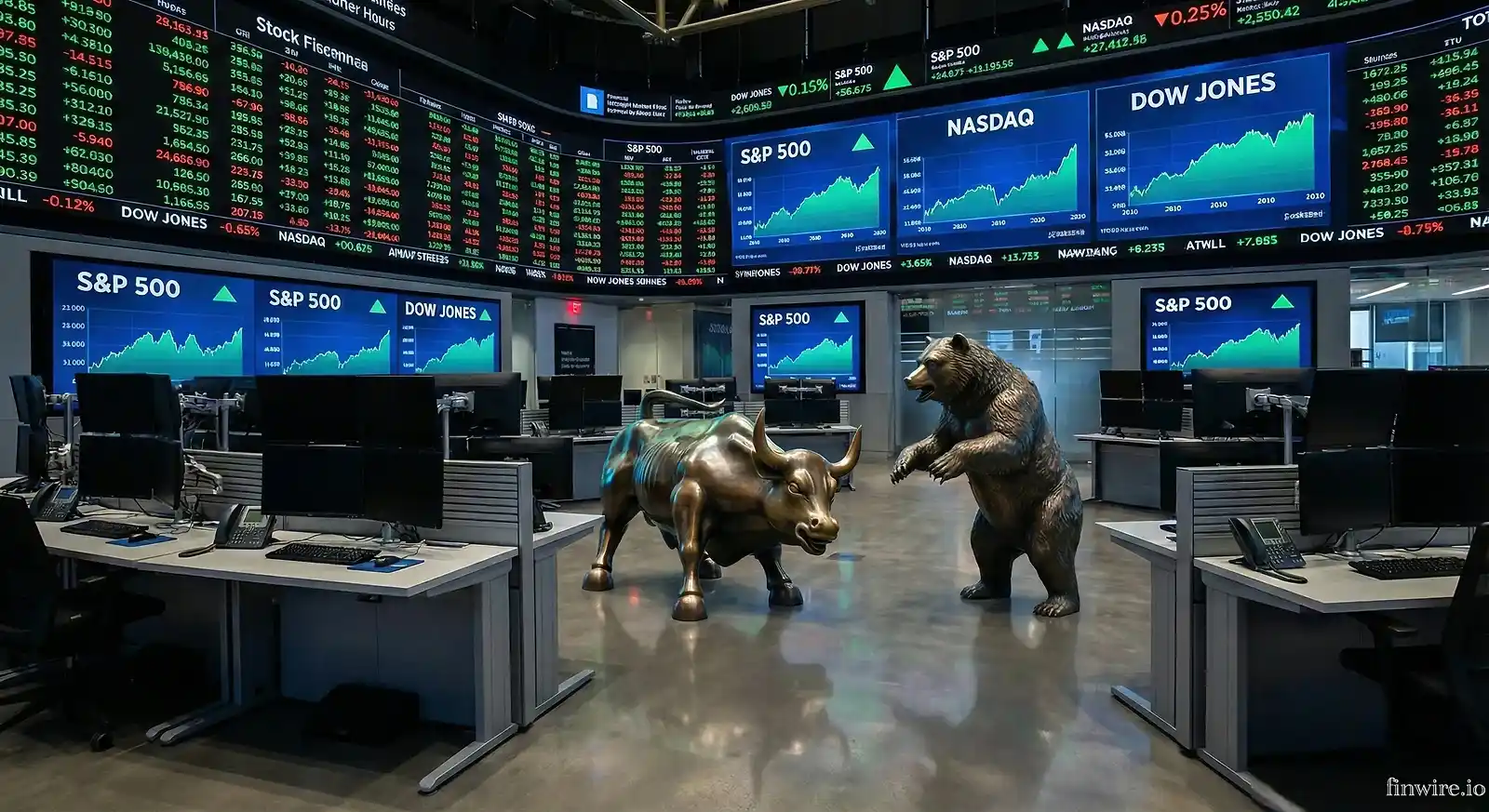
Despite the company-specific headwinds, the broader U.S. equity market is pointing higher today, with the S&P 500 gaining 0.6%, the Dow Jones up 0.8%, and the Nasdaq adding 0.4%, underscoring that Wingstop’s pre-market weakness is driven by stock-specific sentiment rather than any macro deterioration. The stock has already shed roughly 63% from its 52-week high of $363.47, and prior to this downgrade, the analyst consensus stood at 24 buy ratings and 5 hold ratings with no sells — a skew that is now beginning to normalize.
Taken together, the Bernstein downgrade crystallizes a broader re-rating narrative: a once-high-growth restaurant concept grappling with persistent same-store sales declines, a more cautious institutional stance, and a valuation that — even after a steep correction — is being questioned by analysts who previously championed the stock.