What a jump in implied correlation means for markets and the dispersion trade
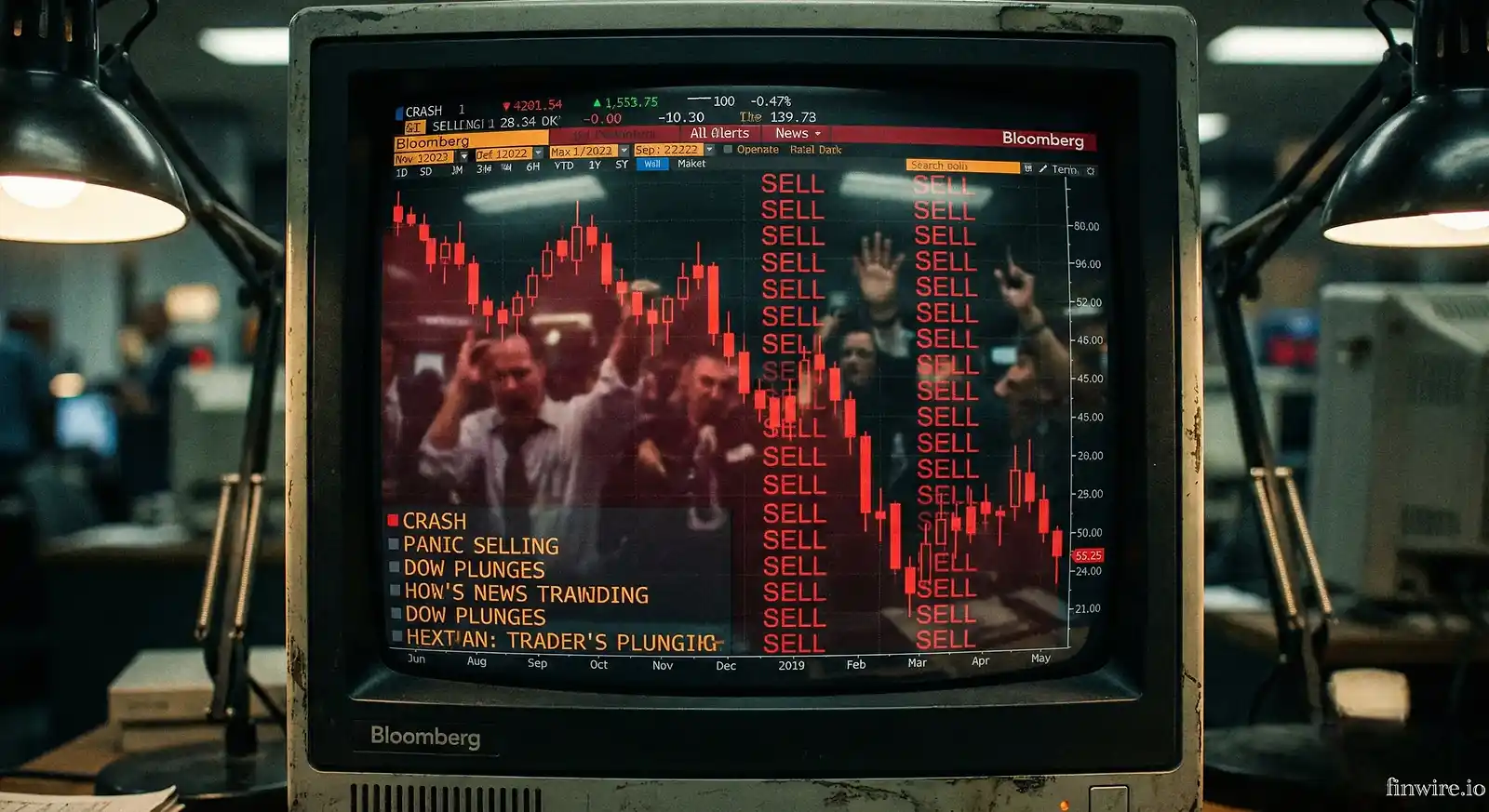
The 1-month 50-delta implied correlation gauge added 7 points to move above 30, its highest intraday level since early April, according to a report from Bloomberg. High implied correlation means options markets expect stocks to move together. In practice, that is what indiscriminate, forced selling looks like: investors sell everything at once, whatever the fundamentals.
What Implied Correlation Signals
Prices as of Nov 20, 9:10 AM EST show it at work:
- S&P 500 (US500) last closed at 7,175.83, down 2.02% (Nov 19, 3:59 PM EST).
- Nasdaq 100 (NDX) last closed at 26,517.05, down 2.21%.
- CBOE Volatility Index (VIX) is at 29.77, up 4.68%.
- AI names are lower pre-market: NVIDIA (NVDA) at $143.10 (-1.97%), Oracle (ORCL) at $107.85 (-2.46%), AMD (AMD) at $467.90 (-4.35%), and Anthropic (ANT) at $88.48 (-8.94%).
- Havens are mixed: the 10-year yield is at 4.983%, below its 5.013% pre-market print, but gold is down 3.13% at $3,569.97.
The Dispersion Trade Problem
Dispersion strategies sell index volatility and buy single-stock options. They worked this year because correlation was low and single-stock volatility was high, so individual stocks swung independently while the index stayed calm.
- Why it hurts now: When correlation jumps, the index starts moving as much as its components. Sellers of index options face losses, while single-stock options do not gain enough to offset them. These positions amount to selling insurance against an index drop.
- The warning: On Nov 10, Will Bartlett of Parallax Volatility Advisers called the trade a "ticking time bomb" that could cause "a lot of pain" if volatility jumps. VIX has risen sharply since then.
- Feedback loop: Losses can force dispersion funds to buy back index volatility, which pushes it higher. That is the same mechanical pressure as the negative gamma discussed earlier.
Implications
- Bear case: If correlation keeps rising, dispersion unwinds could add fuel to the selloff. Fear gauges are already near levels seen at past drawdown peaks.
- Bull case: Extreme correlation is often a late-stage signal. Today’s options expiration removes a large chunk of negative gamma, and VIX has eased from above 30 to 29.77. If correlation falls back, dispersion pain may fade.
- Takeaway: Rising correlation means diversification is working less well and the selloff is driven by forced positioning. It will take a calmer tape to restore stock-by-stock trading.