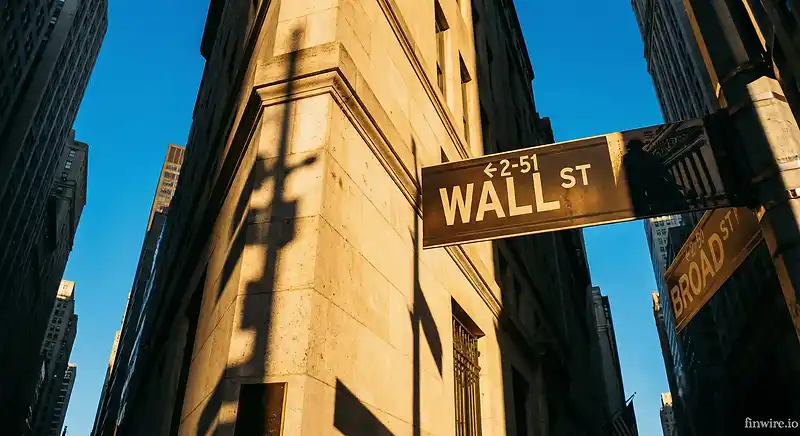
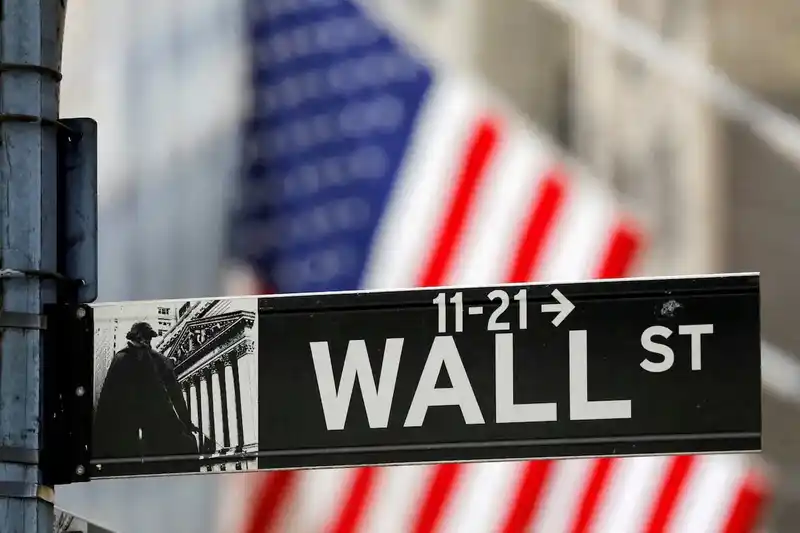
Wall Street ends lower as hot CPI, Waller drive up odds for supersized Fed hike


Wall Street ends lower as hot CPI, Waller drive up odds for supersized Fed hike
U.S. stocks ended lower on Tuesday after a hot U.S. consumer inflation report and comments from a Federal Reserve official supporting an interest rate hike in December boosted odds of a supersized increase to borrowing costs next month.
Interest-rate sensitive assets saw big reactions, with U.S. Treasury yields soaring as bonds were dumped and the dollar strengthening.
It’s been a tumultuous stretch of days for Wall Street. Concerns about more stringent regulation of the artificial intelligence industry in the wake of a decisive Democratic victory in the midterm elections led to a historic crash in the AI trade last week. The benchmark S&P 500 index posted its worst weekly performance since April 2025, only to bounce back strongly on Monday and recoup most of that slide.
The tech-heavy NASDAQ Composite dropped 0.7% to close at 25,065.87 points, while the S&P shed 0.4% to settle at 7,522.82 points. The blue-chip Dow Jones Industrial Average declined 0.3% to conclude at 52,233.32 points.
Half-point rate hike odds jump
Investors on Tuesday were focused on the October consumer price index (CPI) report, followed by the producer price index (PPI) on Friday, for clues on the trajectory of inflation and the Fed’s next policy moves.
As per the U.S. Bureau of Labor Statistics, headline CPI ticked up 0.4% M/M in October after a 0.6% rise in September. Economists had expected an increase of 0.3%. Core CPI, which strips out volatile food and energy prices, remained steady at 0.3% M/M, coming in higher than the anticipated 0.2% figure.
There were no Y/Y figures published in the CPI data on account of a U.S. government shutdown in October 2025.
The CPI comes just days after a blockbuster nonfarm payrolls report, and, combined with Federal Reserve Governor Christopher Waller’s comments earlier, all but locks in an expected Fed rate hike in December. The central bank lifted borrowing costs for the first time in three years in September, then held rates steady in October.
Waller’s remarks came in London. He said he backed hiking rates even if the inflation data had been cooler than anticipated, adding that a deeper half-point rise could be warranted if the data comes in hot.
The combination of Waller’s hawkish words and the hot CPI led to traders reconsidering the probability of a 50 basis point rate hike in December. Odds of such a move rose to nearly 10%, according to the CME FedWatch tool.
Focus will now turn to the PPI later this week, followed by the latest reading on the Fed’s preferred inflation gauge - the personal consumption expenditures (PCE) price index later this month.
"The devil is always in the detail and that is quite true inside the October CPI report. It’s clear from the detail of the report that there are clear signs of passing through from rising oil, energy, gasoline and diesel prices to transportation services and food at home," Joseph Brusuelas, principal and chief economist at RSM US, said.
"The underlying data screams stubborn and sticky inflation is a problem that is likely to grow in coming months despite the recent decline in oil and gasoline costs over the past few weeks. This data demands a December rate hike and it’s appropriate that the Fed consider a 50bps move given how the PPI and PCE are likely to arrive," he added.
Wall Street’s big rebound
The CPI data also comes a day after Wall Street surged, with technology shares bouncing back from last week’s steep sell-off. In the regular session, the NASDAQ advanced 2.7%. The Dow jumped 2.2% and the S&P 500 climbed 2.4%, marking its strongest daily gain since April 8.
The rebound followed a bruising week for equities, when concerns over the sustainability of artificial intelligence spending and the potential impact of Democratic victories in the U.S. midterm elections -- particularly in gubernatorial races in states hosting massive data center projects -- triggered heavy selling in technology and semiconductor shares.
Chipmakers led Monday’s recovery, with the Philadelphia Semiconductor Index surging nearly 7%. AMD jumped over 13%, while Broadcom gained 8.8%. However, Nvidia bucked the broader rally, falling 4.2% to its lowest closing level since April 7, amid concerns surrounding an investigation into whether Chief Executive Jensen Huang had been targeted by an alleged Chinese spy.
"While the inflation number came in hotter than expected, markets are not in a place right now where they want to think about the Fed and rate hikes. They are still digesting Nvidia news, the midterm results, and whether or not the AI trade is over. That’s what’s driving price action right now," Michael Antonelli, market strategist at Baird Private Wealth Management, told Investing.com.
Lower oil prices also provided some support to equities on Monday, easing concerns about energy-driven inflation. President Donald Trump signaled that further strikes against Iran were unlikely as diplomatic efforts to end the conflict continued.
Beyond inflation, investors will likely be monitoring upcoming earnings from AI-related companies -- including CoreWeave, Cisco Systems and Applied Materials -- for indications of whether spending on data centers and computing infrastructure remains robust.
Anthropic aims for $1.4 trillion valuation in much-anticipated IPO
Elsewhere, Anthropic began formally marketing its potential blockbuster initial public offering on Tuesday, giving the Claude-maker the opportunity to pitch itself as a solid investment despite broader ructions in the AI sector.
The frontier lab and some of its investors are attempting to raise up to $64.4 billion, with the base share offering marketed at $70 to $78 each, according to a filing with the Securities and Exchange Commission on Tuesday. At the top end of the range, Anthropic would be valued at roughly $1 trillion. Factoring in restricted shares, stock reserved for charitable donations and employee stock options, Anthropic’s fully diluted value would be around $1.4 trillion, Bloomberg News estimates showed.
Anthropic will raise an additional $26 billion through a private placement with cornerstone investors. The group includes Alphabet’s Google, Nvidia, AMD, Broadcom, Micron Technology, Microsoft, and TSMC.
Previously, reports had suggested that Anthropic’s valuation may be as high as $2 trillion, but those expectations have been tempered by the recent AI jitters. Analysts have indicated that the success of the Anthropic IPO and could have a broader impact on the AI boom, given the financial ties binding together Anthropic and other AI players.
Ayushman Ojha and Scott Kanowsky contributed to this article
Related Articles
- Stock Markets News
U.S. stock futures tick higher after Wall St slips on hot CPI, Nvidia losses
- Stock Markets News
Wall Street rebounds strongly after AI rout, but Nvidia excluded from rally
- Stock Markets News
Dow futures rise ahead of inflation data: 5 things to know before Wall Street opens
- Stock Markets News
Wall Street’s week ahead: As tech swoon roils market, U.S. inflation data on tap
- Stock Markets News
U.S. stocks rise as Anthropic IPO filing boosts AI shares ahead of Fed decision