Wall Street rebounds strongly after AI rout, but Nvidia excluded from rally


Wall Street rebounds strongly after AI rout, but Nvidia excluded from rally
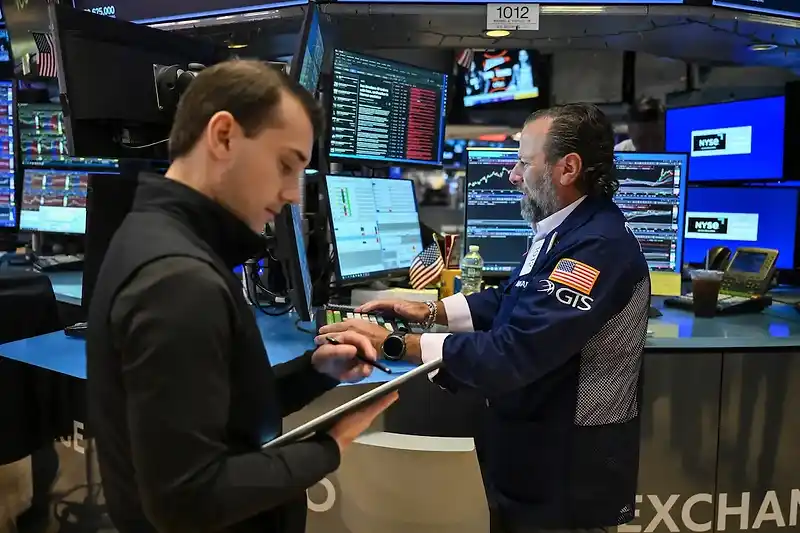
U.S. stocks surged on Monday, as Wall Street rebounded after the benchmark S&P 500 slumped to its worst week since the aftermath of "Liberation Day" in 2025.
The artificial intelligence trade bounced back, led by chip stocks. The Philadelphia Semiconductor Index climbed nearly 7% after an over 12% slump last week. However, AI bellwether Nvidia was excluded from the rally amid an unprecedented corporate governance crisis.
Meanwhile, a slide in oil prices helped sentiment as well, following some positive comments on Iran from President Donald Trump. Market participants were also looking ahead to crucial U.S. inflation data this week.
The tech-heavy NASDAQ Composite soared 2.7% to end at 25,253.14 points. The S&P advanced 2.4% to settle at 7,550.41 points, nearly wiping out all of its 2.7% collapse last week. The benchmark index also notched its best intraday performance since early April. The blue-chip Dow Jones Industrial Average jumped 2.2% to conclude at 52,389.93 points.
"Despite the shock revelations about Jensen Huang’s affair with a suspected Chinese spy which sent Nvidia’s shares plunging, markets have been upbeat,” Danni Hewson, head of financial analysis at AJ Bell, said.
“Investors were buoyed by the falling oil price and comments from the U.S. president that new strikes on Iran are ‘highly unlikely,’" she added.
Nvidia caught in the crosshairs
The big story of the day was Nvidia. The chipmaker’s board launched an independent investigation over the weekend after top boss Jensen Huang apologized to employees and admitted to an affair with Alice Huang, a businesswoman suspected by U.S. intelligence agencies of acting as a Chinese spy.
Trump weighed in on the matter, calling Huang "an honorable guy" while speaking to reporters on Sunday. Bernstein analysts said the developments would at best be a "heavy distraction" and at worst give "significant ammunition" to bipartisan lawmakers.
Separately, a New York Times report said a U.S. probe into a a Singapore-based data center company suspected of diverting advanced Nvidia AI chips to China was transferred to the Justice Department following intervention from the company, raising new questions about the firm’s influence over export-control enforcement.
Against this backdrop, shares of Nvidia closed over 4% lower. The corporate governance drama also adds another source of uncertainty after a historic crash in the AI trade in which Nvidia was also swept up.
Technology stocks stage a comeback
Last week was tumultuous for Wall Street, especially for the NASDAQ Composite. The tech-heavy gauge crashed more than 5% on Thursday alone, marking its worst day since just after Trump’s sweeping reciprocal tariffs announcement in early April 2025 and slipping into correction territory.
The driving force behind the sell-off was a sweeping Democratic victory in the U.S. midterm elections on Tuesday. In the immediate aftermath, a relief rally swept U.S. stocks on Wednesday as the election results removed a significant degree of uncertainty from markets.
But investors woke up to the realities of the possible political ramifications of the victory on Thursday. With the Democrats now in control of both chambers of Congress, concerns that the party could pursue greater regulation of the AI system and attempt to slow down the proliferation of massive data centers ballooned into panic. Traders raced to exit stocks exposed to AI, in particular chipmakers, neoclouds, and data center operators.
"There are still huge concerns about the amount of cash sloshing around and the potential that a slowdown in AI development may occur now the makeup of the Senate has changed. Many U.S. voters have expressed their concerns about the sector as a whole, in particular the build-out of massive data centers," AJ Bell’s Hewson said.
“But today’s gains suggest many investors are satisfied the AI game still has yards left to run. Some of Nvidia’s biggest rivals have been attracting particular attention today as shares in the likes of AMD and Intel enjoyed a Monday bounce," she added. AMD ended 13.3% higher, while Intel gained 5.5%.
The AI trade will again be tested this week amid a fresh slate of AI infrastructure providers reporting quarterly results.
Cloud computing provider CoreWeave, a central player in the AI infrastructure buildout, is scheduled to report on Tuesday. Thursday will see earnings from semiconductor equipment heavyweight Applied Materials and networking giant Cisco Systems.
Trump says renewed attacks on Iran ’highly unlikely’
Turning to geopolitics, a slide in oil prices also helped buoy Wall Street on Monday. Brent crude futures, the global benchmark, shed 5.6% to $92.80 a barrel, extending their slide after their worst weekly performance since late April 2020.
Speaking to CNN in a phone interview on Sunday, Trump said it was highly unlikely he would order further military offensives against Iran, provided that diplomatic negotiations to end the regional conflict continue to make progress.
Trump was also asked in a CBS 60 Minutes interview on Sunday whether he would escalate the war now that the midterm elections were over, to which the U.S. president said: "I’m not looking to. I don’t think there’s any reason to."
Oil’s slide last week came amid swiping speculation that the Democrats would now be able to use their newfound influence to force Trump, a Republican, to find a quick resolution to the conflict that began with joint U.S. and Israeli strikes on Iran at the end of February.
Eyes on inflation data after blowout jobs report
Looking at this week’s market catalysts, a chunk of the spotlight is on the U.S. consumer price index (CPI) and producer price index (PPI) reports for October, due on Tuesday and Friday, respectively.
The data will be closely pursued for cues on future Federal Reserve interest rate actions, especially after a blockbuster U.S. nonfarm payrolls reading on Friday. With inflation running well above the Fed’s long-term 2% target, the jobs report suggested that the labor market remained very strong, theoretically giving the central bank more headroom to hike interest rates.
The CPI will also be complicated by the fact that the Bureau of Labor Statistics (BLS) will not release standard 12-month percentage change figures due to the U.S. government shutdown in 2025.
"We expect headline and core inflation to clock 0.28% and 0.21% M/M, respectively. Softer core inflation would offer some relief after September’s upside surprise but should still leave our call for a December rate hike intact," Wells Fargo said last week.
As per the CME FedWatch tool, the odds of the Fed hiking in December currently stand at nearly 85%.
Ayushman Ojha contributed to this article
Related Articles
- Stock Markets News
Nasdaq futures plunge 260 points: 5 things to know before Wall Street opens
- Stock Markets News
US futures mixed after Thursday's rout: 5 things to know before Wall Street opens
- Stock Markets News
Wall Street ends lower as Alphabet revenue miss revives AI capex jitters
- Stock Markets News
Wall Street’s week ahead: As tech swoon roils market, U.S. inflation data on tap
- Stock Markets News
TSX hits six-day high, led by Celestica and metal miners