U.S. stock futures pare Nvidia-led gains as investors weigh AI risks

U.S. stock futures pared most of their earlier gains on Tuesday evening as investors weighed upbeat quarterly results and revenue guidance from Nvidia against a series of concerns surrounding the chipmaker.
S&P 500 Futures edged up 0.2% to 7,372.20 points, while Nasdaq 100 Futures rose 0.4% to 27,183.75 points by 22:32 ET (03:32 GMT). Dow Jones Futures traded flat at 50,830.0 points.
S&P 500 and Nasdaq 100 futures had initially risen sharply after Nvidia reported stronger-than-expected fiscal third-quarter earnings and forecast fourth-quarter revenue above Wall Street estimates.
Nvidia (NASDAQ:NVDA) shares traded 1.3% higher in extended trading after jumping nearly 5% earlier in the session.
Nvidia reported third-quarter revenue of about $115.8 billion, more than doubling from a year earlier and beating analyst expectations. The company forecast fourth-quarter revenue of $126 billion to $134 billion, above the roughly $125 billion expected by analysts.
However, its outlook also pointed to a potential deterioration in profitability. Nvidia expects fourth-quarter gross margins of 71% to 72%, down from 74.9% in the third quarter.
Comments from interim Chief Executive and Chief Financial Officer Colette Kress on investments and financing arrangements with customers also drew attention. Nvidia has increasingly invested in companies that are among its largest customers, prompting concerns about the extent to which its own capital commitments are supporting demand for its processors.
Kress said the company would continue supporting selected customers and data-centre projects through investments, prepayments and financing guarantees, but would apply greater scrutiny to such commitments.
The company also faces growing regulatory and political scrutiny. Former CEO Jensen Huang is scheduled to testify before U.S. lawmakers in December over national security and export-control issues, while Nvidia’s decision to exclude data-centre computing revenue from China from its latest forecast highlights the restrictions limiting its access to that market.
Nvidia stock had fallen roughly 25% in November since Huang’s departure. Huang said on Tuesday he would be willing to return if Nvidia’s board believed his reinstatement was in the best interests of shareholders and employees.
However, Nvidia Chairman Harvey Jones ruled out a comeback during the company’s earnings call, saying the board had unanimously accepted Huang’s resignation and had no plans to reinstate him.
Although the results provided evidence that demand for its processors remains strong, investors have historically shown a tendency to sell or take profits in the immediate aftermath of some of the company’s earnings announcements.
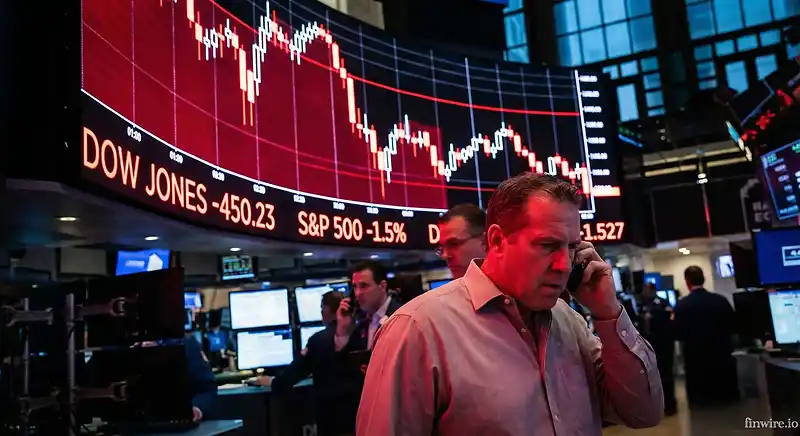
In the regular session, the Dow Jones Industrial Average fell 1.6%, while the S&P 500 dropped 1%. The NASDAQ Composite declined 0.7%. The S&P 500 and Nasdaq both recorded their first four-session losing streaks since September.
Investors remain cautious about the broader technology sector as concerns about AI valuations and the profitability of large-scale infrastructure investments persist. The upcoming market debut of Anthropic, the developer of the Claude chatbot, will also be closely watched, with the company’s initial public offering expected to seek a valuation of as much as $1.4 trillion.
Monetary policy remains another source of uncertainty. Persistent inflation has prompted Federal Reserve officials to signal greater openness to further interest-rate increases, with markets pricing in a 96% probability of a 25-basis-point rate hike in December, according to CME FedWatch.
Investors will also examine minutes from the Fed’s October policy meeting, due on Wednesday, for further clues about the central bank’s thinking on inflation and interest rates.