The memory trade: breather or breakdown for Micron and SK Hynix
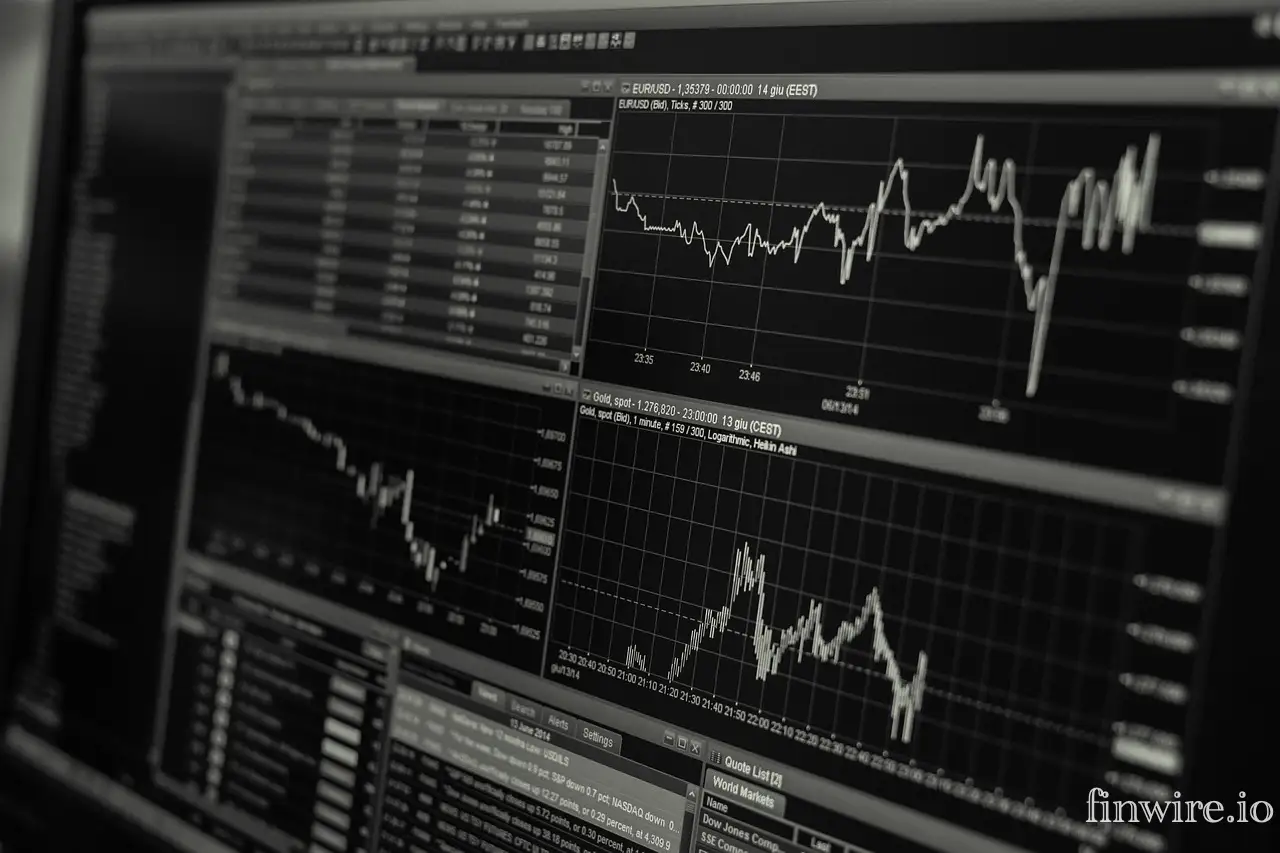
The memory trade isn’t dead — it’s catching its breath after a jaw-dropping run, with Micron down -17% in a month and SK Hynix’s new US ADR crashing -11.5% on its first week of trading, yet both names are still up +625% and +522% over the past year. The divergence between screaming short-term sell signals and a weekly "Strong Buy" on technicals tells the real story: violent deceleration, not reversal.
The Scoreboard First
| Name | Price | 1D | 1W | 1M | 6M | 1Y |
|---|---|---|---|---|---|---|
| Micron (MU) | $844.57 | -6.6% | -14.8% | -17.2% | +133% | +626% |
| SK Hynix ADR (SKHY) | $156.21 | -11.5% | — | — | — | — |
| SK Hynix Seoul (000660) | ₩1,842,000 | -11.5% | -15.7% | -22.7% | +144% | +522% |
The monthly drawdowns look alarming — until you zoom out and see the 52-week range on MU: $103 → $1,255. The current $844 is a pullback, not a collapse.
What the Charts Are Saying
The technical picture is a fascinating split personality:
- Daily timeframe → Strong Sell across every indicator for MU. RSI at 41, MACD negative, StochRSI at zero (oversold). Price is trading below its 5-day and 10-day SMAs.
- Weekly timeframe → Strong Buy. RSI at 59, MACD at +177, ADX at 52.9 (strong trend). The longer-term trend structure remains fully intact.
- SK Hynix ADR technicals are noisier given it just debuted — RSI paradoxically showing 100 (data artifact from short history) but intraday signals are uniformly bearish.
Translation: traders are taking profits on the near-term surge; the longer-cycle momentum hasn’t broken.
The Bull Case Is Structural
The fundamentals backing this trade aren’t a quarter-to-quarter story — they’re multi-year:
- HBM4 prices could double to $4–5/Gb by 2027 (from ~$2 in H2 2026), driven by 3x wafer consumption vs. standard DDR5 and months-long yield ramp times.
- SK Hynix’s CEO warned the memory chip shortage may persist beyond 2030 — one of the most forward-looking bullish statements from any CEO in this cycle.
- Micron has locked in 16 strategic customer agreements, including a long-term deal with Ford — diversifying HBM demand beyond just hyperscalers.
- By 2027, ~50% of global DRAM capacity will be tied up in long-term contracts with tier-1 AI buyers, starving smaller buyers and locking in pricing power for years.
The Bear Case Deserves Respect
HSBC met with 30+ investors across Asia last week and catalogued the real concerns:
- Chinese competition — CXMT has quietly become the world’s 4th-largest DRAM producer, and Apple is reportedly testing their chips for China-market devices.
- Meta’s cloud server entry could signal hyperscaler capex deceleration — demand risk, not supply risk.
- Diminishing catalysts — after +600% moves, the easy money is made. Future gains need to be earnings-driven.
- SK Hynix’s ADR debut at a premium to Seoul shares has already seen that premium compress sharply — classic IPO hype hangover.
The Verdict
This has the fingerprints of a breather, not a breakdown. The structural AI memory supercycle — HBM pricing power, years-long supply constraints, 3–5 year customer lockups — hasn’t changed. What changed is the ran too far, too fast, pulling daily RSI into overbought territory. The pullback is the market digesting extraordinary gains, not pricing in a new reality.
The risk worth watching: CXMT. If Chinese DRAM capacity scales faster than expected and Western hyperscalers begin qualifying it as a supplier, that’s the scenario where "breather" becomes something more serious.