S&P, Nasdaq rebound after their worst session of the year while Dow seesaws
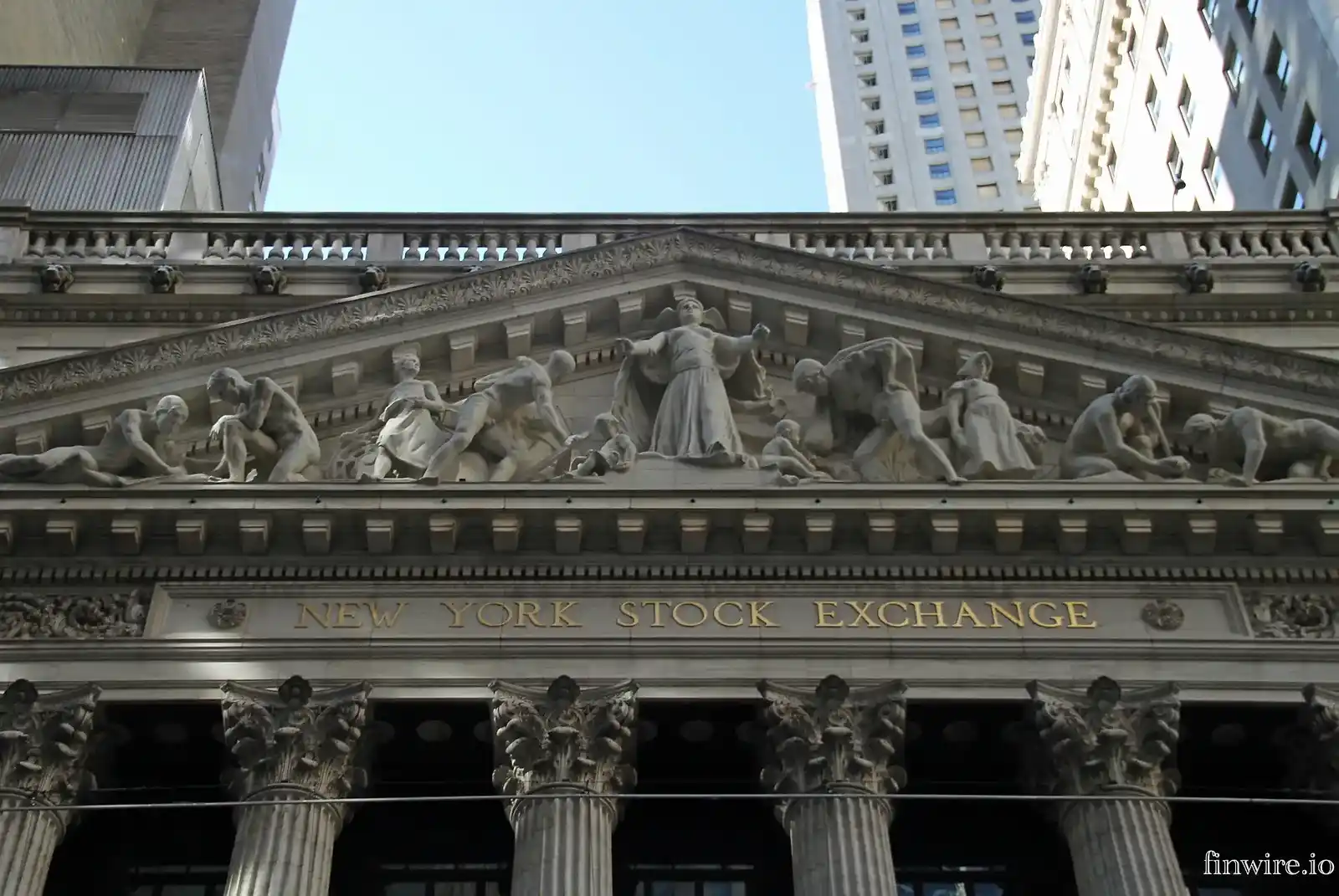
Wall Street mostly rose on Monday, rebounding from a steep sell-off in the previous session. Sentiment was buoyed by a bounce back in chip stocks and a media report that Iran had ended military operations against Israel, soothing some jitters after renewed strikes between the two countries.
At 14:25 ET (18:25 GMT), the benchmark S&P 500 index was up 0.7% to 7,431.82 points, while the tech-heavy NASDAQ Composite advanced 1.3% to 26,035.88 points. The blue-chip Dow Jones Industrial Average was muted, last up 0.1% to 50,889.95 points.
U.S. stocks coming off their worst day of the year
Equities on Friday suffered heavy losses, with the S&P sliding nearly 3% and notching its worst day of this year. The gauge also snapped a nine-week winning streak, its longest such run since December 2023. The Nasdaq was hit even harder, cratering more than 4% to post its worst daily performance in over a year.
The decline was largely sparked by a blowout May jobs report that led to market participants raising their expectations for interest rate hikes by the Federal Reserve. That in turn drove a bond sell-off, boosted U.S. Treasury yields, and put pressure on rate-sensitive stocks such as those in the technology sector.
"A pause in the stock market’s 9-week positive run off of the March lows is entirely understandable. We believe Friday’s pullback was a healthy reset for stocks and is not the start of something more worrisome, especially since fundamentals continue to strengthen from better-than-expected earnings and economic data," Carol Schleif, chief market strategist at BMO Wealth Management, said.
"Friday’s stronger-than-expected jobs report is further confirmation of a solid economy, which continues to support stocks moving higher longer term. Any hope of a Federal Reserve rate cut has been delayed, but we don’t think stocks need rate cuts to move higher. It’s been six months since the Fed last cut rates, and yet stocks have been surging," she said.
"While the recent strength in the labor market takes Federal Reserve rate cuts off the table for now, it also doesn’t necessarily call for a rate hike either. Signs of improvement in the labor market are still tentative, and we doubt the Fed will want to run the risk of disturbing that fragility, especially as they watch to see if the recent elevated inflation data has staying power or not," Schleif added.
Inflation data back in focus after labor market updates
Speaking of inflation data, the attention this week will be on the closely-watched U.S. consumer price index (CPI) and producer price index (PPI) reports for May scheduled on Wednesday and Thursday, respectively.
With last week’s indicators on the job market suggesting that the maximum employment part of the Fed’s dual mandate was under control, the central bank’s focus is now squarely on the inflationary wave emerging from surging oil prices due to the Middle East conflict. The central bank closely monitors specific components from the CPI and PPI data that feed into its preferred inflation gauge - the core personal consumption expenditures (PCE) price index.
"Our economists expect energy to play a key role in May’s CPI, with a sharp increase in petrol prices (around +6.8% seasonally adjusted) lifting headline inflation more than core," Deutsche Bank’s Jim Reid said.
"Thursday’s PPI release will be an important complement to the CPI, particularly as it informs the Fed’s preferred PCE inflation measure. Our economists expect PPI to rise by around +0.5% month on month, following a strong April print. Based on current CPI assumptions and the PPI categories that feed into PCE, they are ex ante tracking core PCE inflation of around +0.33% in May, which would push the year on year rate up to roughly 3.4%," Reid added.
Trump defuses rising tensions between Israel and Iran
Turning to the Middle East, over the weekend there was a rapid rise in tensions after Iran and Israel attacked each other with strikes for the first time since a shaky ceasefire between all warring parties took effect in April.
Media reports said the latest exchange began with an Israeli strike on the Lebanese capital of Beirut. Israel had been fighting Iran-backed Hezbollah militants in Lebanon, although the conflict had not escalated beyond low-key skirmishes until this weekend. Tehran then responded with attacks of its own, sparking a retaliation from Israel that its military says hit targets in central and western Iran.
President Donald Trump took to his Truth Social service to publicly try and defuse the situation, calling upon Israel and Iran to stop "shooting" and asserting that both sides were "looking to do an immediate CEASEFIRE!"
"Final negotiations on ’Peace’ are proceeding, subject to ignorance or stupidity getting in its way. The Blockade will remain in place, and in full force and effect, until a ’Final Deal’ is reached. Things should move quickly," the president said, suggesting that the fresh strikes would not impact his administration’s effort to forge a peace deal with Iran.
Oil prices jumped early on Monday amid the rising tensions, but then received a major reprieve after Iran’s state media said Iran’s armed forced had announced the end of military operations against Israel. Meanwhile, Israeli Prime Minister Benjamin Netanyahu in a televised statement said that Israel will halt its attacks on Iran "for now," vowing to respond with "great force" if Tehran attacks the Jewish state again.
The benchmark crude contracts quickly pared gains after the statements from Iran and Netanyahu. Brent crude futures, the global oil benchmark, were last up 1.3% to $94.26 a barrel, having earlier climbed to as much as $98.07 a barrel. Prices still remain significantly above pre-war levels of around $70 a barrel. The continued shuttering of the critical Strait of Hormuz has led to the biggest supply disruption in history and an inflationary shock across the world.
Chip stocks resume climb, Marvell to join S&P 500
Looking at Monday’s active stocks, semiconductor names rallied after slumping in the previous session. The Philadelphia Semiconductor Index was last up 6.7%, while major names such as Intel, Micron, and KLA were among the top percentage gainers on the Nasdaq Composite.
Marvell Technology ranked first among the Nasdaq’s percentage gainers, with the stock rising 14.2% after S&P Dow Jones Indices said the chipmaker would be added to the benchmark S&P 500 index. Marvell shares have seen a lot of positive momentum recently, after the firm forecast more than $10 billion in revenue in fiscal 2029 from its custom-chip business and Nvidia top boss Jensen Huang called it the next "trillion-dollar company."
Elsewhere, Eli Lilly advanced 2.1% after results from the drugmaker’s trial of its next-generation drug showed the treatment helped with weight loss, knee pain, and sleep apnea.