TSX notches one-week high as commodities rally
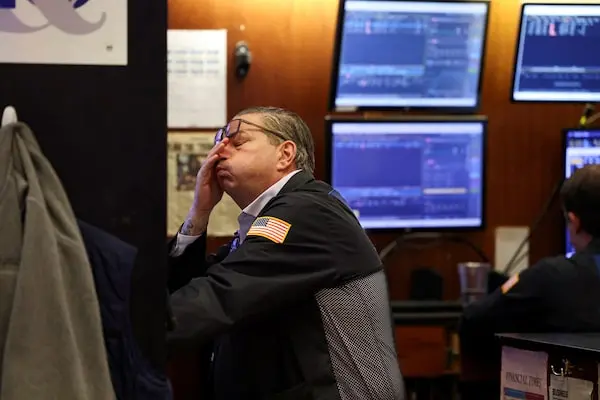

Brendan McDermid/Reuters
Canada’s main stock index clawed back its earlier declines to notch a one-week high on Wednesday, as commodities prices rose and a selloff in technology shares lost some momentum ahead of the US Thanksgiving holiday.
The S&P/TSX Composite Index ended up 217.69 points, or 0.6 per cent, at 34,179.99, its highest closing level since last Wednesday.
The S&P 500 and the Nasdaq retreated amid a tech selloff but finished well off the day’s lows. Wall Street has been roiled this month by worries about AI-related stocks, while news that the US proposed new tariffs on goods from 14 trading partners added to downbeat sentiment.
“A lot of the sellers cleared out and you’ve got bargain hunters stepping in, trying to push the market back up before the holiday,” said Colin Cieszynski, chief market strategist at SIA Wealth Management. “It’s not unusual to see this happen before holidays and long weekends.”
The U.S. market will be closed on Thursday for the Thanksgiving holiday and will close early on Friday
“I think we’ll likely see people take a breather and reassess over the rest of the week and then we’ll see what next week brings,” Cieszynski said
The materials sector, which includes metal mining shares, rallied 3 per cent.
Gold added 0.4 per cent. Earlier in the day, the precious metal touched its lowest level in more than one year as U.S. inflation data reinforced expectations that the Federal Reserve will raise interest rates next month.
U.S. crude oil futures settled nearly 2 per cent higher at US$83.68 a barrel after Yemen’s Houthis said they had attacked Saudi Arabia’s largest oil refinery.
Energy was up 1 per cent and industrials ended 0.9 per cent higher.
Five of the major sectors lost ground, including technology. It was down 0.6 per cent, with shares of electronic equipment company Celestica losing 2.8 per cent.
The S&P 500 and the Nasdaq retreated on Wednesday amid a tech selloff, but finished well off the day’s lows as bargain hunters stepped in ahead of the U.S. Thanksgiving holiday.
The Dow finished higher.
The Nasdaq had been more than 4 per cent lower earlier in the session as the selloff in AI-related stocks and new US tariff proposals hit sentiment.
“There are all these potential headwinds, but then there’s also a certain amount of conditioning of buying on the dip, and that’s part of what we’re seeing,” said Oliver Pursche, senior vice president and adviser for Wealthspire Advisors in Westport, Connecticut.
“The broad selloffs tend to kind of throw the baby out with the bathwater. Investors are taking advantage of some of those discrepancies,” he said.
Technology led declines among S&P 500 sectors, while materials and real estate were among top sector gainers.
Wall Street has been roiled this month, partly because of worries about AI leader Nvidia. Jensen Huang resigned as CEO earlier this month, but the company’s board reinstated him on Monday. The S&P 500 is down roughly 5 per cent for the month.
Volume was lower than average ahead of the holiday. The market will be closed on Thursday and will close early on Friday.
According to preliminary data, the S&P 500 lost 18.01 points, or 0.25 per cent, to end at 7,183.08 points, while the Nasdaq Composite lost 154.10 points, or 0.65 per cent, to 23,579.44. The Dow Jones Industrial Average rose 155.20 points, or 0.31 per cent, to 50,173.90.
Nvidia shares fell along with an index of semiconductors as the tech selloff deepened.
Fears of increased regulatory scrutiny of the AI sector following the Democratic sweep in the US midterm elections have added to worries about AI stocks. Early in the day, the Nasdaq 100 briefly fell 20 per cent from its record closing high, flirting with bear-market territory.
Investors were also digesting news that the U.S. proposed new tariffs on goods from 14 trading partners to combat what it calls structural excess industrial capacity, reviving global trade tensions.
Data showed the U.S. economy grew much faster than initially estimated in the third quarter, while inflation increased further in October, reinforcing expectations that the Federal Reserve will raise interest rates next month and again in early 2027.
The extra tariffs could cloud the outlook for investors grappling with the prospect of interest rates staying higher for longer, as inflation has accelerated and oil prices have risen steadily due to the US-Iran war.
Reuters