Nvidia’s deeper risks predate Huang’s scandal
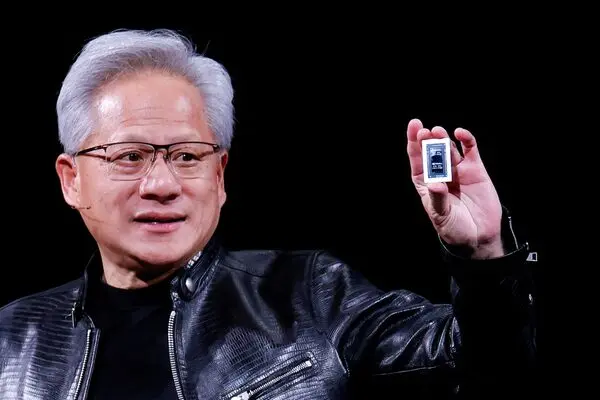

Former Nvidia CEO Jensen Huang introduces the RTX Spark GPU during a keynote address on the sidelines of the annual Computex in Taipei, Taiwan, June 1, 2026.Ann Wang/Reuters
As investors digest the latest twists in scandal-hit Nvidia’s (NVDA-Q) evolving drama, it’s worth remembering that they had already started to sour on the world’s erstwhile AI darling well before former CEO Jensen Huang resigned. That may be far more worrying for the AI trade.
Nvidia offered investors some relief on Tuesday, delivering bumper third-quarter revenue and earnings, as well as sales projections that exceeded Wall Street estimates. Nvidia’s shares rose as much as 5 per cent in extended trading.
This comes after Nvidia’s share price tanked nearly 40 per cent from its record high on October 6, wiping some US$2-trillion off its market capitalization and knocking the firm off its pedestal as the world’s most valuable company.
Importantly, the bulk of Nvidia’s share price decline came before Huang admitted on November 8 to having an affair with Alice Huang, an executive at Singapore-based Megaspeed and alleged Chinese spy. His resignation came four days later following allegations of improper relationships with Nvidia employees.
There is suddenly a plethora of reasons why investors may think twice about buying Nvidia shares, such as trust and accountability, the board’s leadership, and U.S. national security concerns amid external investigations, including a reported probe by the US Securities and Exchange Commission.
But just as worrying may be the gnawing unease investors have about Nvidia’s customer financing, long-term demand for its chips, and the AI business model – all of which predate the scandal.
Nvidia’s fall from favor has been rapid. This should probably come as no surprise, given how meteoric its ascent was.
It is one of only 10 firms since 1960 to hold the title of the largest company in the S&P 500, according to JPMorgan Private Bank’s Michael Cembalest. That’s a remarkably small number and would be even smaller were it not for Cisco’s three days at the top in 2000.
Nvidia’s epic rise was the fastest of them all. Its share of the S&P 500 in December 2022 was 1 per cent. By May this year, it was 8.5 per cent. Revenue and profit growth have exploded thanks to soaring demand for its chips from hyperscalers and so-called “neocloud” AI partners that Nvidia has often helped finance.
It’s unclear how committed interim CEO and former chief financial officer Colette Kress is to this model. On the earnings call on Tuesday, she said Nvidia will be “disciplined” and selective in its capital commitments, investments, and guarantees, although she said there are no plans to change its backstops for “neocloud” companies.
Should that position change, however, companies like CoreWeave (CRWV-Q), Nebius (NBIS-Q), IREN (IREN-Q) and Applied Digital (APLD-Q), whose shares have already tumbled steeply in recent months, could fall further.
This shines a spotlight on the AI vendor financing trend. The Bank for International Settlements published a special report on the subject last month, which found that between 2021 and 2025, nearly 30 per cent of all AI firms’ investment deals by value involved an AI firm on the other side. Meanwhile, 55 per cent of incoming investments in AI firms came from other AI firms.
The authors warned that such circular relationships can artificially inflate demand, which can become a problem if revenue growth and real end-user demand slow. The AI flywheel could then go into reverse, potentially leading to “significant financial market volatility,” the BIS warned.
This risk is exacerbated by the fact that many of these deals are opaque, complex, and private, making them difficult to monitor and supervise.
“These risks may be magnified by the growing use of private credit and special purpose vehicles to finance AI infrastructure, which can create hidden leverage and interconnected exposures that amplify financial stress during downturns,” the BIS authors wrote.
The AI sector is clearly in a downturn on Wall Street right now, with the Philadelphia Semiconductor Index dropping nearly 30 per cent in the last six weeks. AI’s crown jewel may have just released sparkling results, but they are not bright enough to obscure the deep-rooted, mounting concerns about the AI ecosystem.