Morgan Stanley warns major banks in Australia face potential earnings downgrades
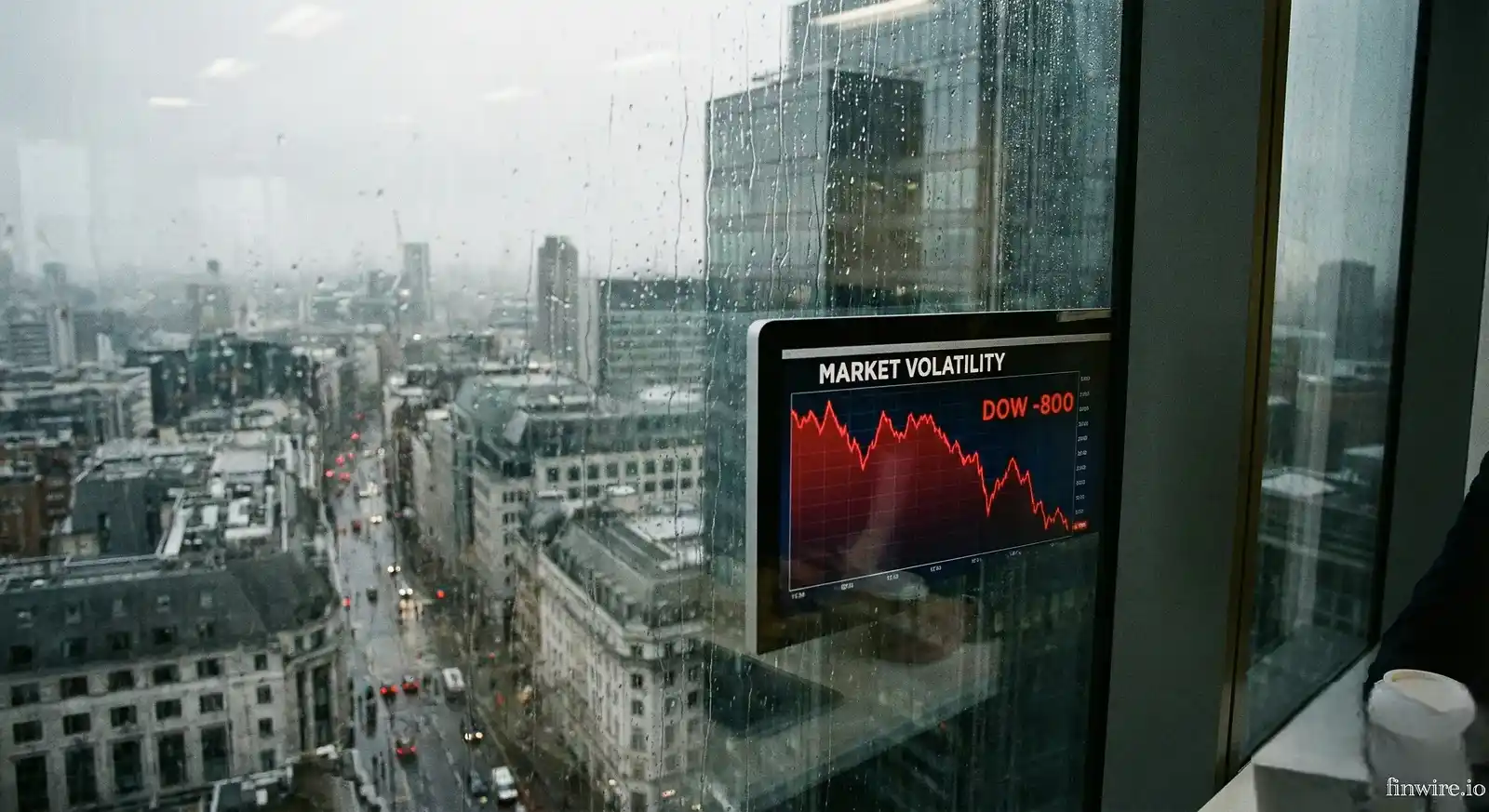
Morgan Stanley has outlined potential downside scenarios for Australia’s major banks amid growing economic uncertainty, suggesting earnings could be downgraded by 7-11% on average for fiscal year 2027.
The investment bank has not changed its current forecasts for the major banks but has analyzed two slowdown scenarios that could impact earnings. These scenarios assume slower loan growth and rising impairment charges returning to pre-COVID levels.
Under these scenarios, National Australia Bank (ASX:NAB) faces the largest potential downgrade range of 9.5-14.5%, followed by Commonwealth Bank of Australia (ASX:CBA) at 6-9%, Australia and New Zealand Banking Group (ASX:ANZ) at 5.5-10%, and Westpac Banking Corporation (ASX:WBC) at 5.5-9.5%.
Morgan Stanley noted that the banking sector has experienced stronger loan growth, better margins, and low loan losses over the past 6-12 months. However, recent developments could fundamentally shift operating conditions, according to the firm.
The uncertain environment raises the risk of both earnings downgrades and a de-rating, increasing the probability that banks underperform the ASX200 in 2026, Morgan Stanley said.
Should the outlook deteriorate, the firm’s analysis suggests CBA’s share price would be the most resilient, while NAB would be the most exposed to slowdown scenarios. ANZ is considered less vulnerable than in the past, according to the analysis.
Morgan Stanley currently forecasts an average fiscal year 2027 loss rate of 10 basis points of total loans or 28 basis points of non-housing loans.
The firm’s bear case valuations are an average of 32% below current prices. These valuations factor in low-single-digit loan growth, mid-single-digit margin decline, and loss rates of 15-20 basis points of loans. This would imply fiscal year 2027 earnings downgrades of 12-17% versus the base case and a return on equity range of 8.5-12.5%.
Morgan Stanley applies bear case price-to-book value multiples of 1.3-2.2 times in this scenario, compared with current multiples of 1.6-3.8 times and COVID lows of 0.7-1.4 times.