Money managers find bargains after sell-off in nuclear sector
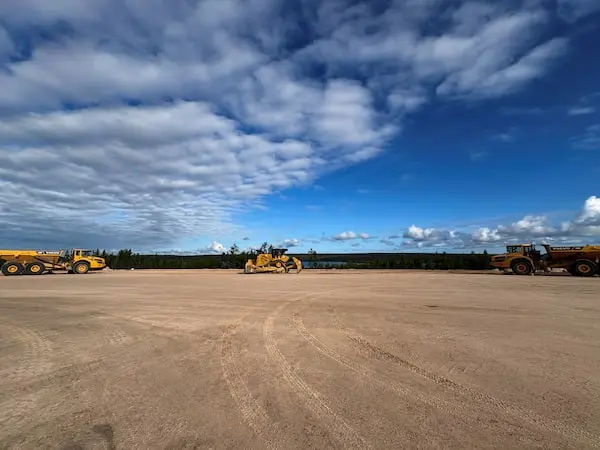

NexGen Energy has started construction on its Rook uranium mine in Saskatchewan's Athabasca Basin.Divya Rajagopal/Reuters
A sell-off in uranium and nuclear energy stocks after last year’s strong rally has created bargains amid growing tailwinds.
A nuclear revival emerged as a result of soaring electricity needs from power-hungry artificial intelligence data centres, government policies to build reactors and rising global demand for clean energy to meet climate goals and for a reliable source of baseload power.
“There are buying opportunities, but one needs to be selective,” says Dragos Berbecel, chief investment officer and portfolio manager at Portland Investment Counsel Inc. in Burlington, Ont.
In the small modular reactor (SMR) space, there are public and private companies with competing designs, but only a few will be winners, says Mr. Berbecel, who oversees Portland Replacement of Fossil Fuels Alternative Fund.
The sharp drawdown in nuclear stocks stems from “high expectations and hype” after U.S. technology firms partnered with advanced nuclear and SMR developers, as well as concerns about whether AI data spending can generate enough profit, he says.
Still, the industry has gained government support in North America and globally. U.S. President Donald Trump signed executive orders last year to overhaul regulations to fast-track nuclear power development. In June, the Canadian government launched a nuclear energy strategy to build up to 10 new large-scale reactors.
During the downturn, Mr. Barbecel started a new position in X-Energy Inc. XE-Q, an SMR developer backed by Amazon.com Inc. AMZN-Q, and added to Centrus Energy Corp. LEU-Q, an enriched uranium fuel supplier and GE Vernova Inc. GEV-N, an energy equipment maker and services company.
He also added to his fund’s holdings in Australia-based Silex Systems Ltd. SILXF, a developer of laser-based uranium enrichment technology, and South Korea-based nuclear reactor builders KEPCO Engineering & Construction Co., and Doosan Enerbility Co.
Mr. Berbecel also bought more shares of Saskatoon-based uranium miner Cameco Corp. CCO-T, which offers refining, conversion and fuel manufacturing services.
Cameco has a 49-per-cent stake in U.S.-based Westinghouse Electric Co., which has a strategic partnership with the U.S. government to build large-scale Advanced Passive 1000 reactors, known as AP1000 reactors.
Cameco should benefit from Westinghouse’s proposed initial public offering (IPO), which “will establish a clear valuation for its stake being carried at a book value of $2.6-billion,” he says.
Nawojka Wachowiak, senior portfolio manager at Ninepoint Partners LP in Toronto, is bullish on the sector because of rising uranium demand amid tight supply and growing government support for new reactors.
Countries such as India are signing contracts for uranium while Poland is planning a nuclear fleet, says Ms. Wachowiak, who owns some uranium miners in her Ninepoint Mining Evolution Fund.
Uranium’s long-term contract price, which is negotiated by utilities, is around US$97 a pound, approaching the US$100 mark for the first time, she says. “That’s very strong demand.”
The spot price, which rose above US$100 a pound in January, has drifted down to the US$90 level. It trades heavily on sentiment and is affected by uranium purchases by physical uranium trusts and exchange-traded funds, she notes.
Given this year’s pullback in uranium equities, “we’re buying some more of our favourite names,” Ms. Wachowiak says.
Although Cameco is a top large-cap holding, her fund also owns uranium developer NexGen Energy Ltd. NXE-T, which has started construction on its Rook 1 project in northern Saskatchewan.
“It has the potential to be the largest new uranium mine in the world,” she says, adding that NexGen is a potential takeover target.
Her fund also holds Vancouver-based Atha Energy Corp. SASK-X, an explorer. Its stock has been strong, she says, because of the possibility of a new uranium greenfield discovery at the Angilak project in Nunavut.
Matt Sallee, head of investments at Tortoise Capital in Overland Park, Kan., says the sell-off indicates some companies, particularly SMR developers NuScale Power Corp. SMR-N and Oklo Inc. OKLO-N, got ahead of themselves.
The pullback is a “buying opportunity” for the long term because there’s uncertainty in the shorter term about the direction of interest rates and geopolitical tensions, says Mr. Sallee, whose firm launched the actively managed Tortoise Nuclear Renaissance ETF TNUK-A in December, 2025.
The speed of AI development will also affect the nuclear energy space, he says. “We’ve seen a bit of an air pocket in the AI trade, and nuclear and AI infrastructure tend to correlate.”
The Tortoise ETF has become more defensive, with lower weights in power producers, such as Vistra Corp. VST-N and Constellation Energy Corp. CEG-Q, because of regulatory uncertainties.
More money has been deployed in engineering and construction firms with recurring cash flows tied to maintaining or extending the life of shuttered U.S nuclear reactors, he adds.
The major ones that were closed include Holtec Nuclear Corp.’s Palisades plant in Michigan, Constellation Energy’s Three Mile Island Unit 1 in Pennsylvania and NextEra Energy Inc.’s NEE-N Duane Arnold Energy Center in Iowa.
Mr. Sallee says Rolls-Royce Holdings PLC and Doosan Enerbility are new positions in the ETF, while additional shares were added to Atlanta-based Mirion Technologies Inc. MIR-N.
The Tortoise ETF also holds Cameco, which provides exposure to nuclear plant maintenance and new construction, while its AP1000 is basically the go-to reactor in the industry, he says.
AtkinsRealis Group Inc. ATRL-T, an engineering and construction firm that builds the Candu reactors, is also a top holding. Its nuclear contribution is growing rapidly, and its engineering side provides stability around the cyclicality of new construction, he adds.
A risk in the nuclear space stems from execution in building reactors on schedule and on budget, pushback by communities who don’t want reactors near them, and a potential nuclear accident, he says.
But chances of a nuclear disaster are lower now, Mr. Sallee says. “The technological ability to monitor what’s going on in the reactors has significantly improved, while there are more safety regulations.”