Memo to Tiff Macklem: Stop hiking interest rates or risk ruining this economy and stock market
Before he departs next June, the Bank of Canada Governor should halt the hikes - it’s not helping in the inflation fight

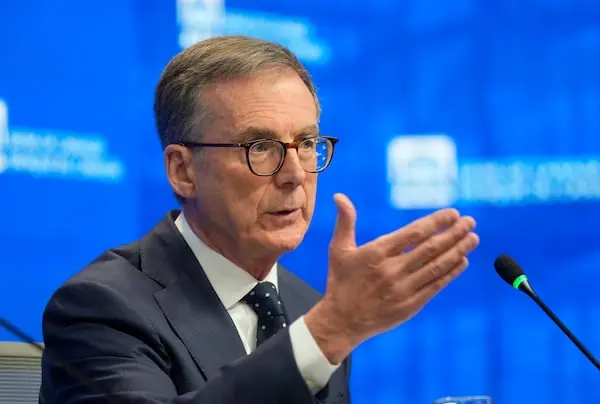
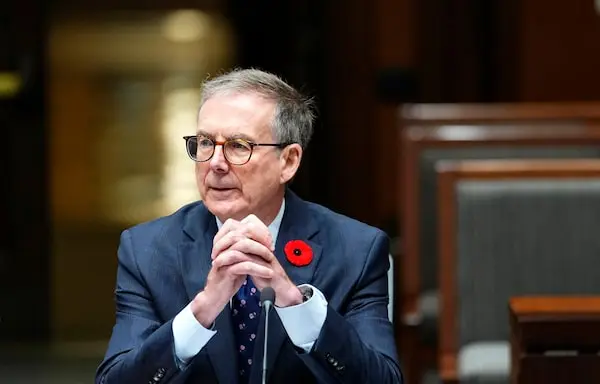
Bank of Canada Governor Tiff Macklem confirmed on Monday that he won't seek a second term.Justin Tang/The Canadian Press
Listen to this article
Learn more about audio
What should outgoing Bank of Canada Governor Tiff Macklem do before departing next June? Halt the hikes! Raising interest rates won’t reopen the Strait of Hormuz or cut energy prices, or trim your mortgage or grocery bills. If continued, it might stifle lending and whack GDP. The BoC should stop hiking before it goes too far.
Globally, 2022’s red-hot inflation terrified central bankers, BoC brass included. Now they see ghosts. They think high oil prices risk pumping all prices higher. They think AI data centre buildouts and U.S. tariffs add inflation tinder.
They all think wrongly, ignoring that 2022’s hot inflation was their own mistake. Wrong-headedly exploding the COVID-era money supplydrove it. But most policy-makers were wrongly trained economically.
Hence the BoC isn’t alone in its half-baked hiking. The U.S. Federal Reserve, the European Central Bank (twice) and the Reserve Bank of Australia (five times!) all have hiked, too. Ugh!
Search for new BoC governor begins as Macklem confirms he won’t seek second term
I don’t discount the frustration of war-driven gasoline prices’ sting. But as I wrote in May, high oil prices alone never spur true, long-lasting, economy-wide inflation. They drive substitution, mostly dampening luxury goods demand, transitioning it into cheaper near-substitutes (think beef to bologna, or beer to hard liquor).
Consider 2026. January’s consumer price index (CPI) inflation hit 2.3 per cent. By May, it hit 3.2 per cent. Many foresaw further upticks. It since wiggled slightly lower to October’s 3.1 per cent. Inflation didn’t bleed elsewhere. Excluding energy, prices rose 3.2 per cent year-over-year in January. In October? Just 2.0 per cent! Inflation outside energy is slowing, not speeding – sharply, too!
In the U.S., the CPI spiked in March but eased through September, too. Exclude energy and it went nowhere: September’s 2.6 per cent year-over-year matched January’s rate. (October’s year-over-year rate can’t be calculated, since the U.S. 2025 government shutdown prevented data collection that October.) That was all before the Fed hiked. The eurozone saw the same trend.
Yes, war uncertainty drives oil prices’ recent swings. Sentiment chop will come and go. But fundamentally, the effects of the Strait of Hormuz’s closure are waning. Middle East oil exports now match pre-war levels. Thank Saudi and UAE pipelines and increased production in the Americas, and stealthy oil transfers from small ships to large ships, too. Soon depleted reserves will refill and prices will fall markedly.
Central bankers should ignore oil and start looking inward. Energy didn’t drive 2022’s nosebleed inflation. Central banks did, including the BoC. They massively spiked the quantity of money reacting to COVID. As Nobel laureate Milton Friedman taught 60 years ago, inflation is always about too much newly created money chasing too few goods and services. Always! Everywhere! Only.
Money supply growth is tame today. Canada’s M2++ (the country’s benchmark) was up 6.3 per cent year-over-year in August, below the 8.9-per-cent average since accurate data started from 1969 – and nowhere near early 2021’s inflation-inducing 14.4 per cent. The U.S.’s M4 money-supply growth is 7.4 per cent year-over-year – too high and above its 5.9-per-cent historical average, but tiny relative to June 2020’s uber-inflationary 30.5 per cent. Eurozone M3 is up just 3.5 per cent year-over-year, trailing its 4.6-per-cent 20-year average. Minimal inflation tinder.
A few hikes won’t wreck global GDP or stocks. Hikes aren’t auto-negative. Five-hike Australia enjoys steady 2026 GDP growth. And the MSCI Australia Index matches the MSCI World Index’s 14-per-cent year-to-date gain through Nov. 16.
To fathom rate hikes’ economic impact, understand yield curves – the gap between short-term and long-term interest rates. Banks borrow short-term money to fund long-term loans. When long-term rates top short-term ones, new loans are profitable. Profitability fosters lending and GDP growth.
Carney boldly strikes at the heart of Canada’s antiquated banking system
When short-term rates top long-term, the yield curve is “inverted.” Lending becomes unprofitable – so banks constrict credit. GDP suffers. Hence an inverted yield curve is a recession warning (albeit an imperfect one).
That isn’t now. Canada’s key 10-year minus three-month yield curve spread was 1.29 percentage points (ppts) at 2025’s start. Through Nov. 16, it remains at 1.22. That spread spurs lending.
Globally, most spreads are positive, too – for now. Since December, the U.S. spread climbed from 0.54 to 0.90 ppts. Germany’s stayed around 0.83 ppts. The U.K.’s is 1.02, up from 0.74. France’s jumped to 2.05 from 1.53! Bullish!
Australia is the outlier. Its yield curve spread started January at 1.11 ppts. But five hikes later, that shrank to just 0.29 ppts. That is where the BoC and other central banks are headed if they keep hiking.
So yes, Mr.Macklem and crew have wiggle room. But some of that results from long-term rates rising, which I expect to reverse soon (more on that in next month’s column). Continued tightening risks flattening or inverting global yield curves, choking lending and GDP and whacking stocks.
Today calls for central bank patience, not tightening. Mr.Macklem should halt the hikes before he departs.
Ken Fisher is the founder, executive chair and co-chief investment officer of Fisher Investments.