Grocery prices haven’t yet seen a big hit from pricey oil – that’s about to change
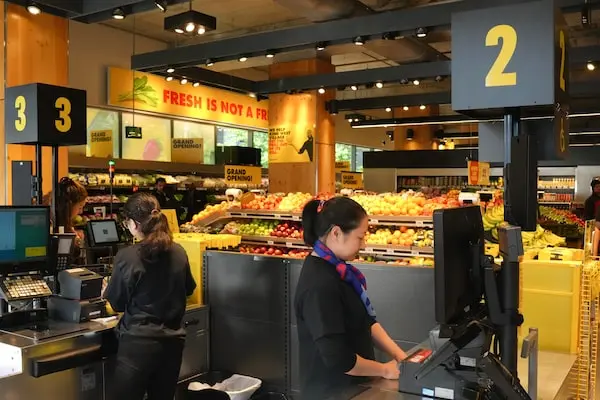

Chris Young/The Canadian Press
As fuel costs began soaring earlier this year, economists anticipated that higher prices would work their way down the supply chain, ultimately increasing consumer grocery bills.
By October, however, groceries in Canada were about 0.9-per-cent cheaper than they were in March, before seasonal adjustment, according to Statistics Canada.
Fruit and vegetable prices tend to come down in October because of the Canadian harvest, but what’s notable is they didn’t decline as much as they did last year, says Michael von Massow, a food economist at the University of Guelph. Fresh vegetable prices, for example, fell 1.8 per cent from September to October, compared with 6 per cent over the same period last year.
“I think that’s a sign that diesel prices, even for local produce, are affecting prices,” Mr. von Massow said.
Shoppers may start feeling the impact of higher diesel costs this winter, particularly in the produce aisle, experts say. Diesel’s influence could be more noticeable because Canada is entering its non-growing season, which means grocers will truck in more fruits and vegetables from farther away. The effects could start showing as early as the end of 2026.
Opinion: High food prices might be the most toxic form of personal-finance adversity in the past six years
Mr. von Massow, for example, said Canadians will start to see “more than regular seasonal increases” in prices as the country imports more food in the winter from further distances, particularly fresh produce. He expects fresh greens will get more expensive in November, for instance, as grocers import from Southern California.
“They need refrigeration, which burns even more diesel and they’re coming a long distance,” he said, adding that transportation accounts for about 12 to 15 per cent of the shelf price of fresh produce. As an example, he said a 50-per-cent rise in diesel prices could leave fresh produce prices 7 to 8 per cent higher than they would otherwise be because of freight costs. Further, grocers also pay U.S. dollars for U.S. produce, so a weaker Canadian dollar can raise costs.
Diesel prices remain elevated as it is still costly to ship out of the Middle East, and refinery disruptions tied to global conflict have also limited diesel production, said Graeme Crosbie, a senior economist at Farm Credit Canada.
“We’re probably looking at elevated diesel prices for the next six months, presumably,” Mr. Crosbie said.
Diesel has an impact all across Canada’s food supply chain, he said, from farmers running equipment to distributors delivering to grocery stores. Farm machinery fuel, for instance, was up roughly 52 per cent in the second quarter from the year prior.
While Mr. Crosbie doesn’t see fuel’s impact on grocery prices in the Consumer Price Index just yet, there are a few reasons for the delay. Fixed rate contracts can act as a buffer against rising costs, and retailers may also be drawing down from their inventory of goods before replenishing them at higher prices, he said.
Opinion: However bad your grocery bill is, it will get worse
“But eventually, if these costs stay elevated, those buffers are going to fade and we’d likely see some upward pressure at the retail level.”
Historically, there is a six- to 12-month lag between an energy shock and a change in food prices, and we’re currently in that window, he added. He expects higher diesel costs to be reflected in food data by the end of the year.
As for now, Michael Graydon, chief executive officer of Food, Health and Consumer Products of Canada, says manufacturers are largely not passing those costs on to retail, despite the pressure manufacturers are facing.
“I’d say that retail has also been very resistant to accept any sort of increases related to fuel costs, so I don’t think you’re starting to see the impact necessarily in grocery prices at this point,” Mr. Graydon said.
Gary Sands, senior vice-president of the Canadian Federation of Independent Grocers, says independent grocers have been receiving letters from suppliers for months about fuel surcharges.
“The difference between independents and the chains is the suppliers just tell us what the price increase will be,” Mr. Sands says. “There’s a little more negotiation that goes on between them and the chains when they present those increases,” he added.
The Globe and Mailreported in April that Maple Leaf Foods added a new fee charging as much as $2,200 in additional costs per 20,000-kilogram tractor-trailer of food.
Like Mr. von Massow, Mr. Sands says diesel costs will be felt more significantly as Canada heads into the non-growing season and relies more on imports.
Some parts of the country, such as rural and remote communities, where food travels farther, will feel those increase more significantly than others, he said.