Goodbye, RRIFs? What Ottawa’s proposed ‘RRSP-for-life’ means for retirees
Government wants to spare account holders and their survivors from needless paperwork, but proposed changes could take years to become reality

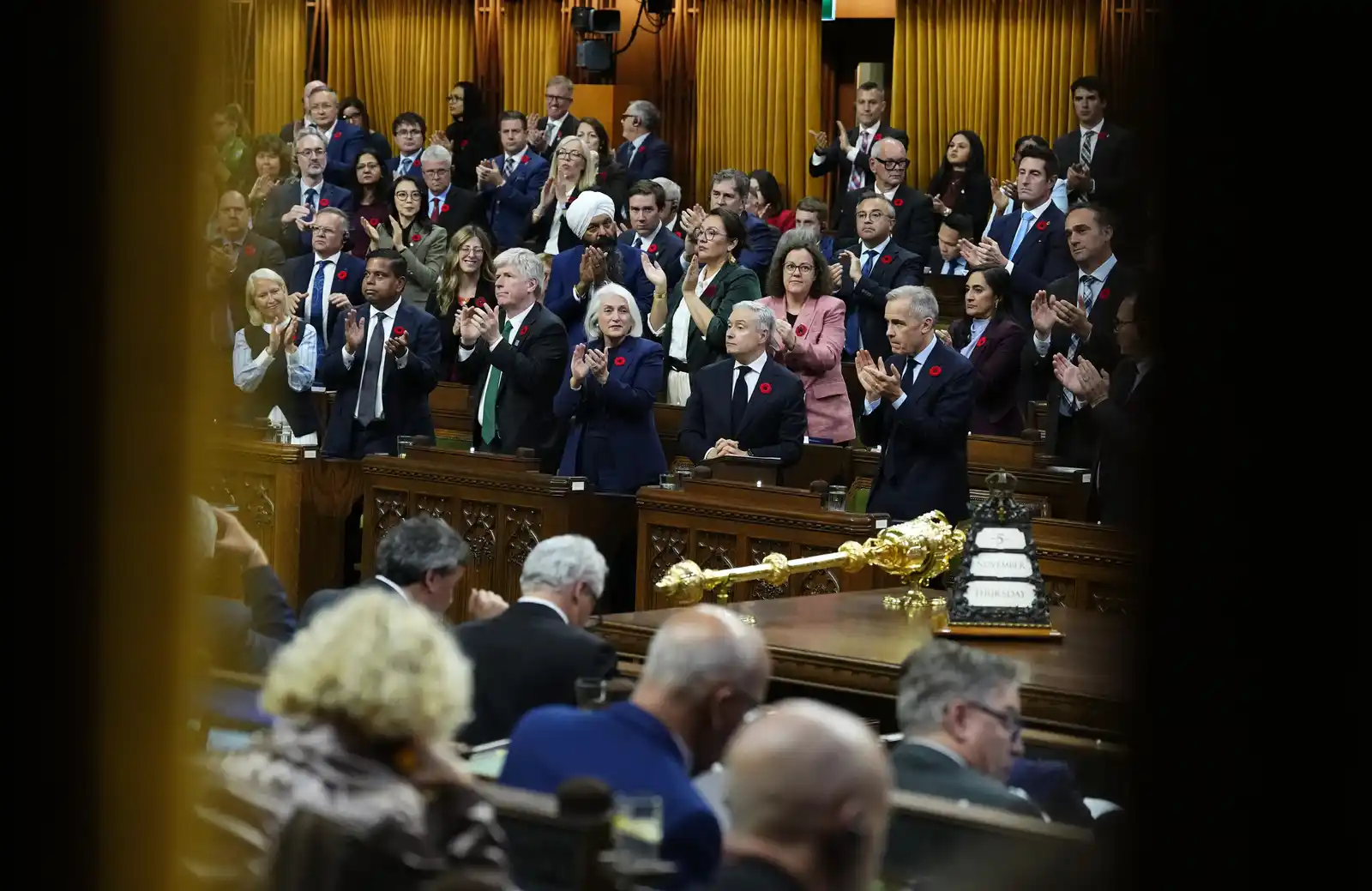
The federal budget, announced in the House of Commons on Thursday by Finance Minister François-Philippe Champagne, proposes combining the RRSP and the RRIF into a single account.Justin Tang/The Canadian Press
The federal government wants to do away with the registered retirement income fund, or RRIF, to spare account holders and their survivors from needless paperwork, but the proposed changes could take years to become a reality.
The 2026 federal budget, released Thursday, proposes combining the registered retirement savings plan, or RRSP, and the RRIF into a single account, dubbed an “RRSP-for-life.”
Canadians would no longer have to convert their RRSPs into RRIFs by the end of the year they turn 71, although they would still be required to start minimum withdrawals by then.
The changes would also streamline how retirement savings are transferred to spouses and other eligible survivors after someone dies.
Financial planners say the changes would largely simplify administrative requirements, but questions remain about how existing retirement savings and tax rules would apply.
“It is a significant improvement to the way the system actually works,” said Adam Chapman, a certified financial planner based in London, Ont.
But the changes could require substantial amendments to both federal and provincial legislation, requiring consultations on the proposals, the government said. The budget did not provide a timeline for implementation.
“This isn’t something that’s probably going to benefit the boomers,” said Mr. Chapman. “This is really a Gen X and millennial improvement.”
One of the biggest proposed changes involves what happens to an RRSP when its owner dies.
Currently, a surviving spouse or common-law partner can inherit their partner’s RRSP savings without paying income tax immediately if they transfer the money into their own eligible registered retirement account.
Ottawa is considering making that process simpler by allowing a surviving spouse or common-law partner to become a “successor holder,” meaning they could take over the existing RRSP. Similar rules already exist for RRIFs, which allow a surviving spouse to take over the account and continue receiving payments.
The government is also considering simplifying the tax rules that allow a qualifying survivor, including but not limited to a spouse, to transfer the deceased’s RRSP savings into eligible registered accounts.
Under current rules, qualifying survivors, such as spouses or financially dependent children or grandchildren, may need to report the money as income and claim an offsetting tax deduction when transferring it into an eligible registered account.
The government is weighing changes that would allow eligible survivors to transfer the savings directly on a tax-deferred basis into eligible registered accounts without the cumbersome process of having to report the amount as income and then claim a deduction.
“The biggest change is more administrative, rather than financial,” said Simon Wong, a certified financial planner and head of financial planning at Blueprint Financial.
But Mr. Wong said several questions remain unanswered, including whether Canadians could continue contributing to their RRSPs after age 71 and how withholding taxes would work. Currently, when Canadians withdraw money from their RRSPs, their financial institution generally holds back a portion for income tax. No tax is withheld from minimum mandatory RRIF withdrawals, even though the money is still taxable.
Canadian snowbirds miss out on Florida’s biggest tax cuts. But there’s a silver lining
Another question is how existing tax benefits for retirees would be treated.
Right now, Canadians aged 65 and older can generally take advantage of two tax benefits when withdrawing money from a RRIF. The first allows them to split up to half of their eligible RRIF income with a spouse or common-law partner for tax purposes, potentially reducing their household tax bill. The second allows RRIF withdrawals to qualify for the federal pension income tax credit, which provides a tax credit on up to $2,000 of eligible pension income. Regular RRSP withdrawals do not qualify for either benefit.
Jason Heath, managing director at Objective Financial Partners, expects both benefits would be extended to RRSP withdrawals under the proposed system, although the budget does not explicitly address the issue.
The changes could also make it easier and cheaper for retirees to withdraw money from their savings before age 71, according to Mr. Heath.
Some financial institutions charge administrative fees of $25 to $100 for RRSP withdrawals, while RRIF withdrawals generally don’t carry those fees. He said combining the accounts could prompt financial institutions to eliminate those charges.
It remains unclear how the proposal would affect Canadians who already have RRIFs. Mr. Chapman suspects existing accounts would remain in place rather than requiring retirees to switch to the new system.
He estimates that implementing the changes could take months, even years, including the time needed to work through consultations, finalize the rules and allow banks and investment firms to update their systems.
The government is accepting public feedback on the proposal until Jan. 8, 2027.