Family hardship helped this advisor find purpose in his practice
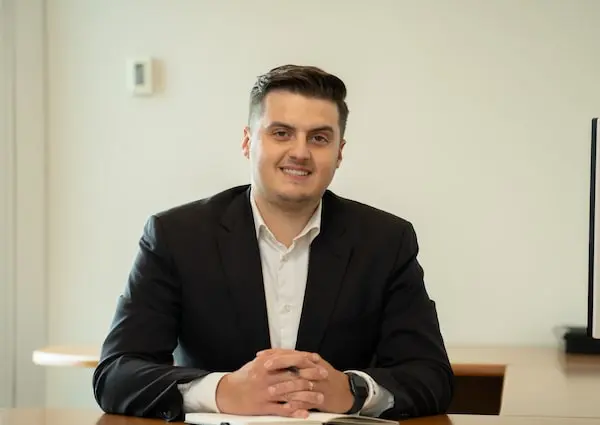

Supplied
In the Behind the Advice series, Globe Advisor asks advisors about their relationship with money from a young age, the lessons they’ve learned over the years, and how those experiences shape the advice they give clients. Behind the Advice is also a podcast: You can find episodes from all five seasons here.
Chris Marshall, investment advisor at Optimize Wealth Management Inc. in Hamilton, talks about how his parents’ separation affected his relationship with money, the family medical event that brought new meaning to his career and why he thinks Chubbs Peterson of Happy Gilmore would make a good advisor.
Describe your experience with money growing up.
I was born and raised in Hamilton, the oldest of two kids. My dad was a carpenter and my mom worked in retail. Money was tight, but it got even tighter after my parents split up when I was 12 years old.
After the separation, my dad bought a home, but we lost it a couple of years later. I remember coming home from school one day with my brother and finding the locks had been changed and a note on the front door saying we weren’t allowed to enter.
My mom had a very small apartment, so my brother and I ended up sharing a room there until I moved out at the age of 18. I remember telling myself back then that I wouldn’t go through this with my family when I got older.
What did you want to be growing up and how did you get into financial services?
Initially, I wanted to be a chef. But after working late hours in restaurants while in school and having to get up early for class the next day, I changed my mind. It also didn’t seem like a good lifestyle for me if I wanted to raise a family.
I took an accounting class in high school and loved how the numbers always balanced to zero. I took accounting in college, but it didn’t turn out to be as interesting as I first thought. My now mother-in-law suggested banking, so I started as a teller at Bank of Nova Scotia in my early 20s. I then worked at a credit union, which is where I started training and working as a wealth advisor.
What’s the best move you made to date to advance your career?
Aligning my practice with a purpose. Early on as an investment advisor, I struggled a bit to find an area of expertise. Then, a couple of years ago, my son received a heart transplant at SickKids in Toronto. He was four months old. Since then, I’ve felt so indebted to that hospital. I want the next child to get the same care as we did, or better.
That led me to two recent decisions: building philanthropy planning into my practice; and focusing on families raising children with complex medical needs, helping them navigate the associated financial challenges. It’s brought a new purpose to my work. It’s what gets me to my desk every day.
What advice do you wish someone gave you earlier in your career?
Earlier in my career, I did a lot of research on stocks and presented it to prospective clients. It didn’t really help me sign on any new people. I didn’t understand what the client really wanted. Most don’t care how much you know about an individual stock. What they want is to be heard.
Clients need someone to understand their goals and family life. They want to make sure their money is growing, but the relationship and what they want their money to accomplish are much more important than the investment itself.
What advice do you have for someone who wants to do what you do?
Don’t just do it for the money. If you join the business just for money, it will show in your work with clients. Finding a purpose and partnering with people you enjoy working with will make going to work so enjoyable – it will be like seeing your friends and family every day.
How do you spend time outside of work?
I spend time with my wife, Ayla, our son, Lucas, and our dog, Gus. After everything my son has been through, we don’t take any day with him for granted. I also enjoy golf, camping, fishing and vegetable gardening.
Name a famous person or fictional character you think would make a great financial advisor and why?
Chubbs Peterson, [the golf mentor played by Carl Weathers in the 1996 comedy Happy Gilmore]. Chubbs taught Happy [played by Adam Sandler] how to play golf while also keeping his emotions in check. It’s similar to what advisors do for their clients, particularly when markets are volatile. You need to keep playing, or keep investing, to reach your goals.
This interview has been edited and condensed.
Attention advisors:Are you a client-facing financial advisor looking to share your experiences with money growing up and your thoughts on the industry today? For more details and to be considered for an interview for Behind the Advice, e-mail: bbouw@globeandmail.com