Dow Jones, Nasdaq, S&P 500 weekly preview: Iran war remains key focus, CPI on tap
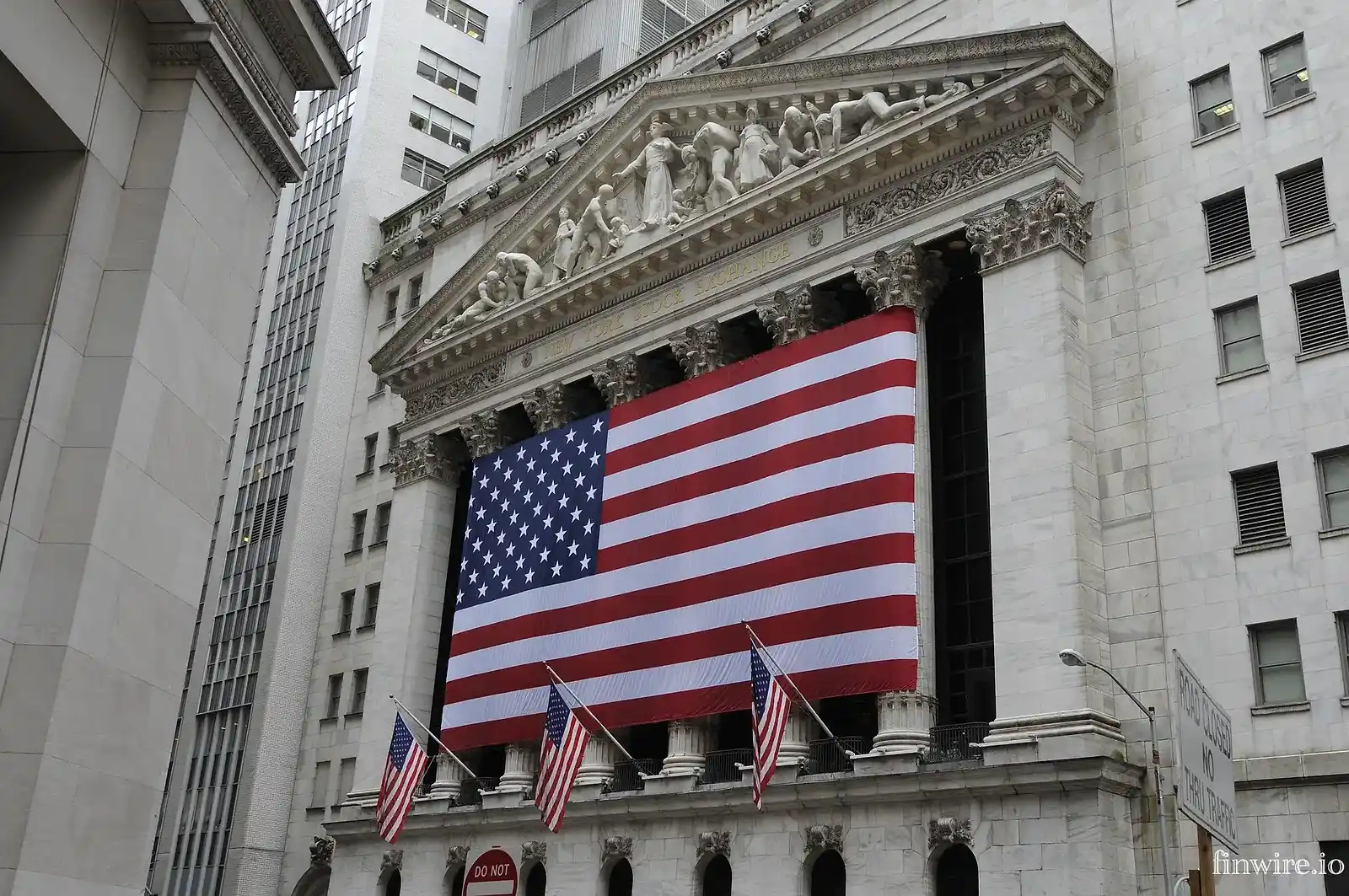
U.S. equities ended lower on Friday, extending weekly losses as surging oil prices and weaker-than-expected jobs data weighed on sentiment.
The Dow Jones Industrial Average fell 453.19 points, or 0.95%, to close at 47,501.55 after dropping nearly 950 points earlier in the session. The S&P 500 declined 1.33% to 6,740.02, while the Nasdaq Composite slid 1.59% to finish at 22,387.68.
Oil markets were a key driver of volatility. West Texas Intermediate (WTI) crude climbed above $90 per barrel and ended the week up roughly 35%, the largest weekly gain since oil futures began trading in 1983. Prices surged after U.S. President Donald Trump said in a Truth Social post that there would be no agreement to end the U.S.-Iran war without an “unconditional surrender” from Iran.
"We believe that duration will be the determining factor of the ultimate price trajectory for energy. With no clear definition of what winning looks like, it is hard to forecast whether this will be a multi-week or multi-month conflict," RBC Capital Markets strategists led by Helima Croft said in a note.
Equities were also pressured by disappointing labor market data. The Bureau of Labor Statistics reported that nonfarm payrolls fell by 92,000 in February, sharply contrasting with January’s downwardly revised gain of 126,000 and missing economists’ expectations for a 50,000 increase, according to a Dow Jones survey. The unemployment rate edged up to 4.4% from 4.3%.
For the week, the S&P 500 declined 2%, the Dow dropped 3%, and the tech-heavy Nasdaq fell 1.2%.
Looking ahead to this week, investors will remain sharply focused on whether the conflict in the Middle East widens further and how severely it could disrupt global energy supplies.
In addition, markets will also closely watch fresh U.S. inflation data. The February consumer price index (CPI) is scheduled for release on Wednesday. Economists surveyed by Reuters expect CPI to rise 0.2% month-on-month.
Some investors think that a benign reading could be discounted because the data largely reflects a period before the Middle East conflict escalated, while an upside surprise could intensify concerns about energy-driven inflation.
Those concerns have already pushed back expectations for the Federal Reserve’s next rate cut. However, Friday’s weak jobs report revived some easing bets, with market pricing implying a 45% probability of at least a 25-basis-point cut at the Fed’s June meeting, according to LSEG data.
Meanwhile, rates strategists at RBC expect no cuts in 2026 but forecast a few more in 2027.
"If RBC’s forecast for no more cuts in 2026 is right, this would have a minimal impact on our S&P 500 outlook, as S&P 500 moves tend to be slightly stronger (17.7%) when the Fed does nothing in a 12-month time frame," strategists led by Lori Calvasina said.
S&P 500 set for 5th straight quarter of double-digit earnings growth
The fourth-quarter earnings season is nearing its end, with only a few of the S&P 500 companies yet to report. The index is set to record its fifth consecutive quarter of double-digit profit growth.
A recent strong report from Nvidia marked one of the final results from the major technology companies, underscoring continued heavy spending on specialized AI chips.
This week, a handful of earnings reports will attract investors’ attention, most notably from HPE, Oracle, and Adobe, among others.
What analysts are saying about U.S. stocks
Morgan Stanley: We remain constructive over a 6-12 month time horizon as earnings growth reaccelerates and the broadening continues. However, the equity market is not immune from further near-term volatility if oil prices continue to rise alongside a strengthening dollar. We favor Quality and Healthcare for those seeking defensive hedges. Our baseline remains that further weakness in the near term sets up an opportunity to add to the cyclical trades we prefer over the intermediate term across Financials, Industrials, Consumer Discretionary and Small Caps. The bear case risk to our positive 6-12 month view would be oil prices over $100/bbl for a multi-month period, and a Fed that does not cut rates or add additional liquidity—i.e., more potential focus on inflation rather than growth risks."
BTIG: "A break of 6,700 would open the door to a test of the 200 DMA (6582) which would be ~3% lower. In order to get that, we felt semis likely would need to see further pressure, and they certainly did on Friday. Adding it all up our confidence that 6,700 holds has diminished, especially given the move in semis, but a quick flush below 6,700 that approaches the 200 DMA should still prove to be buyable, in our view."
Evercore: "There is a tense standoff between Fear of Downside (exacerbated by geopolitics) and Greed/FOMO (No Recession, modest Interest Rates, robust Capital Market cycle) lending to a reiteration of our SPX year end 7,750 PT. But tension builds, driving hedging (Fear) in Equity options more extreme than prior scares of the current cycle – all buying opportunities."
Goldman Sachs: "S&P 500 price action this week has resembled the equity market’s behaviorn during past geopolitical risk shocks. The S&P 500 has declined by 2% since last Friday with large intra-week volatility. During seven geopolitical risk episodes since 1950, the S&P 500 declined by an average of 4% in the first week but recovered within the subsequent month."
RBC Capital Markets: "We think the stock market is in the midst of a discovery process about how the Iran conflict will evolve (how long it will go, how high it could take oil prices, and other derivative impacts), and that it is too early to make any major changes in assumptions in our modeling at this time. For now, we assume that the stock market will be able to return to the course that it was on before these events unfolded, but the longer the conflict goes on and the higher oil goes, the more likely it is that some of our assumptions will require adjustments.