Don’t mistake the TSX for a refuge from AI turmoil
Canadian investors still have too much riding on too little

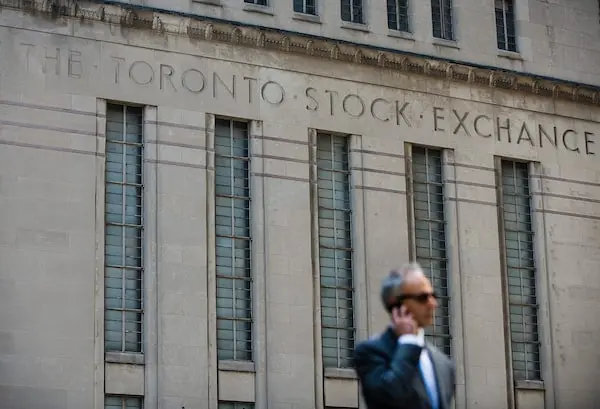
The TSX is trading at a seven-month low and looking wobbly.Aaron Vincent Elkaim/The Canadian Press
The spectacle to the south has made it easy to overlook the fault line running underneath Canada’s own stock market.
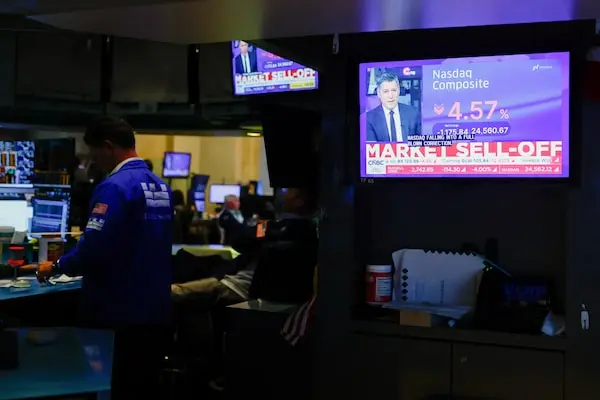
A startling acceleration of the U.S. tech selloff has ignited fears that an AI bubble is beginning to deflate. The tech-focused Nasdaq Composite Index went into free fall on Friday with a loss of 5.3 per cent, effectively wiping out the index’s gains thisyear.
While the fate of the U.S. bull market hinges on the AI trade, Canada’s vulnerabilities are also beginning to show.
A cold wind blew through the entire commodity complex this past week, pushing down prices across a range of energy products, precious metals and industrial metals. Gold sank to its lowest level in 15 months, crude oil is off its recent peak by more than US$20 a barrel and copper is having its worst weekly losing streak in two years.
In a flash, the TSX is trading at a seven-month low and looking wobbly. What was a banner year for Canadian equities now hangs in the balance.
Let this skid serve as a reminder that the TSX has been a great bet, but not necessarily a safe one.
Opinion: The tech-AI bubble is deflating. Should governments ride to the rescue if it bursts?
It so happens that the Canadian stock market is just as top-heavy as the U.S. market, by some measures. This may come as a surprise, considering how much we’ve been pummelled with the idea that American stocks are dangerously skewed toward the AI buildout.
It’s true that the fortunes of the mighty U.S. stock market are hopelessly tethered to AI. The technology is responsible for driving 60 to 80 per cent of the S&P 500’s gains over the past year, depending on the methodology used to calculate them.
That dependency cuts both ways. When the market begins to doubt the durability of the AI revolution or the financial benefits it will ultimately confer, it’s chaos in financial markets. Over the past couple of weeks, the dark side of the AI boom has come into view.
The comforts of home can seem appealing in such moments. The TSX has very little direct AI exposure. Valuations are lower. In investing, as in politics, it feels like an altogether more sane place. But it’s a mistake to assume the TSX is safer. Beware simply trading one form of concentration for another.
The TSX is top-heavy, too
Stock market concentration is not just a U.S. problem, with the top 10 Canadian stocks accounting for nearly 40 per cent of the index, just like in the S&P 500
TSX
S&P 500
7.7%
Apple
Royal Bank
7.7%
TD Bank
5.6
7.6
Nvidia
Shopify
4.9
5.9
Microsoft
BMO
3.3
Scotiabank
3.1
4.5
Alphabet
Enbridge
3.0
3.6
Amazon
CIBC
2.9
2.4
Broadcom
CNQ
2.8
2.1
Meta
1.7
Eli Lilly
Agnico Eagle
2.5
1.7
Tesla
Brookfield
2.4
1.6
Berkshire
the globe and mail, Source: bloomberg
Look at the total combined weighting of the top 10 stocks in the S&P/TSX Composite Index – just shy of 40 per cent, roughly the same as in the S&P 500 index.
The two markets feature wildly different lineups, of course. The American index is loaded with technology strength – all but two of the top 10 are tech powerhouses. In Canada, it’s all financials and resources, which account for nine spots on the leaderboard.
Stocks close sharply lower as tech rout deepens, with S&P 500, Dow and TSX sliding into technical corrections
Anthropic’s post-debut stumble delivers reality check for AI trade
Surprisingly, the Canadian mix has carried the day for almost two years now. Even in the heart of a tech boom, the TSX has beaten the S&P 500 by 15 percentage points since the end of February 2025. It’s the longest period of sustained Canadian outperformance in nearly 20 years, according to a recent TD Economics report.
Such episodes are rare and tend to happen when either the U.S. is in a deep recession or commodities are booming.
This time around, gold and oil have served as the twin engines of the TSX. A monumental run-up in bullion last year filled the coffers of Canadian miners. And the oil supply shock that followed the war in Iran earlier this year proved a windfall for the energy sector.
Both trends now seem to have exhausted themselves.
After gold hit a record of nearly US$5,600 an ounce in January, it’s been falling pretty much ever since. The latest leg downward has been the steepest, losing 25 per cent since late August. The problem is that interest rates are on the rise, as is the U.S. dollar, both of which penalize gold.
Crude oil futures, meanwhile, hit their lowest levels since August as the global supply backdrop shifted dramatically. Though passage through the Strait of Hormuz remains treacherous, Middle East energy shipments have rebounded, thanks to various workarounds.
The downward trend has extended to all manner of commodities – heating oil, gasoline, silver, copper, even agricultural commodities. And with them have turned the fortunes of the Canadian stock market, which is now 10 per cent below its peak.
That’s nothing to get worked up about, but it reinforces that the TSX is far from a diversified market. If you’re the type to devote a huge share of your investments to domestic stocks, you’re probably overexposed to the commodity cycle.
Not that the U.S. is looking much more well-rounded these days. Investors have become hyperattuned to any sign that the AI earnings boom holding up the S&P 500 is beginning to wane. S&P 500 companies are tracking toward a growth rate of 36 per cent over last year. There’s nowhere to go but down.
Goldman Sachs recently said it expects U.S. profit growth to fall to 11 per cent next year. While that’s perfectly respectable, it represents a 70-per-cent drop in earnings growth. And what the market really cares about is the rate of change.
The fear of an earnings slowdown is arguably the driving force behind much of the volatility in U.S. stocks of late. From Thursday on, U.S. tech stocks continued to dive despite the blockbuster IPO of Anthropic – a linchpin of the AI trade.
Two stock markets, both highly concentrated, one in the resource economy, the other in the digital economy – and both risky plays for entirely different reasons. The TSX has a lot going for it these days, but it’s no antidote to AI fever.