Could a robot be your next caregiver?

In Japan, robots already help care for some nursing home seniors, and surprisingly, many prefer it

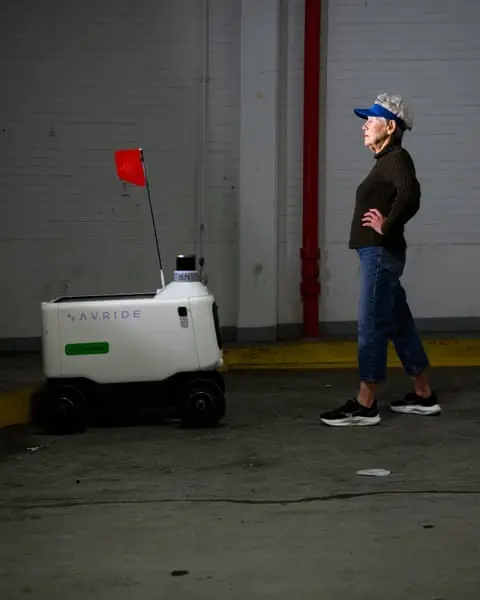
A ugo Nova semi-humanoid robot developed by the Japanese robotics company ugo performs a demonstration at the Physical AI Summit in Tokyo in September. In Japan, robots already help care for some nursing home seniors.Manami Yamada/Reuters
Good morning. In Tuesday’s budget, the government said it’s proposing to merge RRSPs and RRIFs into what it calls a new “RRSP-for-life.” The merge wouldn’t change the need to make minimum withdrawals after age 71. But it would spare Canadians a boatload of paperwork.
I want your thoughts on this proposal. If you’re willing to be interviewed and have your name in a story, please send me a note at mraman@globeandmail.com.
Now back to our regular programming: Would you trust a robot to take care of you in old age? Turns out, a lot of people do. Let’s get into it.
Domo arigato, Mr. Roboto
I know, it sounds like something out of a dystopian science-fiction movie, but in Japan, robots are already helping care for some seniors in nursing homes. And surprisingly, many older adults seem to prefer it that way.
A new research brief from the Center for Retirement Research at Boston College, based on a survey of more than 4,300 Japanese adults aged 55 to 75, found that 65 per cent would choose a nursing home that uses robots for some caregiving tasks over one relying entirely on human workers. On average, respondents were even willing to pay 8.3 per cent more for a nursing home that uses robots.
Now, before you start picturing humanoid robots roaming nursing-home hallways, the reality is a little less futuristic (and scary).
The most popular technologies are robots that help people move around, with 70 per cent of respondents preferring nursing homes that use mobility robots over those relying solely on human caregivers.
Mobility robots help lift residents out of bed or into wheelchairs, while other types of robots monitor vital signs or even provide companionship through conversation.
Take Hug, a robot being used in Japan. In a video, the machine gently raises a resident to their feet at the push of a button, allowing a caregiver to transfer them from a bed to a wheelchair without doing the heavy lifting.
In Japan, an aging population and a shortage of nursing-home workers prompted the country more than a decade ago to experiment with ways robots can take some of the pressure off human caregivers. Not to mention that it would likely cut costs.
It’s unclear whether Canadians would be as enthusiastic about robotic care. But with long-term-care wait lists already stretching into years in some parts of the country, it’s a conversation worth having.
The Boston College brief is partly based on research from HEC Montréal’s Retirement and Savings Institute, which also noted that the median wait for a nursing-home bed in Ontario exceeded 200 days in 2023, with some people waiting two years or longer.
Of course, the idea of robots taking on tasks traditionally performed by humans raises some uncomfortable questions. Could technology help older adults receive better care, or would it mean less human interaction at a time when they might need it most?
Subscribe to the Retire Rich newsletterAre you reading this newsletter on the web or did someone forward the e-mail version to you? If so, you can sign up for Retire Rich here.The Calculator
Cumulative gain or loss if CPP starts
in 2027 vs. Dec. 2026
Future months (month 1 is Dec. 2026)
Start CPP in Jan. 2027
Start CPP in June 2027
Probability of survival: 75%
$20,000
$16,740
15,000
Probability of
survival: 93%
$10,673
10,000
5,000
0
When Trevor
is underwater
-5,000
-10,000
50
100
150
200
THE GLOBE AND MAil, source: AUTHOR'S CALCULATIONS
Cumulative gain or loss if CPP starts in 2027 vs. Dec. 2026
Future months (month 1 is Dec. 2026)
Start CPP in Jan. 2027
Start CPP in June 2027
Probability of survival: 75%
$20,000
$16,740
15,000
Probability of
survival: 93%
$10,673
10,000
5,000
0
When Trevor is underwater
-5,000
-10,000
50
100
150
200
THE GLOBE AND MAil, source: AUTHOR'S CALCULATIONS
Is it better to start collecting CPP in December or wait until 2027? Frederick Vettese, former chief actuary at Morneau Shepell, says delaying your Canada Pension Plan benefits by even a few months could pay off.
The numbers: For someone turning 65 in 2027, waiting until June instead of starting CPP in December could mean more than $15,000 in additional benefits by age 83, according to Vettese’s calculations.
The Retirement Receipt

For their budget, Jordanna and Derek Gibeault wanted a large private backyard, not only for their two large dogs, but for themselves.Amanda Erickson/The Globe and Mail
With a budget of $550,000, what home did this Red Deer couple buy?
The buyers: Newlyweds Jordanna and Derek Gibeault live in Red Deer, Alta. She’s a realtor and he’s an oil field electrician. They wanted to upgrade from their semi-detached home without stretching their finances.
The wish list: At least four bedrooms for home offices, a gym and visiting family, a large private backyard for their two dogs, and a heated two-car garage. They hoped to stay in southeast Red Deer.
The options: A $549,900 home in an upscale neighbourhood that needed work, a $525,000 bungalow with a private yard but dated interiors, and a $545,000 split-level home with upgraded appliances but a less appealing layout.
What they bought: The couple chose the five-bedroom bungalow for $515,000, coming in $35,000 under budget. They made some cosmetic updates and moved in shortly after their February wedding.
Best of the Rest
⭐ Rob Carrick: Canadians withdrew nearly $70-billion from their TFSAs. New CRA data show younger Canadians are dipping into their savings more frequently, likely to cover housing and family expenses, while retirees are making fewer but larger withdrawals.
🌴 Canadian snowbirds miss out on Florida’s biggest tax cuts. But there’s a silver lining. A new rule could help slow future property tax increases on their vacation homes. But rising insurance premiums, condo fees, and the weak loonie may outweigh any savings.
⏰ Saying goodbye to changing clocks could come at a cost.Several Canadian provinces have switched to permanent daylight time, but experts warn that darker winter mornings could disrupt sleep, affect productivity, and even increase health risks.
💸 Ottawa wants to ban fees for transferring your investments.Canadians typically pay $50 to $150 per account to move their investments between financial institutions. New proposed rules would eliminate those fees at federally regulated banks and set timelines for transfers.