China stocks surge most in two years as Beijing vows stronger market support
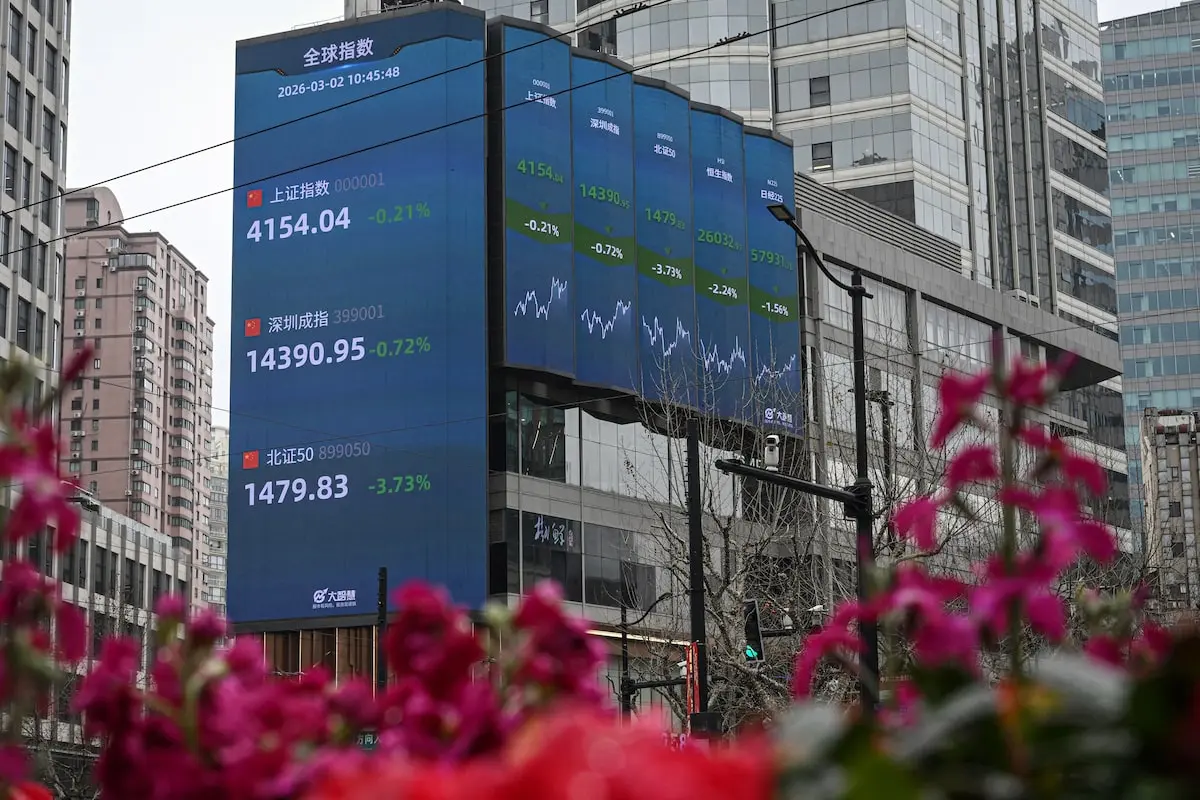
Chinese stocks roared up from 17-month lows on Friday, notching their largest gains in more than two years after Beijing flagged a bigger role for state-backed investors in a move to stabilise a struggling market.
The move could put a floor under prices, which have been sliding relentlessly since July on worries about weak consumer demand, the prolonged property downturn and the risk that trade tensions threaten the economy’s one bright spot in exports.
A bigger role for the “national team” of state investors is also the latest sign of authorities stepping into markets to shore up bets on the AI infrastructure buildout.
The benchmark Shanghai Composite Index ended 3.7 per cent up and the blue-chip CSI300 index was 4.2 per cent higher at the close, both notching their biggest daily gains since October 2024 when China rolled out massive stimulus to revive the market.
China’s tech-focused STAR 50 Index surged 15 per cent for its biggest one-day jump in two years, while a sub-index tracking semiconductors soared 19 per cent, marking its biggest single-day gain on record.
The rally also spread to Hong Kong, where the Hang Seng Index gained 2.1 per cent while the Hang Seng Tech Index jumped more than 6 per cent.
“It’s a shot in the arm for markets,” said Kenny Ng, a strategist at Everbright Securities International in Hong Kong.
“Sentiment has been downbeat for so long. There hasn’t been much good news to trade on. At least now there’s something to count on: the national team will come to the rescue if things really turn south.”
China’s “national team” is the name traders have given to a loose collection of state investors who tend to be buyers at times of stress and a source of near-constant speculation about their habits and intentions.
Investors took it as a strong signal of support when state media Xinhua reported that Central Huijin, a lead player in the team, would enhance its role as a quasi-stabilization fund after a meeting of China’s cabinet — the State Council.
“Giving this message from the very top level... it is an attempt to re-instill some confidence, stabilize liquidity and stabilize the trajectory of the market,” said Winnie Wu, head of Asia equity strategy and co-head of China equity research at BofA Global Research in Hong Kong.
“There’s probably this awareness that AI is strategically, economically and financially very important, and they don’t want to see a big fallout in this space.”
The Chinese yuan also gained against the dollar and is near its firmest level for four years.
The move also followed relaxations to margin lending rules, aimed at reducing selling pressure in the market, and on Friday Xinhua Finance separately reported that regulators would tighten rules on share sales by controlling shareholders of listed companies and guard against listings by firms that inflate earnings.
Investors will have the weekend to consider whether Beijing’s support changes a deep-seated wariness about China’s equity markets, where before the news the tech-heavy STAR 50 and ChiNext indexes had slumped roughly 50 per cent since July.
“There is an increasingly clear signal that Chinese authorities are uncomfortable with the extent of the equity market selloff,” said Charu Chanana, chief investment strategist at Saxo Bank.
“I would distinguish between a turning point in policy resolve and a turning point in market fundamentals... A policy-induced bounce needs to evolve into a fundamentally driven recovery before we can confidently call it a durable bottom.”