China AI bust threatens Xi’s ’Wall Street East’ ambitions

China’s deepening technology stock selloff is threatening President Xi Jinping’s ambition to turn the country’s household savings into a powerful source of funding for its technology sector, as mounting investor losses expose weaknesses in Beijing’s efforts to build a more attractive domestic capital market.
The technology-heavy SSE Star 50 index has plunged 40% in less than four months, wiping out at least $480 billion in market value, while losses have spread across companies linked to artificial intelligence, electric vehicles and semiconductor manufacturing. The decline has prompted Beijing to mobilise state-backed funds, insurers and regulators to support the market, highlighting growing concerns about the sustainability of China’s technology rally.
The broader exposure is significant. Goldman Sachs estimates that AI-related companies account for 42% of China's total stock market capitalisation, with more than 3,000 listed companies generating AI-related revenue. Their combined market value was estimated at around $10 trillion as of March.
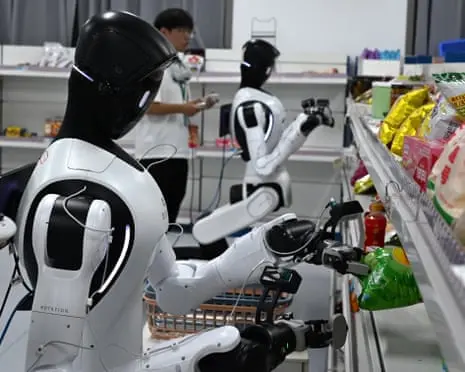
Several prominent companies have already suffered substantial losses. Battery maker CATL has fallen 35% this year, while robot maker Unitree has lost half its value since its August initial public offering. Shares of optical component maker Suzhou TFC Communication and printed circuit board manufacturer Victory Giant Technology have dropped as much as 26% over the past week.
The selloff reflects a combination of elevated valuations, intensifying domestic competition, higher energy costs, tariffs and the possibility that the United States and Europe could restrict access to Chinese technology and data-centre equipment. However, weakening domestic demand and the prolonged property crisis are adding to investor concerns.
China's blue-chip CSI 300 index has fallen around 21% from its June peak, despite earlier stimulus measures aimed at supporting the economy and combating deflation. The country's $21.5 trillion economy remains heavily dependent on exports, while the property downturn continues to weigh on household confidence and spending.
The weakness in Chinese equities also contrasts with gains elsewhere in Asia. The CSI 300 has declined nearly 14% this year, while Taiwan's benchmark has gained 56% and South Korea's has risen 36%. Japan's Nikkei 225 has advanced more than 25%.
China's challenge is particularly significant because its AI industry has continued to produce technological breakthroughs, but investors have struggled to translate those achievements into comparable stock market gains. Unlike companies benefiting from semiconductor hardware and upstream infrastructure investments elsewhere in Asia, many of China's AI successes have centred on developing new models.
For Xi, the consequences extend beyond market valuations. Beijing wants to encourage households to invest in equities, particularly technology companies, to finance AI infrastructure development and reduce dependence on property as a store of household wealth. Property accounts for roughly 70% of Chinese household wealth, and its prolonged crisis has reinforced concerns about deflation.
However, repeated stock market collapses and regulatory interventions have damaged retail investor confidence. The Shanghai Composite remains around 4,000, well below its October 2007 peak of approximately 6,100, despite China's economy growing nearly sixfold since then.
The government's history of technology-sector crackdowns, unpredictable regulation and weak corporate governance has also made households cautious about investing in equities. Retail investors account for much of China's market turnover, leaving trading vulnerable to policy signals and speculation rather than fundamentals.
Even after the recent decline, the STAR 50 trades at around 38 times forward earnings, compared with approximately 20 times for the Nasdaq 100, suggesting valuations remain elevated.
China remains a formidable competitor in artificial intelligence, with Bloomberg Intelligence projecting that the country could lead the world in large language models by 2030. But a prolonged market downturn could undermine Beijing's efforts to use private capital markets to finance technological development.
An extended AI correction would therefore threaten not only investor wealth and China's technology ambitions but also Xi's broader plan to establish a stock-market-driven alternative to the struggling property sector.