Asian stocks rise as tech rebound, easing U.S. trade concerns lift sentiment

Most Asian stocks rose on Friday as technology shares extended their recovery and investors took some comfort from easing concerns over U.S. trade tensions, although uncertainty surrounding the artificial-intelligence investment cycle continued to limit risk appetite.
U.S. cash markets were closed on Thursday for Thanksgiving, with Wall Street set to resume trading in a shortened session on Friday. A late recovery in U.S. equities on Wednesday helped stabilise sentiment, while buyers stepped in across Asian technology shares ahead of the holiday break.
Treasury yields resumed their advance as demand for safe-haven assets eased. The 10-year U.S. yield rose five basis points to 4.9%. Nasdaq 100 futures jumped 2.2% and S&P 500 futures gained 1.4% in Asian trade.
Markets are pricing in a 99% probability of a 25-basis-point Federal Reserve rate increase in December, although expectations of a larger half-point move have faded.
Oil headed for its first weekly advance in four weeks as attacks on Middle Eastern energy infrastructure and tankers raised concerns over supply disruptions. Brent crude slipped 0.4% to $96.14 a barrel but remained up 3.9% for the week, while monthly losses stood at around 18%.
Asian markets recover, but November losses remain substantial
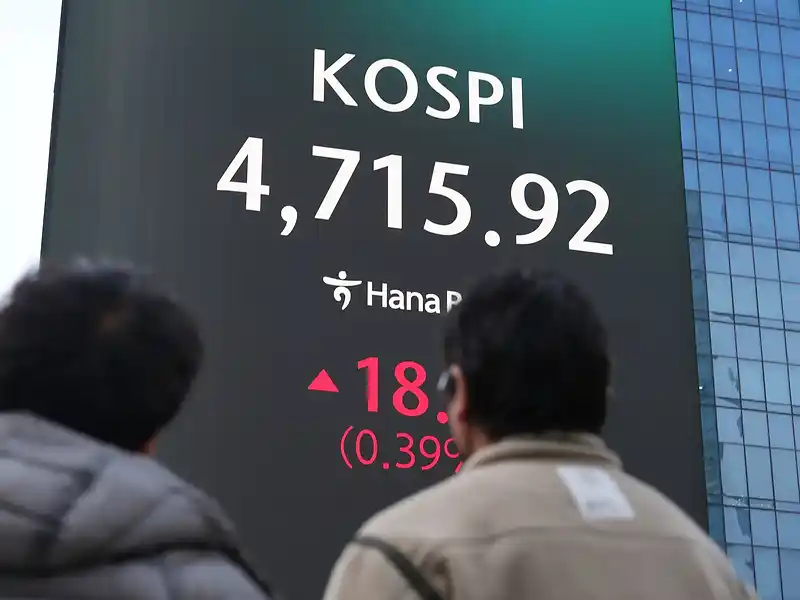
South Korea's KOSPI gained 3%, Japan's Nikkei 225 rose 1.5% and Taiwan's Weighted Index added 0.8%. Hong Kong's Hang Seng advanced 0.5%, while Australia's S&P/ASX 200 climbed 0.7%.
MSCI's broadest Asia-Pacific index excluding Japan edged up 0.5%, leaving it 1.9% higher for the week but still down 8.2% for November. Japan's Nikkei added 2.7% for the week, although it remained down 8.4% for the month.
South Korea's benchmark recovered around 2% on Friday but remained 16% lower for November, while Taiwan's index was down about 15% this month.
Japan's November core inflation accelerated to 2.9% year-on-year, its fastest pace in 16 months, from 2.6% in October. The reading remained above the Bank of Japan's 2% target for a third consecutive month, strengthening expectations of a possible interest-rate increase at its December 18 meeting.
The Bank of Korea also raised its benchmark interest rate by 25 basis points to 3.25% on Thursday and upgraded its 2027 growth forecast to 4.1%, citing stronger economic activity and semiconductor demand.
New Zealand's NZX 50 was marginally higher after final election results left parliament without a clear majority. Prime Minister Christopher Luxon's National Party secured 40 seats against Labour's 36, leaving the seven-seat centrist Opportunity Party pivotal to government formation.
Chipmakers rebound as corporate developments drive individual stocks
South Korean semiconductor shares advanced, with SK Hynix rising 2.9% and Samsung Electronics gaining 3.6%. Taiwan Semiconductor Manufacturing Co. added 1.2%, while Foxconn rose 1.3%.
Japan's Kioxia climbed 6.5%, recovering some ground after losing more than 40% this month on concerns over the sustainability of AI-driven memory demand.
Japan Tobacco gained 3.6% after Bloomberg reported it was considering joining a partner in a potential takeover of British cigarette maker Imperial Brands.
Australia's WiseTech Global surged 16.7% to A$54.61, its highest level since February 4, after management expressed confidence in meeting its full-year revenue guidance.
Nvidia remained a source of uncertainty after S&P Global placed its credit rating on negative watch over governance concerns.
The company also reportedly instructed manufacturing partners to suspend shipments of servers containing its chips to Malaysia, Singapore, Thailand and Indonesia amid tighter U.S. export controls, the Financial Times reported.