AI free-fall triggers another major hedge fund shakeout

Wall Street’s AI-focused sell-off is producing another round of collateral damage inside the hedge fund industry, with $17 billion Walleye Capital restructuring its stock-picking operation as technology shares suffer another sharp reversal.
The move is reviving memories of July, when AI-focused Situational Awareness lost 67% of its portfolio value and sold most of its public-equity holdings to Ken Griffin’s Citadel. Less than four months later, another wave of selling is exposing how quickly crowded AI positions can become a liquidity problem for investors using leverage.
Walleye told investors Thursday that it would simplify its internal equity long-short business, part ways with the unit’s leadership and a substantial portion of its investment teams, and return some capital to investors. The multi-strategy firm lost 5.9% in October, its worst month since March 2020.
As of the end of the second quarter, the hedge fund held large positions in AI stocks like KLA Corporation, Micron, AMD, and Applied Materials, among others.
In a letter, CEO and Chief Investment Officer Will England said the firm had taken a hard look at every part of its business after the difficult month. He said the internal equity long-short operation had been Walleye’s weakest-performing strategy since 2023 and had substantially underperformed its external long-short business. Efforts to improve it, including bringing in new leadership, failed to produce expected results.
“This is a proactive decision,” England wrote, emphasizing that Walleye is not abandoning stock picking. The firm plans to continue investing through outside equity managers and its highest-conviction portfolio managers, while directing more resources toward volatility, quantitative and other businesses where it believes it has a competitive edge. England said Walleye’s volatility business had its strongest month on record in October and was on track for its best year in dollar terms.
Engineers Gate has also surfaced in the broader discussion about pressure on stock-focused hedge funds. The multi-billion-dollar hedge fund is parting ways with most of its ‘synthesis’ stock team, according to reports Thursday.
Other large managers have also reported losses. Millennium’s flagship multi-strategy fund fell 2.3% in October, while Marshall Wace’s Eureka strategy dropped 5.4%, ExodusPoint lost 2.4% and North Rock Capital declined 2.3%, according to Bloomberg-reported figures.
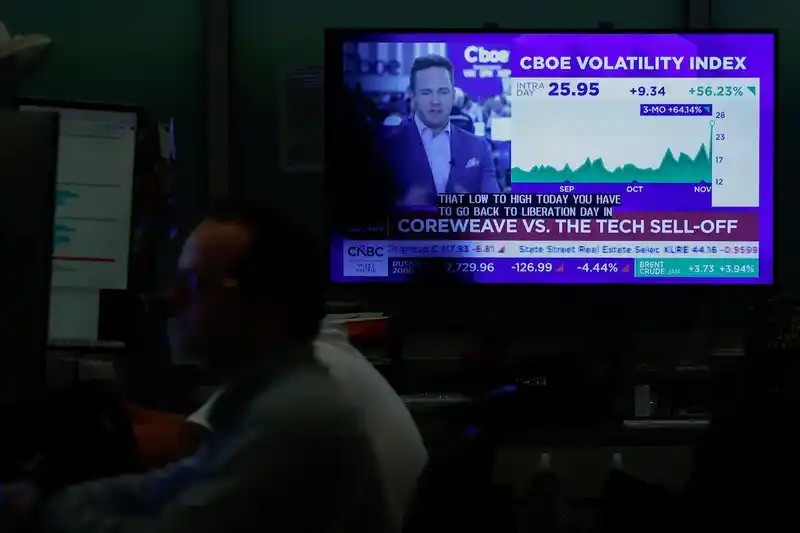
The broader retreat has been swift. Goldman Sachs data cited by hedge fund industry publications show managers sold about $20 billion of technology stocks over two weeks and erased, in just five sessions, their net purchases of AI stocks accumulated since the start of 2025. On Thursday, the semiconductor index fell as much as 11%, its steepest decline since March 2020.
The latest turmoil does not mean every fund is facing a Situational-style collapse. But it highlights a common vulnerability: when managers crowd into the same AI winners, often with leverage, a reversal can force them to sell at the same time. A trade built on extraordinary growth can quickly become a test of liquidity, risk controls and survival.