UK government borrowing lower than expected in June

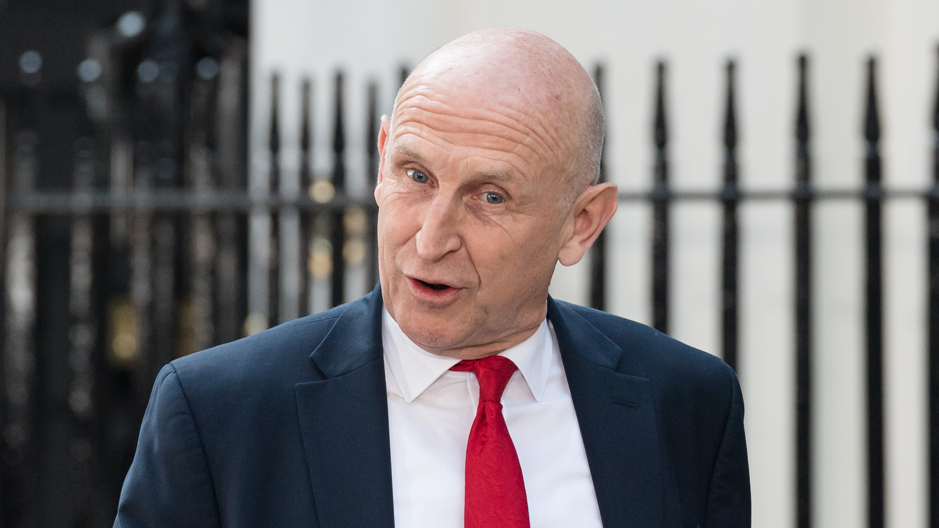 Image source, Getty Images
The UK's new chancellor John Healey
- Published
The government borrowed slightly less than expected in June, according to official figures published as new prime minister Andy Burnham began setting out measures to cut living costs for households.
Borrowing - the difference between spending and income from taxes - was £16bn, £7.9bn lower a year earlier, although analysts said challenges remained over the UK's public finances.
Separate data showed the unemployment rate was unchanged, with the Office for National Statistics (ONS) saying the labour market was "relatively steady".
However, while the borrowing figure was less than forecast, the ONS said total debt remained near £3 trillion - close to the annual value of the entire UK economy.
Borrowing for June was slightly below the £16.3bn that had been predicted by the government's official forecaster, the Office for Budget Responsibility (OBR).
Ruth Gregory, deputy chief UK economist at Capital Economics, said June's figure was "a rare piece of good news" for the new prime minister and his new Chancellor, John Healey.
However, she added: "Overall, there's no escaping the fact that the public finances are fragile and that there is limited scope for extra borrowing."
So far in the current financial year, borrowing has reached a total of £57.6bn, according to the Office for National Statistics (ONS). While this is down £3.7bn from the same period last year, it is £2.7bn above the OBR's forecast.
James Smith, chief UK economist at ING, told the BBC's Today programme the fact that borrowing was still running ahead of the OBR's projections was "a reminder of the challenges that the new chancellor and the new prime minister face".
He added they would face a "difficult picture" at the autumn Budget, with "lots of tough choices to be made".
Burnham and Healey have both pledged to stick to former chancellor Rachel Reeves' fiscal rules on spending and borrowing. although the new prime minister said on Monday he would use "any flexibility within them" to help with policy changes.
Shortly after Burnham's comments were made public, the yield on 10-year government bonds - effectively the interest rate charged to the UK government for a 10-year loan - rose above 5%.
The yield hit 5.03% late on Monday afternoon. However, when trading began on Tuesday the rate slipped back slightly to 5.01%.
In a statement released on Monday, Healey said "fiscal credibility is the bedrock for economic stability and for national security".
The new leadership's first major policy announcement was to cut VAT on household electricity bills from 5% to zero from the beginning of October.
Ministers said it would be funded by savings from the cancellation of the digital ID programme, but Labour's Darren Jones, who was sacked as chief secretary to the prime minister on Monday, accused the government of announcing an unfunded tax cut.
- VAT to be cut from household electricity bills in October
- Published11 minutes ago
- Burnham promises help with your money. How could it affect you?
- Published33 minutes ago
June's borrowing figure was helped by higher revenues from income tax and VAT, while interest payments on inflation-linked debt fell.
The government paid £11.8bn in debt interest payments in June, which was nearly a third lower than the same point last year.
However, it was still the fourth highest total for June on record, the ONS said.
Meanwhile, the latest survey of the labour market showed the unemployment rate remained unchanged at 4.9%.
Growth in regular earnings - which excludes bonuses - remained unchanged, rising at an annual pace of 3.4% in the March to May period.
However, the ONS noted that regular wage growth in the private sector fell below 3% for the first time since 2020.
Yael Selfin, chief economist at KPMG, said the "subdued" wage growth made it more likely that the Bank of England would keep interest rates on hold at 3.75% when it meets next week.
"Weak hiring activity is continuing to weigh on workers' bargaining power, limiting upward pressure on wages," she added.
"Workers are also set to see a renewed squeeze on living standards during the second half of the year as higher energy costs feed through to household bills."
Related topics
- Unemployment
- Office for National Statistics
- Pay
- UK economy