Starmer pledges crackdown on 'addictive elements' of social media

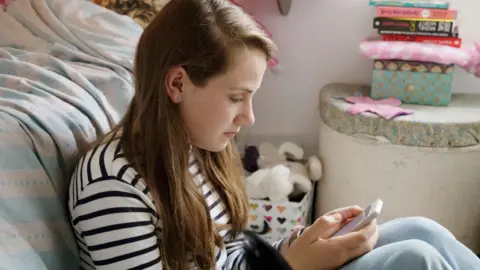
Prime Minister Sir Keir Starmer has pledged to respond more quickly to close loopholes in laws designed to protect children online.
Sir Keir said no online platform will get a "free pass" over the issue of children's online safety as he promised to "crack down on the addictive elements of social media".
The proposals include a measure to require tech giants to preserve all of the data on a child's phone if they die, as campaigned for by the group Jools' Law - as well as consulting on a potential social media ban for under-16s.
Opponents accused the government of "inaction", and have called for Parliament to be given a vote on the social media ban for children.
The Online Safety Act - which became law in 2023 - was written before the release of AI chatbots such as ChatGPT, and the government says it intends to close loopholes in the legislation so the tech is included.
Amendments will also be made to the Crime and Policing Bill to ensure chatbots protect users from illegal content.
The government had already said it would launch the public consultation in March, seeking opinions about restricting children's access to AI chatbots and limiting infinite scrolling features for children – also known as doomscrolling.
It follows arguments between ministers and X's Elon Musk earlier this year, after the platform's Grok AI chatbot was used to make fake nude images of women.
Ahead of launching the consultation, Sir Keir said: "The action we took on Grok sent a clear message that no platform gets a free pass."
"Technology is moving really fast, and the law has got to keep up. With my government, Britain will be a leader, not a follower, when it comes to online safety," he said.
Other measures being considered include preventing children from using virtual private networks (VPNs) to illicitly access pornography and amending the law so chatbots have to protect users from illegal content.
In an article on the website Substack, Sir Keir said that, as a parent of two teenagers, he knows children's access to social media is "something that is front and centre of a lot of parents' minds right now".
He said: "In the past 20+ years, social media has evolved to become something completely different from the simple, stripped-back pages it was in its conception.
"And in that evolution, it has become something that is quietly harming our children."
The prime minister added that the government will "bring new powers that will give us the ability to crack down on the addictive elements of social media, stop the auto-play, the never-ending scrolling, that keeps our children hooked on their screens for hours, and stop kids getting around age limits".
"And if that means a fight with the big social media companies, then bring it on," he said.
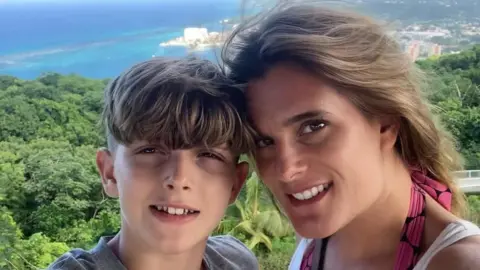
There are also plans to change rules on how children's social media data is stored under the Crime and Policing Bill, after the Jools' Law campaign.
In 2022, Ellen Roome's son Jools died aged 14. She believes he was trying an internet challenge which went wrong, but has never been able to access his data to prove it.
Under current rules, a child's data must be requested from tech companies within 12 months of their death by either a coroner or the police.
But bereaved parents say often by the time that happens, this record of what their child has been doing online has already been deleted.
New rules will mean it has to be preserved within five days if it might be relevant to the cause of death, which hopefully means more families will get some answers.
"This going forward will help other bereaved families," Roome said. "What we now need to do is stop the harm happening in the first place. This is really relevant when a child dies, but we need to stop them dying in the first place."
Lord Nash, a Conservative former minister who has been campaigning in the Lords for tighter social media controls for children, welcomed the adoption of Jools' Law by the government.
But, he said to avoid "future tragedies", the "government must raise the age limit to 16 for the most harmful platforms now".
Shadow education secretary Laura Trott described the consultation announcement as "inaction", and said Britain was "lagging behind. "I am clear that we should stop under-16s accessing these platforms," she said.
Liberal Democrat spokeswoman Munira Wilson, too, accused the government of continuing to "kick the can down the road" and called for a "much clearer, firm timeline" on when action will be taken.
Technology Secretary Liz Kendall said the government was "determined to give children the childhood they deserve and to prepare them for the future at time of rapid technological change" and would "not wait" to take the action families needed.