Starmer trims investment budgets to fund extra £15bn for defence

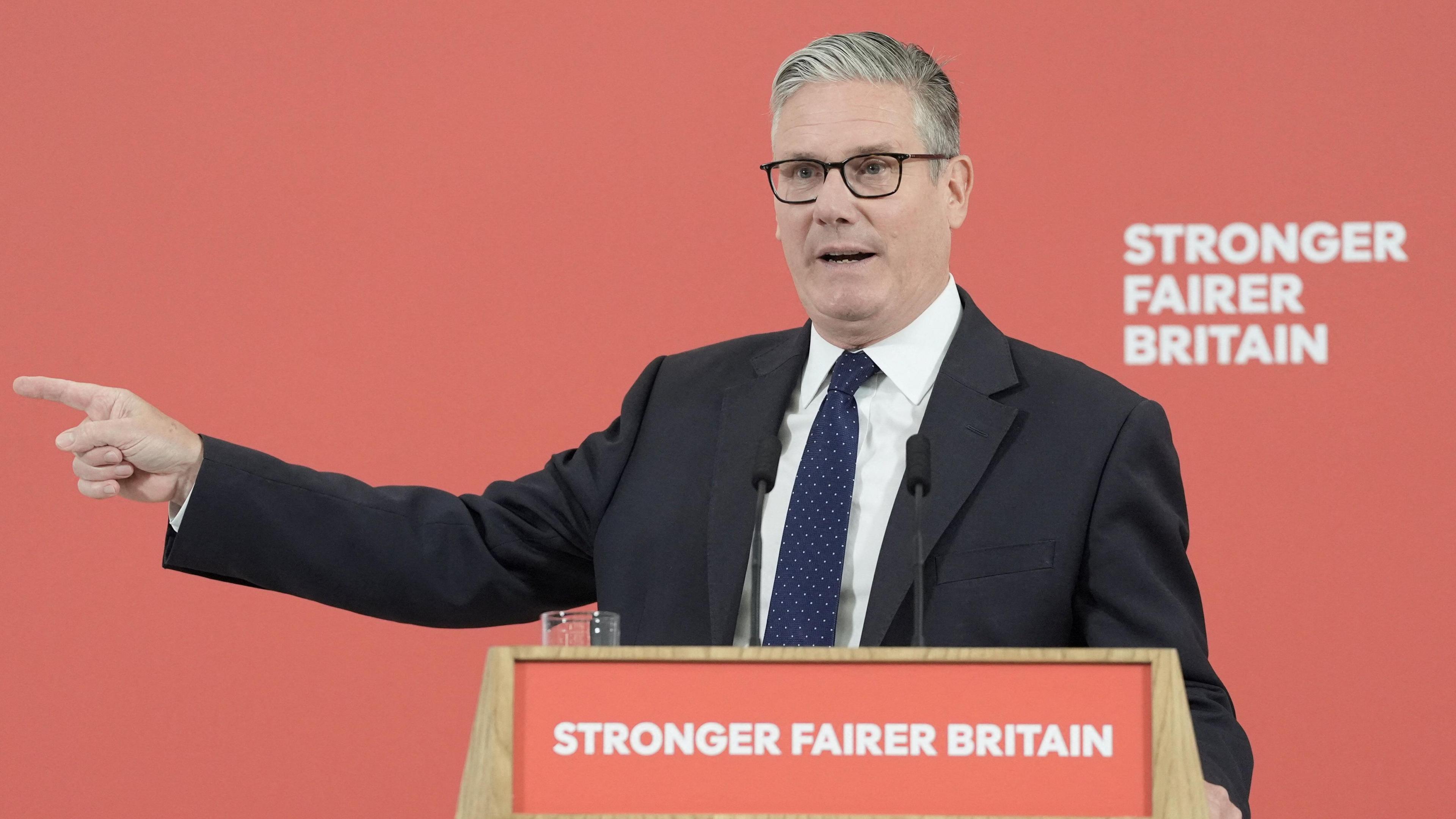 Image source, Reuters
- Published
Prime Minister Sir Keir Starmer has said a £15bn increase in military spending will be funded by cutting investment budgets in other areas, as he set out the UK's long-delayed plan to invest in defence.
In one of his final acts as prime minister, Sir Keir said some road and energy projects would not "go ahead as planned" to help raise defence funding to £80bn a year by 2029.
In a speech, he said the defence investment plan (DIP), initially expected last autumn, would reverse the "corrosive hollowing out" of the armed forces under the Conservatives.
He said the plan would be built on by his successor, widely expected to be Andy Burnham, who is yet to comment on the plan.
In his speech, Sir Keir said he had chosen chosen not to further increase government borrowing or cut day-to-day spending on public services to pay for the extra defence investment.
Instead, he said the money would be found by cutting the long-term investment budgets of other government departments by 1%.
A document outlining the specifics of the DIP is expected to be published on Tuesday afternoon.
The extra £15bn in spending over the next four years is more than the £13.5bn reportedly secured by John Healey, who resigned earlier this month in protest at the plans, but less than the additional £28bn sought by defence chiefs.
Some details of planned commitments over the next four years include:
More than £64bn to strengthen the UK's nuclear deterrent, including new submarines and F-35A fighter jets capable of carrying nuclear bombs
£5bn to fund a "drone transformation" for the armed forces
More than £8bn for the global combat air programme (Gcap), a scheme to build the next generation of RAF stealth jets, in partnership with Japan and Italy
Plans for the Royal Navy to become a "hybrid navy", using self-controlled vessels and AI alongside warships and aircraft and funding for six new warships
The Royal Air Force will develop autonomous fighter jets and bring its "uncrewed electronic warfare drone system" into service in 2026
Sir Keir has pushed ahead with the DIP despite his impending departure from Downing Street after announcing his resignation last week. Tense Whitehall negotiations over how to fund it have been ongoing for months.
But the row over increasing military funding has seen two defence ministers resign, with Armed Forces Minister Al Carns joining Healey in resigning over the scale of the proposed uplift.
Sir Keir said the plan would now increase the military budget to 2.7% of gross domestic product (GDP) by 2029, and put the UK on track to meet Nato's core defence spending target of 3.5% of GDP by 2035.
The prime minister said the UK was on track to spend 3% of GDP on defence in the next five-year Parliament - but he did not set a more specific date on this target, something Healey had called for.
The DIP follows the wide-ranging Strategic Defence Review (SDR), which was published in June 2025 and pledged billions in extra spending to fund a shift towards "warfighting readiness".
General Sir Richard Barrons, one of authors of SDR, told the BBC earlier that the lengthy delay to the DIP highlighted "how hard the conversation has been between the MoD and the Treasury".
Sir Richard said while the publication of the DIP "does count as progress", it would not "crack the issue" defending the UK "sufficiently well and quickly".
"More has to be done sooner and that requires more money than is currently on the table," Sir Richard said.
- Frank Gardner: Navy plans reflect sea change in how wars are fought
- Published22 hours ago
- Burnham will need a Moscow test as well as Makerfield test, says ex-military chief
- Published2 days ago
- UK forces face operational cuts without more cash, defence chief warns
- Published16 June
Sir Keir's decision to publish the DIP in his final weeks as prime minister could cause tension with his successor, who may want to revise defence spending when they take over.
The Sunday Times reported Andy Burnham, who is widely expected to succeed Sir Keir as prime minister next month, has seen the DIP and approved it, though Sir Keir declined to say whether this was the case when asked by a reporter.
Burnham is the only candidate to have formally joined the Labour leadership race.
Shadow defence secretary James Cartlidge said the DIP was "being rushed through because Keir Starmer is desperate for a legacy".
He said: "This plan is not worth the paper it's written on - Keir Starmer is prime minister in name only.
"The next prime minister needs to cut welfare and give our armed forces the funding they need to keep Britain safe."
Lib Dem leader Sir Ed Davey said: "The government has dangerously short-changed our armed forces when they need urgent investment after years of Conservative negligence.
"Defence chiefs have been forced to make hard choices, when they should be given what they need."
Nato General Secretary Mark Rutte has previously urged the alliance's members to present "clear, concrete and credible plans" for how they will raise defence spending to 3.5% ahead of a leaders' summit net week.
Rutte welcomed the plan as a "good step" towards the 3.5% target, saying "stronger UK defence makes us all safer".

Sign up for our Politics Essential newsletter to read top political analysis, gain insight from across the UK and stay up to speed with the big moments. It'll be delivered straight to your inbox every weekday.
Related topics
- UK defence spending
- Ministry of Defence