Wall Street’s Biggest 1-Day Loss of Value on Record

Earnings forecasts are rising as semiconductor valuations fall, and more.
Wall Street Suffers Its Heaviest One-Session Loss of Value on Record
Thursday, 5 November, ranked among the roughest trading days of the year for American stocks. The S&P 500 slid 4.4% and finished at 7,354. The Nasdaq 100 shed about 6.4%, and the Philadelphia Semiconductor Index (SOX) plunged 12.3%, leaving chipmakers close to 38% under their June high. The weakness was not confined to a handful of companies: falling stocks outnumbered rising ones by more than five to one, and 84% of the day’s turnover occurred in names that were losing ground.
Roughly $2.8tn of market value vanished in a single day. That is the largest daily destruction of value ever measured, topping the earlier high of about $2.69tn reached during the pandemic-driven sell-off.
Politics lit the fuse. Wednesday’s post-election bounce had been fuelled by relief that the vote was behind us and by hopes of a split Congress, yet it faded within 24 hours. Participants turned to the implications of a stronger Democratic showing, especially in state capitals, for the AI build-out. Their worries are practical: power and water demand, planning approvals, and the climbing price of constructing data centres. A weak earnings outlook from Qualcomm (NASDAQ:QCOM) further weighed on the chip sector.

Source: Litest; heatmap format: TradingView
How Has the Nasdaq Behaved After Earlier Falls of 5%?
The Nasdaq Composite’s 5.52% drop on Thursday is its eighth fall of more than 5% since 2015. Looking back at the seven earlier cases:
On the following session, 6 of the 7 bounced.
Seven days on, 5 of the 7 stood lower.
Three months on, 6 of the 7 were higher, gaining 23% on average.
The dataset is thin, and three of the seven cases come from March 2020. Still, it illustrates that a first bounce does not guarantee the sell-off has run its course. Historical patterns offer no assurance about what happens next.
Source: Donald Dean (X), using Nasdaq Composite closing prices
Share Prices Are Sliding Even Though Profit Forecasts Keep Rising
The faster analysts lifted their forecasts, the more valuations shrank. Since 30 June, expected earnings per share (EPS) over the coming twelve months have climbed 32% for memory makers, 31% for AI infrastructure companies and 30% for semiconductors overall. Over that same stretch, the forward price-to-earnings (P/E) ratios of those groups dropped 50%, 36% and 35%, in that order. Every one of the 20 chip companies in the S&P 500 now trades on a lower multiple.
Source: Zero Hedge, Citadel Securities
The Deepest Equity Market Collapses on Record
A graphic ranking the most severe stock market crashes in history, which helps put Thursday’s drop into perspective.

Source: Logic Universe
Might the Midterm Elections Give US Stocks a Lift?
Market Intelligence, J.P. Morgan’s research group, argues that past patterns point to a supportive effect from US midterm elections on share prices. Dating back to 1990, the S&P 500 has returned an average of 5.4% after three months, 11.4% after six, 12.5% after nine and 14.7% after twelve. At the six, nine and twelve-month marks, the index has never ended lower.
The bank adds that the latest round of risk reduction falls short of a full capitulation, with systematic selling and crowded technology positions still looming as threats. Even so, heavy deleveraging and a momentum exposure that has sunk to only 30% of its high suggest conditions could be ripe for an alpha recovery.

Source: J.P. Morgan, TME
Regardless of Who Governs, Equities and Government Debt Tend to Climb Over Time
Across several decades, both the S&P 500 and US federal debt have moved upward under presidents from each party. Public borrowing looks set to carry on, and nominal economic growth should stay robust enough to support share prices. Judging by the record, the broad outcome has been much the same whichever party occupies the White House.
Source: Multpl (S&P / Robert Shiller), Yahoo Finance, U.S. Treasury via BBC, NBER
The AI and Data Centre Investment Wave Shows No Sign of Fading
Those predicting a crash in American data centre outlays after the Democratic advance tend to forget that the CHIPS Act, signed during Joe Biden’s presidency, rebuilt the country’s chipmaking base. That same administration also set off a race for computing power against China by imposing sweeping export restrictions on cutting-edge chip-making tools.
Artificial intelligence and data centres are now treated as questions of national security and economic strength. We therefore see no reason for this investment cycle to wind down in the near term.
Source: U.S. Census Bureau (Value of Private Construction Put in Place), via Monolith_Cap

We Are Still Early: One Brutal Wall Street Session Erased More Than the Entire Crypto Market
The S&P 500 alone wiped out roughly $3 trillion in market value within a single trading session.
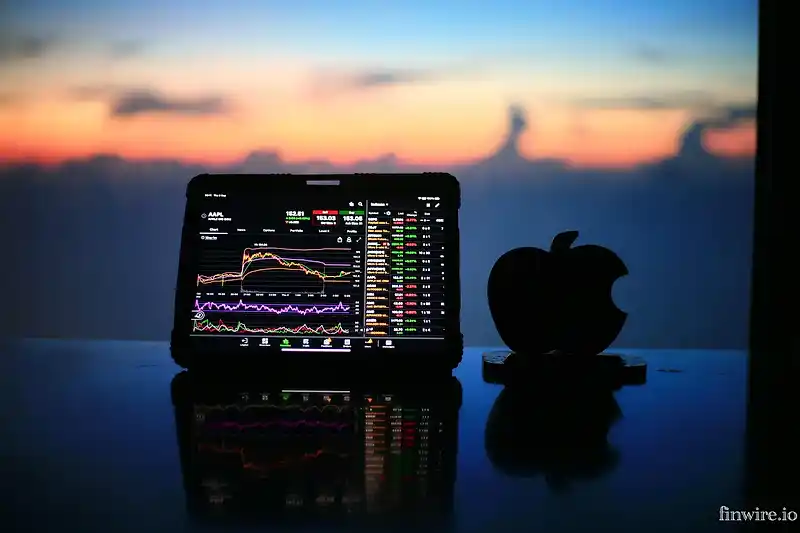
Wall Street suffers historic losses as Dow, S&P 500 plunge into correction territory
Nvidia shares tumbled about 14% and newly public Anthropic fell 9% as AI fears fueled a brutal sell-off that erased the Nasdaq's gains for the year.

Wall Street sees biggest market cap drops ever after midterm bloodbath for GOP
S&P 500 firms shed $2.9 million in market value and Nasdaq companies lost $2.5 trillion – both single-day records – on Thursday as investors panicked over a looming data-center reckoning in the wake of Democrats’ midterm sweep.
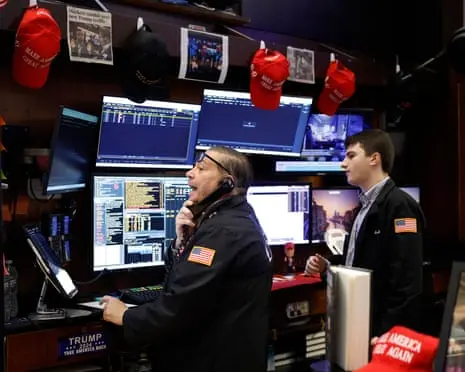
Nasdaq sees worst day in 18 months as investors bet on AI slowdown after Democrats’ election triumph
Nearly $2tn shaved off Nasdaq value as worries of curbs to AI datacenters ripple across bourses The Nasdaq share index had its worst day in 18 months after slumping 5.5% on Thursday amid growing signs that the artificial intelligence industry will face tougher regulation because of the midterm election results. As Wall Street sustained widespread losses, the Nasdaq composite tumbled into...