The Week Ahead on Wall Street: We’re Not in Kansas Anymore
That is why the remark from Swiss National Bank Chairman Martin Schlegel that “the wind has changed on interest rates” landed so neatly. The wind has changed, and oil is doing a fair amount of the blowing.
Oil set the drumbeat for most of the week and will likely continue to do so for the foreseeable future, but Friday’s CPI was always going to be the lead singer because it arrived only days before what had previously looked like a razor-close FOMC decision.
We’re Not in Kansas Anymore
Wall Street spent much of the summer treating the bond market like an irritating neighbour: loud, occasionally disruptive, but ultimately something equities could ignore as long as earnings kept coming through. That arrangement is starting to break down.
The problem is that oil has changed the conversation.
WTI has climbed back toward $100/bbl, diesel has pushed above $6 a gallon, and the inflation scare investors thought was safely boxed up has climbed back onto the trading desk. The US 10-year briefly tested 5%, only the second visit to that level since 2007 after the short-lived break in October 2023, while two-year yields surged almost 20 basis points toward 4.6%. The message from rates is becoming difficult to finesse: the energy shock is no longer being treated as a temporary nuisance. It is being priced as a policy problem.
That is why the remark from Swiss National Bank Chairman Martin Schlegel that “the wind has changed on interest rates” landed so neatly. The wind has changed, and oil is doing a fair amount of the blowing.
Oil set the drumbeat for most of the week and will likely continue to do so for the foreseeable future, but Friday’s CPI was always going to be the lead singer because it arrived only days before what had previously looked like a razor-close FOMC decision.
In the end, inflation came in close enough to expectations that nobody needed to reach for the fire alarm, but there was just enough heat underneath the surface to make a September hike much easier to justify. Headline CPI rose 0.4% in August, exactly as expected, leaving the annual rate at 3.4%, while core prices rose 0.3%, slightly hotter than expected even as the yearly core rate eased a tick to 2.4%. Inflation breadth improved somewhat, an important detail given Chair Kevin Warsh’s focus on how widely price pressures are spreading, but it wasn’t enough to declare the job done.
And that was probably all the market needed.
By late Friday, Fed funds futures were assigning better than an 80% probability to a quarter-point hike on Wednesday. The CPI itself did not create that trade from scratch. A firmer PPI report, another surprisingly strong payroll print, and the run higher in energy prices had already moved the furniture around before CPI arrived. Friday simply failed to give the Fed a persuasive reason to put everything back where it was.
That is why the market response was relatively orderly. The argument has moved on from whether the Fed can hike to what a hike would actually mean.
This is where Wednesday gets interesting.
If the Fed raises the current 3.5% to 3.75% range by a quarter point, investors will immediately ask whether this is one hike designed to lean against a renewed inflation pulse or the first step in another tightening cycle. That may sound like a fine distinction on a policy statement, but for markets it is the difference between taking one punch and discovering there are several more rounds on the card.
Wall Street can probably absorb one hike.
A cycle is a different proposition.
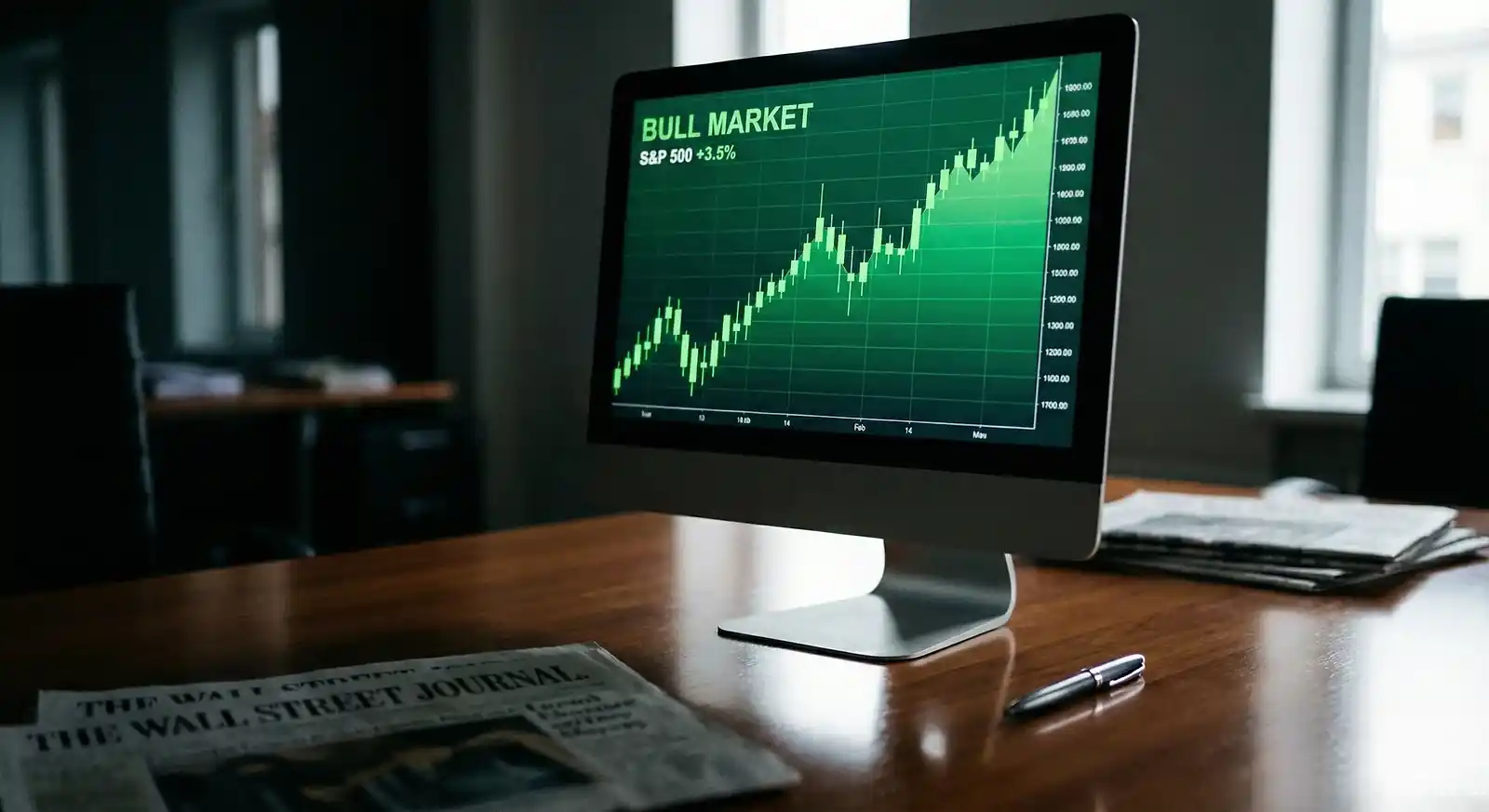
The S&P 500 is still up nearly 12% this year, supported by strong corporate earnings and the extraordinary investment boom around artificial intelligence infrastructure, so this is hardly an equity market staggering around looking for a chair. But the index is roughly 2% below its mid-August record, and the steady rise in Treasury yields is starting to test how much valuation compression investors are prepared to absorb while remaining confident that earnings can keep doing the heavy lifting.
The closer the 10-year gets to 5%, the harder that conversation becomes.
Higher Treasury yields give investors an increasingly respectable alternative to equities while simultaneously raising borrowing costs throughout the economy. That pressure is unlikely to be distributed evenly either. Smaller companies and other rate-sensitive areas of the market, particularly those that depend more heavily on debt financing, have much less room to shrug off another leg higher in yields than the cash-rich giants dominating the major indices.
There is an important counterargument. Yields have also been rising for some good reasons, including stronger growth expectations, while corporate earnings continue to expand at a rate that has so far outrun the rise in real yields. As long as profits keep delivering, the equity market still has something substantial underneath it.
But that argument becomes more difficult if Wednesday reveals that the Fed believes there is considerably more work to do.
A quarter point hike accompanied by language suggesting policy has simply been recalibrated would be one thing. A hike accompanied by a warning that inflation remains too broad, energy pressures are threatening to linger and further moves may be required would force the market to reopen a tightening path that only a few months ago barely existed.
That is the real event risk next week.
Warsh also has a credibility issue sitting in the background. Markets have debated the Fed’s reaction function since his July press conference, and concerns about central bank independence have not completely disappeared. His hawkish Jackson Hole speech moved expectations materially, and Wednesday is the first real opportunity for the new Fed Chair to show markets whether that rhetoric translates into policy.
Which brings us back to oil.
The resurgence in crude has changed the arithmetic because it has arrived at exactly the wrong moment for a central bank still dealing with inflation above target. WTI around $100/bbl and diesel above $6 are not merely commodity market curiosities when policymakers are debating whether inflation pressures have genuinely been contained. The longer energy remains elevated, the harder it becomes to argue that the recent rise in inflation expectations can simply be looked through.
And that is why this meeting feels different from the ones Wall Street became accustomed to.
For much of the year, investors could still entertain the idea that the next meaningful policy move would eventually be toward easier money. Now they head into Wednesday with more than an 80% probability of a hike, the 10-year pressing against 5%, the two-year near 4.6%, crude around $100/bbl, and an equity market that has finally begun to show a little sensitivity to the price of money.
The question is no longer simply whether Warsh hikes.
It is whether he hikes once and walks away, or whether Wednesday marks the moment when Wall Street has to start pencilling another tightening cycle back onto the roadmap.
After years of markets instinctively looking over their shoulder for the next Fed easing cycle, that would be a meaningful change of scenery.
We’re not in Kansas anymore.