The Research Timeline on AI Inference Is Already Behind the Market

The model most allocators still cite for when AI inference overtakes training puts the crossover around 2030. The hardware Nvidia is already shipping, the guidance hyperscalers already raised, and the CEO statements already made at CES say it happened this year. An advisor waiting for the conservative model to catch up before repositioning a client is waiting for something the market has already priced.
The Model Most Allocators Are Still Using
McKinsey’s data center demand model, published in February 2026, is the version of this story most research desks cite. It projects total global data center demand rising from 82.3 gigawatts in 2025 to 219.0 gigawatts in 2030, with training growing from 23.1 to 62.2 gigawatts and inference growing from 20.9 to 93.3 gigawatts, crossing 50 percent of AI-specific demand only near the end of the decade. That model treats the shift as gradual and still early. We think that’s the piece worth disagreeing with directly, because the ground-level data doesn’t support a gradual timeline anymore.
Why the Conservative Timeline No Longer Holds
Deloitte’s November 2025 estimate put inference at half of all AI compute in 2025, already jumping to two-thirds in 2026, not 2030. The Futurum Group’s December 2025 report went further, with analyst Nick Patience stating that inference workloads would overtake training in revenue terms within the same year. At CES in January 2026, Lenovo CEO Yuanqing Yang told reporters the historical 80 percent training, 20 percent inference split in AI spending is reversing now, with the company’s own forecast calling for 80 percent inference going forward.
The strongest evidence isn’t a projection at all. At Nvidia’s GTC 2026 conference, the company shipped the Groq 3 LPX, a dedicated inference rack built on purpose-designed chips, sold as a distinct product line alongside its training-focused Vera Rubin platform. A company does not build and ship separate hardware categories for a transition it expects to matter in 2030. By early 2026, inference had already crossed 55 percent of total AI cloud infrastructure spend, ahead of training, according to the same infrastructure analysts tracking the hardware shift.⁶ That is a present-tense fact, not a forecast a client’s allocation should be waiting on.
What This Changes About the Advice You’re Giving
This has a direct bearing on how you should be timing reallocation conversations, not just what you recommend. HSBC upgraded Digital Realty from Hold to Buy in the second quarter of 2026 and raised Equinix’s multi-year growth targets, both explicitly on inference-driven demand rather than the training-campus narrative that dominated client conversations through 2024 and 2025. A portfolio manager on CenterSquare Investment Management’s real estate securities team frames the case in terms directly useful for a client meeting: the carrier-dense urban real estate these REITs already hold is the asset inference needs now, which is a present-tense advantage, not a future one an allocation model is still waiting to price.
If a client’s AI infrastructure exposure, or a product a wholesaler is pitching, was built around the training-era story, rural mega-campuses, chip suppliers, debt-financed operators still burning cash to build out capacity, that positioning targeted a 2030 timeline the market has already passed. The due diligence question worth asking now isn’t whether the AI infrastructure theme still has room to run. It’s whether a specific holding targets the transition that already happened or the one the client’s advisor thinks is still four years out.
The Muni Exposure Riding on the Same Assumption
This matters beyond equities. Loudoun County, Virginia expects data center property tax revenue to approach $900 million in fiscal year 2025, nearly matching the county’s entire operating budget, a concentration its own board of supervisors is reconsidering because of how dependent the county has become on one industry.⁹ That revenue is overwhelmingly tied to the training-scale campuses built in the county over the past several years, the exact asset class the faster inference timeline is pulling investment away from. A municipal bond position tied to that tax base deserves the same timing question as an equity holding: is the underlying demand durable at the pace the market has already moved to, or was it underwritten against a slower curve.
What to Bring to the Next Client Review
The training side of this story is not disappearing, even on the slower model. It nearly triples in absolute gigawatts by 2030. What’s changed is that inference arrived years ahead of the timeline most portfolios and most muni underwriting assumed, and the earnings calls, hardware roadmaps, and rating actions of the last two quarters confirm it. The training-specific fights over water, power, and land covered elsewhere concentrate in exactly the category the market is now allocating past faster than expected. Waiting for a research house’s base case to formally catch up before adjusting a client’s exposure is not a neutral choice. It’s a bet that the slower timeline is right, against evidence that it already isn’t.

AI: Bubble, Super-Cycle, or Both?
Market Analysis by covering: S&P 500, NVIDIA Corporation, Palantir Technologies Inc. Read 's Market Analysis
AMD Earnings Show Demand Isn’t the Risk in the AI Trade
Market Analysis by Itai Smidt covering: S&P 500, Dow Jones Industrial Average, Intel Corporation, NVIDIA Corporation. Read Itai Smidt's Market Analysis

AI Spending Vs. Nasdaq Sell-Off: Why Wall Street May Be Misreading the Boom
Market Analysis by covering: Nasdaq 100, Microsoft Corporation, Oracle Corporation, Amazon.com Inc. Read 's Market Analysis

Texas Data Center Restrictions Threaten Timelines, but Not Necessarily AI Demand
Market Analysis by Ivana Delevska covering: Microsoft Corporation, Oracle Corporation, Alphabet Inc Class A, Amazon.com Inc. Read Ivana Delevska's Market Analysis
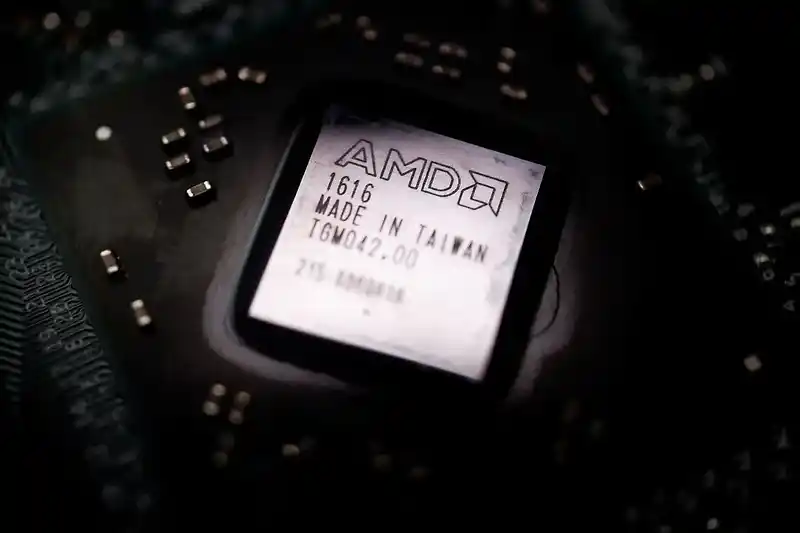
AMD shares jump as AI-driven data-centre strength fuels growth outlook
Results reaffirm demand for AI infrastructure remains strong