Nvidia’s Jensen Huang Problem: The Risks of a Founder’s Exit
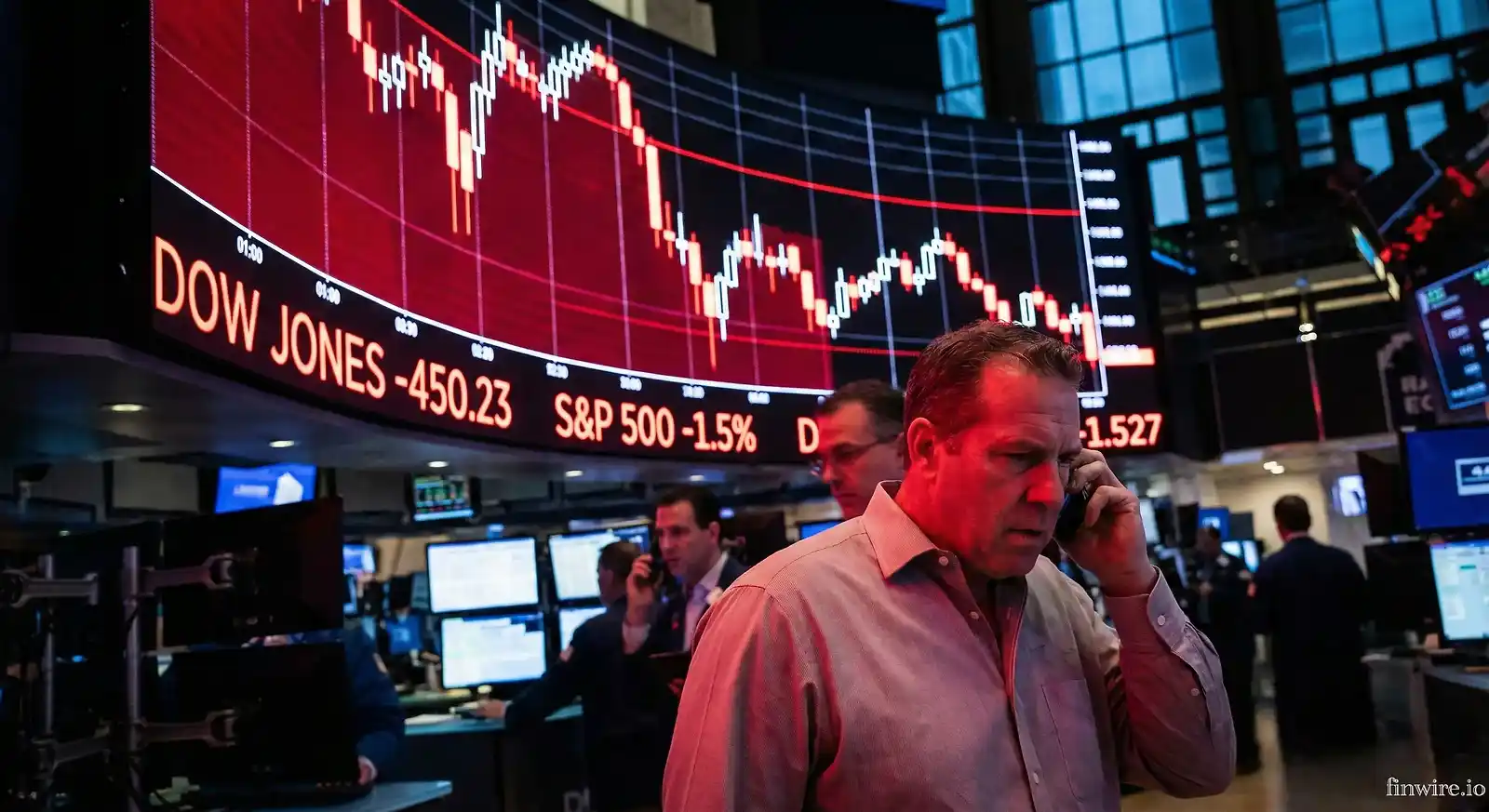
Jensen Huang’s resignation as Nvidia (NASDAQ:NVDA) CEO could become one of the most consequential leadership shake-ups in corporate history. The impact would reach well beyond Nvidia, a company that has helped define the global AI race.
Nvidia’s influence extends far beyond the chip industry, so a change at the top could ripple through startups and geopolitics. Routes that have allowed Nvidia chips to reach China despite U.S. export controls may be closing, though Beijing’s response remains uncertain.
The company could lose billions in sales. And if that leaves Nvidia with less money to invest in smaller AI companies, its influence across the startup world could weaken too.
Still, Huang stepping down would not mean the end of Nvidia—or of the global shift toward AI. Businesses were investing in AI long before ChatGPT arrived in 2022, and that demand is unlikely to disappear.
The cycle of innovation and investment Huang often described would continue across major tech companies and startups, even if it slowed. In a more cautious climate, that slowdown might give established leaders an even stronger advantage.
Nvidia’s Days as AI’s Open Checkbook May Be Numbered
Nvidia’s interim CEO, Colette Kress, is expected to take a more cautious approach to funding AI companies. Before stepping down, Jensen Huang had already started encouraging Nvidia’s partners to line up more of their own financing.
At a recent Nvidia conference in Berlin, Huang reportedly told emerging cloud companies they would need customers to pay upfront if they wanted access to Nvidia’s sought-after GPUs. That would make their projects easier to fund and mean Nvidia was not carrying the financial burden alone.
Startups that have relied on Nvidia’s backing see this as a significant shift. With Kress—who was reportedly wary of some deals made under Huang—now in charge, they expect the company to pull back further.
UBS analyst Tim Arcuri estimates that a retreat by Nvidia could remove $50 billion or more from the market.
Nvidia Reassesses Its Deal-Making Push
Over the past year, Nvidia has done more than sell chips. It has backed emerging companies, helped finance data-center projects, and even agreed to rent chips from some customers. Those arrangements helped reassure lenders that the companies had solid contracts and that Nvidia’s chips would find buyers.
Nvidia had planned to expand these incentives and strike more deals than ever. Rivals such as Google and AMD were offering similar support, and Jensen Huang wanted to make sure Nvidia did not lose ground. One of the executives helping lead the effort was Nvidia vice president Nico Caprez, Huang’s son-in-law.
But the company soon began to take a harder look at the numbers. Nvidia announced its financing program in July, and by August, Huang and finance chief Colette Kress were questioning whether some of the deals were worth the investment.
WSJ: How Jensen Huang’s Asian Network Helped China Access Advanced AI Chips
Just outside Malaysia’s capital, Bangladeshi workers are operating heavy machinery at a construction site so large it covers the equivalent of 117 football fields. It may seem a world away from Silicon Valley, but the Wall Street Journal says projects like this sit at the center of a growing controversy around Nvidia CEO Jensen Huang.
A Chinese company is expected to use advanced Nvidia chips at the site. Malaysia is also emerging as a major data-center destination, potentially second only to Virginia, which could give Chinese AI firms access to powerful computing capacity.
The Journal reports that Huang built a multibillion-dollar business serving China’s appetite for U.S. chips, working through Asian partners and lobbying Washington to preserve sales. Chinese firms, meanwhile, have reportedly obtained Nvidia chips through smuggling or accessed them remotely from places such as Malaysia, helping them compete with U.S. AI companies.
Now, scrutiny of Huang’s relationship with an executive at an Asian partner who may have links to Chinese intelligence could put both his position and the wider network at risk. The fallout may also disrupt a system that has helped Chinese AI companies get access to advanced computing.
Nvidia Directors’ Long Tenures Bring Billions in Wealth—and Questions About Independence reported by WSJ. Nvidia’s independent directors have earned nearly $188 million in compensation over the past 20 years and made more than $15 billion from stock holdings and sales, the Wall Street Journal reports. Their fortunes have grown alongside Nvidia’s share price, while several have remained on the board for decades—four for roughly 30 years.
That combination has raised questions about how independent the directors can remain. One expert told the Journal that long board tenures and substantial stock wealth may make it harder to offer a truly outside perspective.
NVIDIA Creates Board Committee to Oversee National Security and Export Controls
NVIDIA’s board has set up a standing committee to keep a closer watch on national security, export controls, and global trade risks. The company’s National Security and Global Trade Compliance teams will report to the committee on board-related matters and to Interim CEO Colette Kress on day-to-day operations.
Director Suzanne Nora Johnson will chair the committee, joined by directors Stephen C. Neal and John O. Dabiri. They will meet at least once a quarter, both with company leaders and in private sessions.
The committee will also oversee plans to strengthen the two teams and bring in independent experts in law, national security, and global trade compliance.
Employees Urge NVIDIA Board to Reinstate Huang
Senior NVIDIA employees have reportedly urged the board to bring Jensen Huang back as CEO, warning that the company could lose “irreplaceable talent” if he does not return, according to The Wall Street Journal.
Some employees are also considering a show of support for Huang, including a possible demonstration at the company’s campus in the coming days.
Analysts Expectation
- Yorkville Ives analysts reiterated an Outperform rating and $225.00 price target on NVIDIA (NVDA).
- TD Cowen analysts lowered the price target on NVIDIA (NVDA) to $200.00 (from $275.00) while maintaining a Buy rating.
- KeyBanc analysts reiterated a Sector Weight rating and $155.00 price target on NVIDIA (NVDA).


NVDA fiscal Q3 2027 earnings after market (4:20 pm ET) Tuesday Nov. 17, 2026
Analyst Ratings | |||
SOURCE | BUY | HOLD | SELL |
LSEG | 48 | 15 | 1 |
TipRanks | 26 | 12 | 1 |
Earnings Expectation | |
EPS | 2.48 USD |
Revenue | 108.96BUSD |
Expected Move by Option Expiration:

NVDA Expected Move:
Options markets imply NVDA could swing roughly between 167.25-145 post-earnings this week and between 169-143.35 next week’s expiry.
NVDA Put/Call Ratio:
Heavy call bias in the next four option expiries suggests that option traders are bullish on NVDA post-earnings.
Technical Analysis Perspective:
In late October, NVDA broke below a major rising trendline that had been in place since its April 2025 low, triggering a sharp decline.
The stock fell $94.60—from $243.37 to $148.80—in just five weeks, wiping out more than $1.5 trillion in market value.
After earnings, the price may remain range-bound between $150 and $165. A decisive breakout in either direction could set the trend for the coming weeks.
The weekly RSI is hovering near 31, a level not seen since October 2022, before OpenAI’s launch of ChatGPT.
For now, investors appear more focused on who will replace Jensen Huang and how serious the company’s current crisis is than on its earnings or forward guidance.
Weekly Candlestick Chart

NVDA Seasonality Chart:

Since 2000, NVDA has finished November higher in 74% of years, with an average rise of 6.82%. December has been stronger historically, with the stock closing higher 62% of the time and averaging a 2.08% return.
Below are the key ways an InvestingPro subscription can enhance your stock market investing performance:
- ProPicks AI: AI-managed stock picks every month, with several picks that have already taken off this month and in the long term.
- Warren AI: Investing.com’s AI tool provides real-time market insights, advanced chart analysis, and personalized trading data to help traders make quick, data-driven decisions.
- Fair Value: This feature aggregates 17 institutional-grade valuation models to cut through the noise and show you which stocks are overhyped, undervalued, or fairly priced.
1,200+ Financial Metrics at Your Fingertips: From debt ratios and profitability to analyst earnings revisions, you’ll have everything professional investors use to analyze stocks in one clean dashboard.
Institutional-Grade News & Market Insights: Stay ahead of market moves with exclusive headlines and data-driven analysis.
A Distraction-Free Research Experience: No pop-ups. No clutter. No ads. Just streamlined tools built for smart decision-making.
- Vision AI: InvestingPro’s newest addition. It analyzes any asset’s chart with professional-grade market intelligence, identifying key timeframes, technical patterns, and indicators — then delivers a clear trading playbook with the levels, scenarios, and risks that matter most in under a minute.
Not a Pro member yet? Subscribe below at 55% off during the limited-time EARLY-BIRD SALE.
- App users can subscribe here.
- Web users can subscribe here.
***
Ali Merchant is a seasoned financial market professional with expertise in Technical Analysis, Treasury & Capital Markets, Trading, Sales, Research, Training, & Fund Management. He is the founder of www.twtlearning.com providing financial education, research, and advisory services to fund & hedge fund managers and family offices.
He has been trading FX, FX options, US stocks & options, Indices, Commodities & Oil, and Metals Futures. He has a CMT charter, an AAPTA membership, and a CMT Canada membership. He has worked in various roles and organizations in North America and the GCC, such as ABN Amro bank, Thomson Reuters, Refinitiv, MAK Allen & Day Capital Partners, and Bridge Information Systems.
He is regarded as an excellent mentor and has trained more than 2000+ users in North America, Gulf countries & Asia on financial markets & products, active and passive trading, and technical analysis strategies. He emanated technical analysis daily and weekly reports for BridgeNews Chicago bureau and updated technical analysis reports on Bloomberg and Reuters while working with ABN Amro bank treasury & capital markets. Has moderated and produced technical analysis reports for Thomson Reuters (Refinitiv) users’ chat rooms and trained users on technical analysis techniques and models. Conducted TA & Global Markets outlook workshop with central banks, sovereign funds, global & regional banks & family offices.