Apple’s Duo Pricing Reshapes the Bull Case for iPhone Revenue
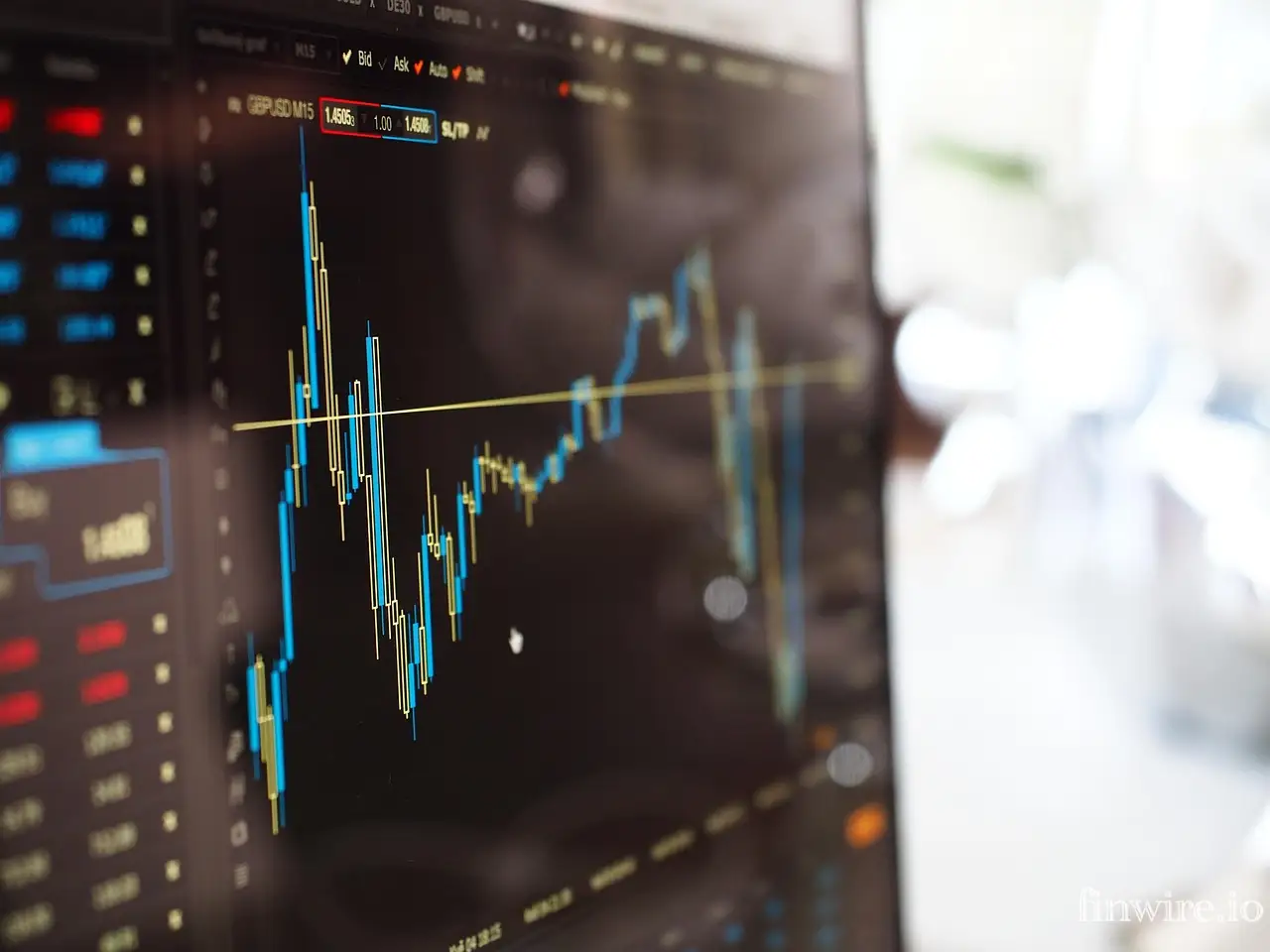
AAPL traded at $319.14 Thursday, up $3.80 or 1.20% from Wednesday’s $315.34 close, having climbed more than 1% in the premarket session and touched almost $318 in early trade before extending higher.
The relative move is what matters. The Nasdaq Composite was down 185.48 points at 26,067.86, a 0.71% decline. The S&P 500 fell 0.61% to 7,590.14. The Russell 2000 gave up 0.85% and the VIX jumped 9.23% to 17.98. Apple outperformed its index by roughly 190 basis points on a day when the 10-year Treasury yield hit 4.90%, its highest since November 2023, and West Texas Intermediate touched $100.10 a barrel.
Wednesday told the opposite story. Apple closed at $315.34, down 0.28%, on 64.7 million shares — nearly 2% above its three-month average of 53.7 million — on the day it unveiled the biggest change to the iPhone in its nearly twenty-year history. The S&P 500 finished at 7,636, down 0.48%, and the Nasdaq at 26,253, down 0.64%. Microsoft closed at $491.65, off 0.47%, and Alphabet at $330.65, down 2.28%.
So the sequence was: launch day flat-to-lower on heavy volume, then a 1.2% advance the following session as the market digested pricing and product detail against a hostile macro tape.
Market capitalization stands at $4.602 trillion. The trailing price-to-earnings ratio is 36.28 against trailing EPS of $8.69 on a diluted basis over twelve months. The 52-week range runs $225.95 to $344.57 — Apple sits 41% above the low and 7.4% below the high.
Performance has been strong and getting stronger. The stock is up 39.43% over twelve months, roughly 35% over the past year on an alternative measure, and close to 21% year to date. Against an S&P 500 up 11.55% year to date, Apple has been a source of index outperformance rather than a drag.
Volume Thursday ran above the 53.2 million three-month average. The stock has now traded above 53 million shares in consecutive sessions, which is turnover consistent with repositioning rather than drift.
The Day-After Trade That Broke a Two-Decade Pattern
Thursday’s gain is statistically unusual and the market noticed.
Apple shares have historically fallen or been little changed the day after a major product introduction, according to a study of releases going back to 2007 published this week. The pattern is well documented and it makes intuitive sense: anticipation builds into the event, the product is revealed, and the news is sold.
Thursday broke it. The stock rose more than 1% in premarket trading and held the gain into the session, bucking the multi-year trend.
The reason is pricing, and specifically the fact that the foldable came in cheaper than the market expected. The iPhone Duo starts at $1,999 for 256GB. Investor expectations had clustered in the $2,300 to $2,500 range, with one pre-event projection putting the device between $2,099 and $2,299. Apple undercut the low end of that band by $100 and undercut Samsung’s Galaxy Fold7 by exactly one dollar.
That single number resolved the biggest overhang on the launch. A $2,500 foldable is a halo product with a negligible unit contribution. A $1,999 foldable is a new price tier that a meaningful slice of the existing installed base can actually reach, particularly with a leasing option attached.
The revision that followed captures the shift. One prominent estimate for the Duo’s share of fiscal 2027 iPhone revenue was doubled from 5% to 10% overnight.
Wednesday’s 0.28% decline reflected skepticism about how many consumers would pay up for an expensive new device. Thursday’s 1.2% advance reflected the arithmetic once the price sank in.
There is a competing interpretation worth holding. Apple raised iPhone 18 Pro and Pro Max prices by $100 each, and one immediate read on Wednesday was that the stock slid because of the increase rather than the foldable. Higher prices across the premium line also narrow the perceived gap to a completely new form factor, which could push some buyers toward the Duo rather than away from it.
Either way, the day-after reversal is a genuine signal in a stock where the day-after pattern has held for nearly twenty years.
The Duo: $1,999, a 7.6-Inch Display, and a Price Tier That Did Not Exist
The product detail justifies the market’s attention. The iPhone Duo is Apple’s first foldable and the largest form-factor change since the original iPhone.
The device uses a passport-like design that opens and closes like a book. The outer display measures 5.4 inches. Unfolded, it reveals a 7.6-inch display Apple describes as the largest ever on an iPhone, positioned for video, gaming, work and multitasking. Apple says it is the thinnest iPhone yet when unfolded. The hinge — historically the failure point on every foldable ever shipped — was designed and built with the help of AI and 3D printing.
Pricing starts at $1,999 for 256GB and scales through configurations to 2TB, with the top of the range reaching $3,199. Preorders open October 16 across more than 70 countries and regions, with availability from October 23. Apple Pencil support on either display arrives later this year.
The strategic significance sits in the average selling price line. A $1,999 entry point establishes an entirely new premium tier above the existing Pro range heading into the holiday quarter — the ASP lever bulls have been asking Apple to pull for years. iPhone generated $54.25 billion in the June quarter at 49.6% of total revenue. A device carrying a 67% premium over the $1,199 iPhone 18 Pro, even at modest unit volumes, moves that number.
The AI framing was deliberate. The new chief executive opened his first keynote by describing what an ideal personal intelligence hub would look like — something always with you, deeply personal, able to bring intelligence to the moments that matter — before revealing the iPhone as the answer. It was a structural echo of the original 2007 launch.
The device rollout sits alongside upgraded Siri AI, Apple Intelligence extended across apps, and Apple Reference Images, a feature designed to detect AI-generated photos.
The counter-case is unit math, and it is not trivial. Foldables have been available from competitors for years and still represent a small share of the market. Apple enters the category behind Samsung.
iPhone 18 Pro at $1,199 and the $100 ASP Lever
The volume story is not the foldable. It is the $100 price increase across the Pro line.
The iPhone 18 Pro starts at $1,199 and the Pro Max at $1,299, each a $100 increase over the iPhone 17 equivalents. The devices carry a similar look and feel to last year’s models but add A20 Pro processors built on a 2-nanometer process, with improved CPU, GPU and neural engine performance for running games and on-device AI models. Battery life reaches 24 hours. The camera adds a variable mechanical aperture. New colours include glacier and burgundy, following the reception of last year’s Cosmic Orange.
Run the revenue arithmetic. iPhone revenue was $54.25 billion in the June quarter alone. A $100 increase applied across the Pro and Pro Max mix — historically the majority of iPhone revenue even when it is not the majority of units — compounds through every quarter of the fiscal 2027 cycle.
The increase was not opportunistic. Component and memory costs have surged roughly 38% year over year, and pre-event analysis flagged the likelihood of 10% to 20% retail price increases across the 2026 lineup. Apple raised prices on Macs and iPads over the summer for the same reason. A $100 hike on a $1,099 base is a 9.1% increase — at the low end of the range the cost structure implied, which supports unit demand while limiting margin damage.
The company has done this before and it worked. Prices on the iPhone 16 and iPhone 17 were each raised by at least $100 to offset higher memory component costs, and neither cycle produced the demand destruction bears predicted.
The rest of the lineup was priced more conservatively. AirPods 5 held at $129, or $149 with a wireless charging case — the same price as the previous generation. Apple Watch Series 12 and Apple Watch Ultra 4 arrived with an all-new health sensing system, the S11 chip and Audio Intelligence, with the Ultra 4 starting at $799. Both watches and the AirPods reach stores Friday, September 18.
Holding accessory pricing flat while raising phone pricing is a deliberate mix decision.
The Leasing Program and the $58-a-Month Math
The least-discussed announcement may matter most to the fiscal 2027 revenue line.
Apple is now offering a way to lease a new phone. The Duo works out to approximately $58 monthly through the programme, against a $1,999 outright price.
That reframes the purchase decision entirely. A $1,999 sticker is a barrier for most of a 2.5 billion-device installed base. Fifty-eight dollars a month sits inside the range consumers already pay carriers for device financing, and it converts a capital decision into a subscription decision.
It also does something structurally important to Apple’s revenue profile. Leasing turns hardware into a recurring payment stream, softens the cyclicality of the iPhone upgrade cycle, and keeps devices inside Apple’s ecosystem rather than in the second-hand market. It is the hardware analogue of what Services did to the income statement over the past decade.
The margin consequences are less obvious and cut both ways. Leasing revenue recognition differs from outright sales, and financing carries balance-sheet and credit exposure Apple has historically avoided. Against that, a leased device is a device that returns, which supports a certified refurbished channel and a predictable replacement cadence.
The strategic logic connects to the pricing decision. Apple raised prices on the premium lineup by $100 and simultaneously introduced a mechanism that hides price from the monthly decision. Higher ASPs with lower perceived cost is the combination that lets the company push through 38% component inflation without losing units.
Whether it works shows up in the December quarter, and the December quarter is the one that includes the October 23 Duo launch and the full holiday period.
That timing is why guidance for the September quarter — 9% to 11% revenue growth with gross margin at 47% to 48% — is less informative than usual. The product cycle that matters starts after it closes.
Technicals: $344.57 Above, $315.34 Below, and a $305 Floor
The chart is constructive without being extended.
Apple at $319.14 sits 7.4% below its 52-week high of $344.57 and 41.2% above its 52-week low of $225.95. That places it in the upper third of its annual range with room before resistance.
The immediate levels are close. Wednesday’s $315.34 close is the first support and it now carries additional weight as the launch-day settlement — the price at which the market marked the entire product cycle. Below it, $310 is the round-number shelf and roughly $305 marks where the stock consolidated through late August.
Above, $320 is the psychological handle Thursday’s session is testing. Beyond that, the path toward $344.57 has no meaningful obstruction because the stock moved through that zone quickly on the way down from its highs.
The moving-average picture supports the constructive reading. Apple has gained roughly 21% year to date and 39.43% over twelve months, which means the medium-term trend is intact and the stock is above its longer-term averages by a comfortable margin.
Volume is the confirming variable. Wednesday’s 64.7 million shares against a 53.7 million three-month average, followed by continued elevated turnover Thursday, indicates institutional repositioning around the product cycle rather than retail drift. Rising price on rising volume is the healthier combination.
The risk to the technical case is macro rather than company-specific. A 10-year at 4.90%, 62% to 64% odds on a Federal Reserve hike at the September 15–16 meeting, and Friday’s consumer price index print all sit outside Apple’s control. Consensus calls for 0.4% monthly headline CPI, 3.4% annually, with core at 2.4%. A hot core reading compresses every multiple in the index, and Apple trades at 36.28 times trailing earnings.
The stock’s defence is that it generated $34.4 billion of operating cash flow in a single quarter. In a rate shock, near-term cash flow is the scarcest asset — which is precisely why Apple outperformed Thursday while AI infrastructure names like CoreWeave fell 5.49% and Astera Labs 5.60%.