AI Meets Politics: A New Test for Tech Stocks


Market Analysis by James Picerno covering: S&P 500, NVIDIA Corporation, State Street® Technology Select Sector SPDR® ETF. Read James Picerno's Market Analysis
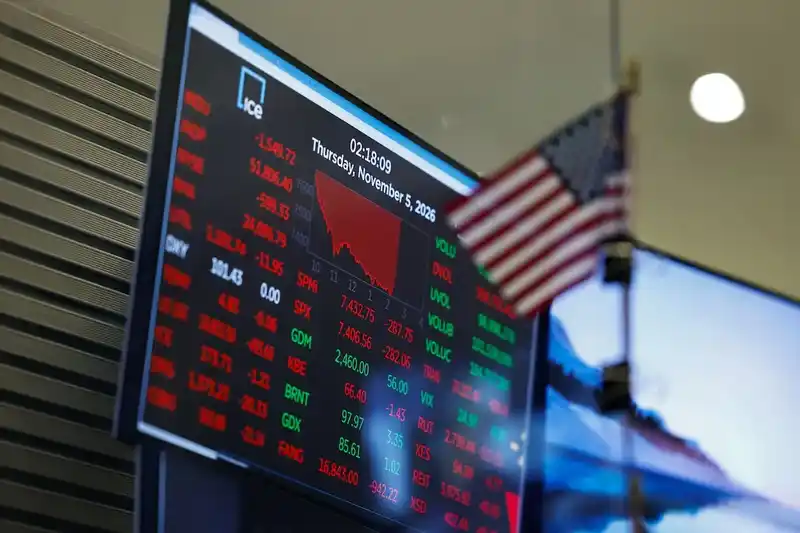
Skeptics of the AI-fueled surge in the stock market have long warned that a bubble may be forming. Those concerns deepened after yesterday’s sharp selloff in equities, which marked the market’s worst one-day decline in two years.
To be clear, the jury is still out on whether AI represents a bubble or simply a richly valued growth opportunity. There is also room for debate about how large an economic and business opportunity artificial intelligence ultimately represents. What is beyond dispute is that the technology has already transformed a wide range of industries, and its influence is likely to expand further in the years ahead. The challenge for investors is determining how to value that transformation — a question that’s come into sharper focus after yesterday’s stock market selloff.
Thursday’s rout in technology stocks, which dragged down the broader market, reflects Wall Street’s ongoing struggle to determine what the AI revolution is truly worth. The answer is unlikely to emerge anytime soon. Expectations will rise and fall as the technology evolves, companies refine their business models, and investors gain a clearer sense of which firms can convert massive AI investments into higher profits and productivity.
The blue wave of Democratic victories in Tuesday’s election introduces a new source of uncertainty for AI and technology stocks by potentially shifting the policy landscape toward greater regulation. Markets will be watching closely to see whether political developments translate into new constraints on the sector’s rapid growth.
The immediate focus is how markets price this new uncertainty in the wake of yesterday’s correction. The first question is whether key support levels will hold. In other words, was yesterday’s selling wave a one-off event, or does it mark the beginning of a deeper, longer correction? An early test will be whether the S&P 500 breaks below its 200-day moving average. If this widely followed trend line gives way, confidence in the near-term outlook could suffer another setback.
Note that the technology sector has already crossed this red line. After yesterday’s selloff, the Technology Select Sector SPDR ETF (NYSE:XLK) closed well below its 200-day moving average. The longer the ETF remains below that threshold, the greater the risk that weakness in technology stocks persists or deepens.

Incoming earnings data will also influence near-term sentiment. Most of the mega-cap technology companies have already reported their latest quarterly results, and the numbers broadly reinforced the AI growth narrative. The key concern is that AI-related spending continues to surge, leaving investors increasingly focused on whether future profits can justify the industry’s unprecedented capital investments.
A critical update arrives on Nov. 17, when Nvidia (NASDAQ:NVDA), the market’s premier AI bellwether and the semiconductor company at the center of the AI ecosystem, reports its latest quarterly results.
The key question in the days ahead is whether technology stocks, and the broader market, can find a floor. There is a reasonable case for optimism. One factor supporting this view: recession risk remains low. The acceleration in economic growth in the third quarter is expected to continue in Q4, according to the Atlanta Fed’s current GDP nowcast, which estimate another solid 3%-plus increase in output.
Meanwhile, the near-term outlook for the labor market still looks encouraging. U.S. weekly jobless claims continue to trend lower, falling below 190,000 last week. With new filings for unemployment benefits hovering near historic lows, the labor market remains resilient despite a softer pace of hiring.
With a relatively upbeat economic backdrop providing support, the AI revolution appears poised to continue transforming how businesses operate. But because that transformation is still in its early stages, investors are left grappling with two uncertainties: how to value the opportunity and how a Democratic-controlled Congress might reshape the rules governing its development.
Democrats formally take control of Congress in January, which means investors may be reluctant to fully price future earnings until policy priorities come into clearer focus. As a result, stocks could trade within a broad range through year-end as markets reassess the outlook for 2027.
The AI revolution is still unfolding, and a stock market correction is unlikely to derail its long-term trajectory. But determining how to value its economic and business impact, while also assessing how a shifting political landscape may influence its development, is likely to remain one of the defining challenges for investors in the months ahead.
Original Post
Related Articles
- Stock Markets News
AI boom heading for its dot-com moment? Here's what Jim Cramer thinks
- Stock Markets News
U.S. stock markets plunge as AI sentiment worsens in wake of Democrats’ election sweep
- Stock Markets News
Analysts and investors react to AI market rout
- Stock Markets News
‘It’s actually a bit of a disaster’: Analysts and investors react to AI market rout
- Economy News
Deep chip selloff drags global stocks lower on AI spending concerns