US Winemakers and Beer Brewers Face an Existential Crisis: Plunging Alcohol Consumption

Beer brewers have long suffered as Americans switched to wine. But since Covid, even winemakers got hit, and 2025 was really bad.
Beer brewers and winemakers in the US are struggling with an existential crisis: A substantial decline in consumption. It hit beer first, because people switched to wines. And then it hit both after the pandemic, when alcohol consumption declined all around.
There are numerous stories about vineyards not being able to sell their grapes, and winemakers not being able to sell their wines, and a slew of them have gone out of business. I described the fate of Vintage Wine Estates, a publicly traded winemaker with 34 widely known brands which filed for bankruptcy in July 2024 and entered out pantheon of Imploded Stocks.
The decline in alcohol consumption isn’t because the tapped-out overindebted always-struggling or whatever American consumer can no longer afford to buy a beer or some wine.
But it’s because older people have become aware of the toxicity of alcohol and what it does to their bodies, and they have cut back, and by a lot, and younger people never really got started in the large numbers that the older generations did at that age. And for the industry, this has turned into a deadly mix.
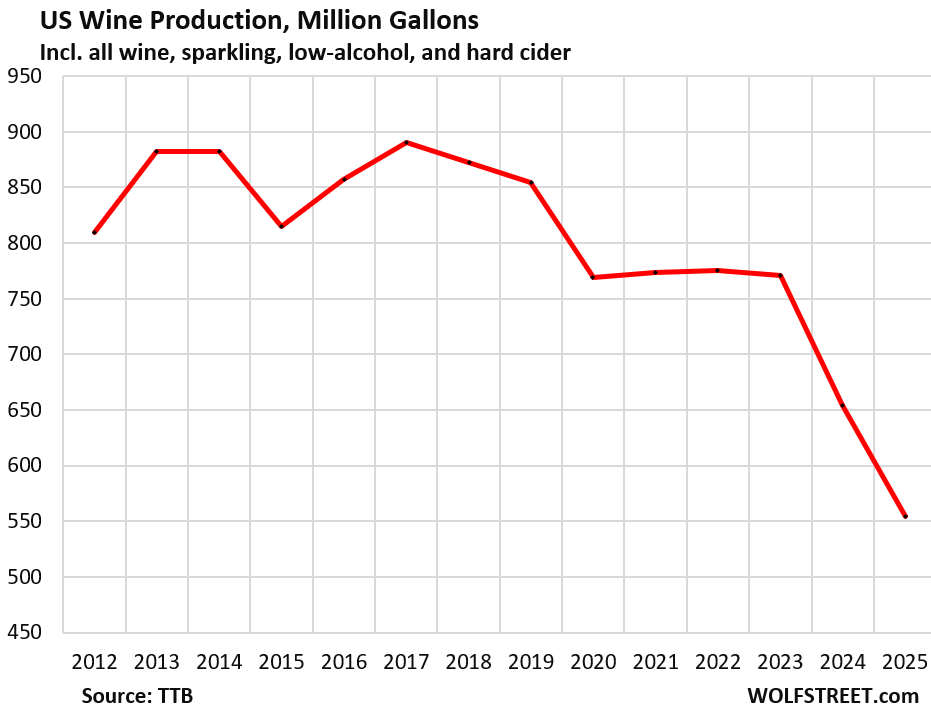
Wine production in the US plunged by 15.2% in 2025 from the prior year, and by 28% over the past two years, to 554 million gallons of all types of wines (including sparkling wine and hard cider). Since the peak in 2017, wine production has collapsed by 38%:
The data was released today by the Tax and Trade Bureau (TTB), based on the excise tax filings that winemakers have to file with the Treasury Department.
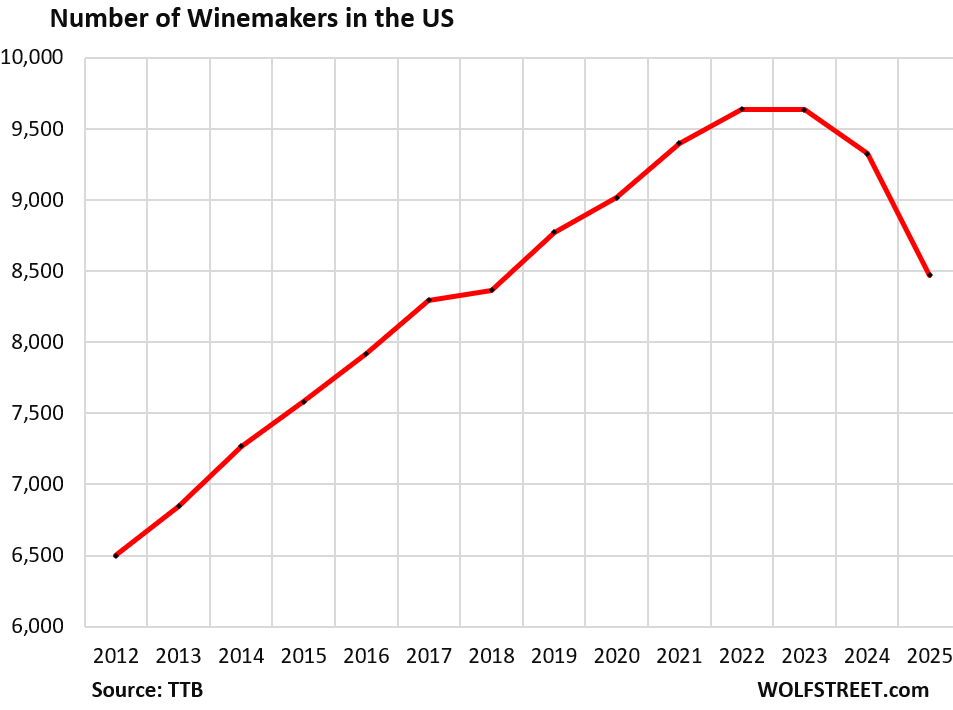
The number of winemakers in 2025 has dropped by 9% from the prior year, and by 12% from the peak in 2022. The year 2025 was a terrible year in terms of winemakers not being able to hang on any longer:
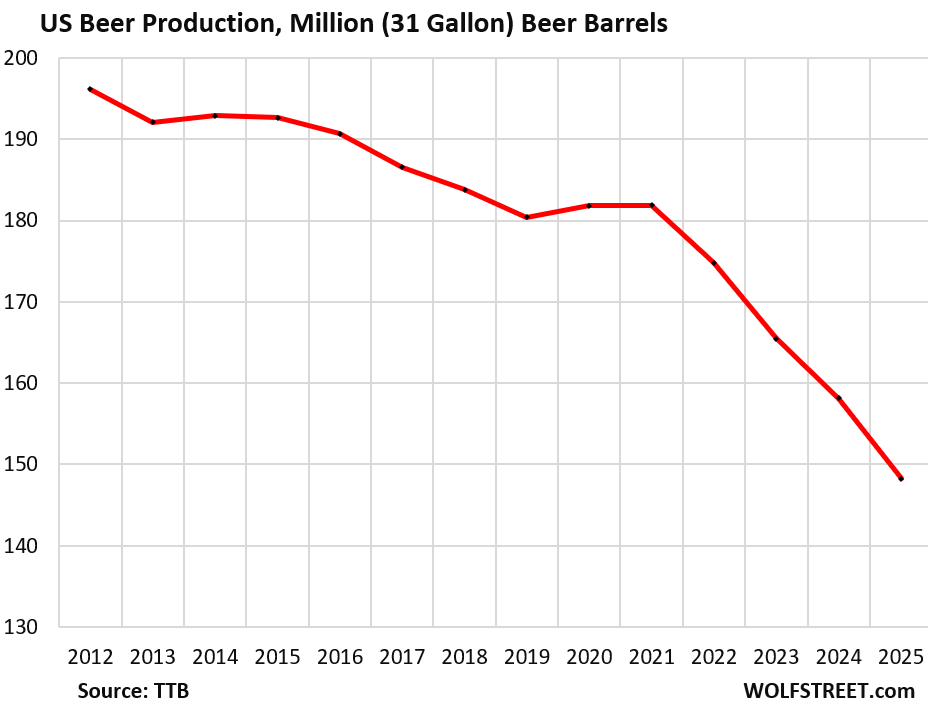
Beer production fell by 6.2% in 2025 from the prior year, and by 10.2% over the past two years, to 148 million barrels, the lowest in ages (for measuring beer production, 1 barrel = 31 gallons).
Since 2021, beer production has dropped by 18.5%. Since 2012, it has plunged by 24%, according to data from the TBB.
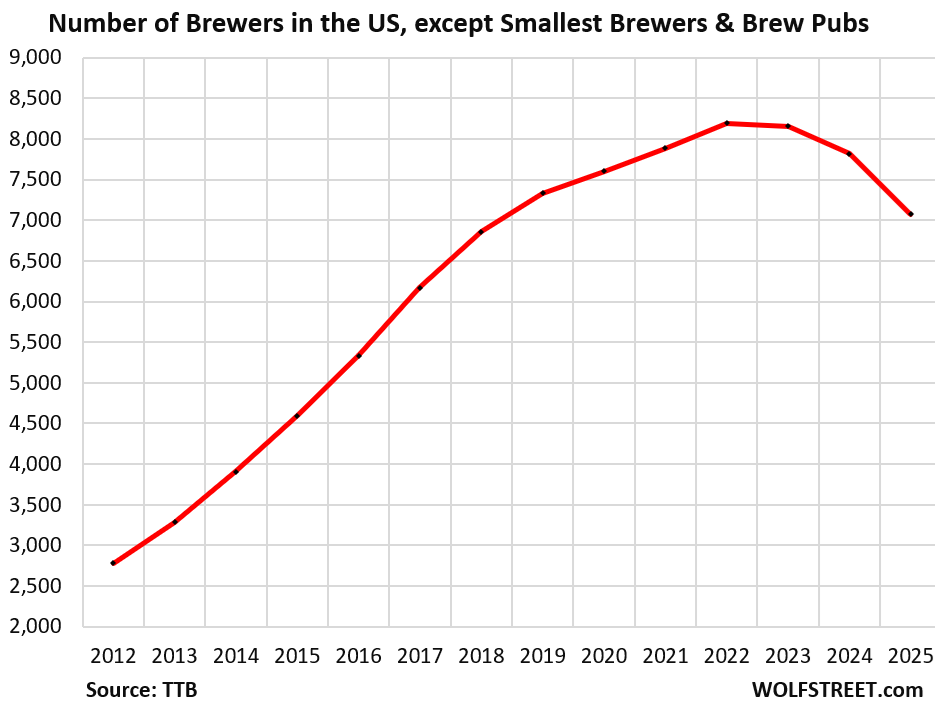
The number of beer brewers – not including the smallest brewers and brew pubs that don’t have to file the excise tax form – has dropped by 9.5% in 2025 to 7,024.
Since the peak in 2022, the number of brewers has dropped by 13.7%.
Very small brewers and brew pubs that are liable for less than $50,000 in excise taxes a year – they would produce less than 14,200 barrels of beer a year – do not have to file the excise tax form TTB F 5130.9, and are therefore not included in this count. There may be about 3,000 of them.
Beer production has long suffered from US consumers switching to wine. At the time, Big Beer was running the show, and Americans lost interest. That trend started decades ago when per-capita beer consumption began to decline.
Then small brewers started brewing delicious beers that caught people’s attention, and so began the craft brew boom that came out of the hide of Big Beer, which was losing market share. So Big Beer started buying many of the bigger craft brewers.
But new craft brewers kept springing up, and it was a dynamic industry, and sales of craft brews boomed, despite a continuous shakeout that wiped out many of the earlier brands that had brewed some great beers but in money-losing operations. By 2012, overall beer consumption started declining, and that decline accelerated since the pandemic, and craft brewers are getting hit too.
America makes some of the best beers and wines in the world, and exports some of them. But other countries too are cutting back on alcohol consumption. And governments encourage it with big sin taxes and with explanations of the health effects of alcohol. As older people are cutting back and younger people are not picking up the habit, the industry – similar to the tobacco industry – faces the prospects of a long decline.
I’m a huge fan of craft brewers and love many of their excellent IPAs. I want them to thrive. But I too have cut back by about 75%. Everyone I know has cut back. I’ve become a terrible customer. I’m down to just four beers a week in most weeks, half a beer per day plus a whole beer on Saturday night when we go out, and that’s where I’ll keep it. It’s enough to enjoy the awesome experience of that first sip, but maybe not enough to keep the brewers alive.