September Jobs Miss Challenges the Case for Another RBA Hike

Australia shed 39,300 jobs in September, far short of economists’ forecast for a 19,600-job gain. The loss also wiped out most of August’s 29,300-job increase.
Full-time employment rose by 34,400, but part-time employment plunged by 73,700, pulling the overall figure into negative territory.
The report comes just weeks after the Reserve Bank of Australia (RBA) raised its cash rate to 4.60%.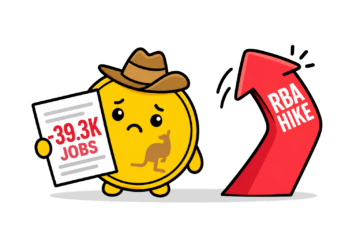
Now, a fifth rate hike looks much less certain ahead of the November 2 and 3 meeting.
Australia Jobs Report September 2026: Key Takeaways
- Employment change: -39,300 month-over-month in September 2026 (forecast: +19,600; August: +29,300)
- Unemployment rate: 4.7%, unchanged from 4.7% in August (forecast: 4.6%)
- Full-time employment: +34,400 to 10,232,400; part-time employment: -73,700 to 4,550,200
- Participation rate: 66.8%, down 0.2 percentage points from August (forecast: 67.0%)
- Youth unemployment: 11.1%, up 0.3 percentage points month-over-month
- Trend employment: +15,700 in September; trend unemployment held at 4.6%, showing a more stable underlying picture
- AUD/USD fell 0.3% immediately after the release; the RBA’s next policy meeting is November 2-3, 2026
What Were Australia’s September 2026 Jobs Results?
The ABS Labour Force report showed a seasonally adjusted loss of 39,300 jobs in September, versus a consensus forecast for a 19,600-job gain. That’s a miss of nearly 59,000 jobs, one of the largest labour market surprises of 2026.
August’s strong result made the September miss stand out even more. The economy added 29,300 jobs that month, beating the 20,000-job forecast and suggesting the labour market was holding up despite the RBA’s rate hikes.
September erased those gains. Employment is still up 168,300 people, or 1.2%, from September 2025, so the longer-term trend remains positive.
The unemployment rate steadied at 4.7% in September despite 8,900 more Australians becoming unemployed. The participation rate, which measures the share of working-age Australians who have jobs or are actively looking for work, fell 0.2 percentage points to 66.8%, below the 67.0% forecast.
Why Did Employment Fall? The Full-Time vs. Part-Time Breakdown
Full-time employment rose by 34,400 to 10,232,400 in September. But part-time employment fell by 73,700, leaving total employment lower overall.
Part-time work is generally more sensitive to shifts in business confidence, so the steep drop suggests employers cut back on casual and flexible hiring.
The ABS also noted a data quality adjustment. Using standard quality-assurance methods, it adjusted survey weights for about 1,400 respondents, or 2.8% of the sample, in one rotation group in Victoria to keep the data representative of the population. The ABS says the September figures are fit for use but advises caution when assessing short-term changes.
Is Australia’s Labour Market Actually Getting Weaker?
The month-to-month figures look weak, but the trend data, which the ABS considers the best measure of underlying conditions, tells a steadier story. Trend employment rose 15,700 in September, while the trend unemployment rate held at 4.6%, unchanged from August. Trend data smooths out sharp monthly swings and points to a labour market that’s cooling, not collapsing.
Monthly employment figures in Australia can vary widely. August added 29,300 jobs, then September gave back 39,300. Together, the two months were nearly flat. Trend data captures that better than either monthly result on its own. Over the past year, trend employment rose 1.4%, adding 210,800 jobs.
One figure also offers a counterpoint to the headline: total hours worked rose 0.1% to 2,011 million hours in September, even as the number of employed people fell 0.3%. That suggests workers who kept their jobs picked up some of the slack. It’s too early to call it a trend, but it adds a bright spot to an otherwise weak report.
What Does September’s Jobs Report Mean for the RBA?
The RBA raised its cash rate by 25 basis points to 4.60% in September, its fourth hike of 2026. The Board said inflation remained elevated and left the door open to more increases if the data called for them. Its next meeting is November 2 and 3.
September’s jobs report makes a fifth hike harder to justify. A softer labour market can slow wage growth over time, easing inflation pressure and giving the RBA more room to hold rates steady. Today’s report doesn’t rule out another hike, but it raises the bar.
The September-quarter Consumer Price Index (CPI), which measures price increases across the economy, is due October 28, five days before the RBA meeting. That report will carry more weight in the November decision than today’s jobs data. Hot inflation could push the RBA to hike again despite the weak jobs report. Cooling inflation, alongside continued labour market softness, would give the Board a clear case for holding rates.
What Does the September Jobs Report Mean for AUD Traders?
The Aussie began the day under pressure from the previous U.S. session, when hotter-than-expected U.S. CPI pushed the dollar higher against most major currencies.
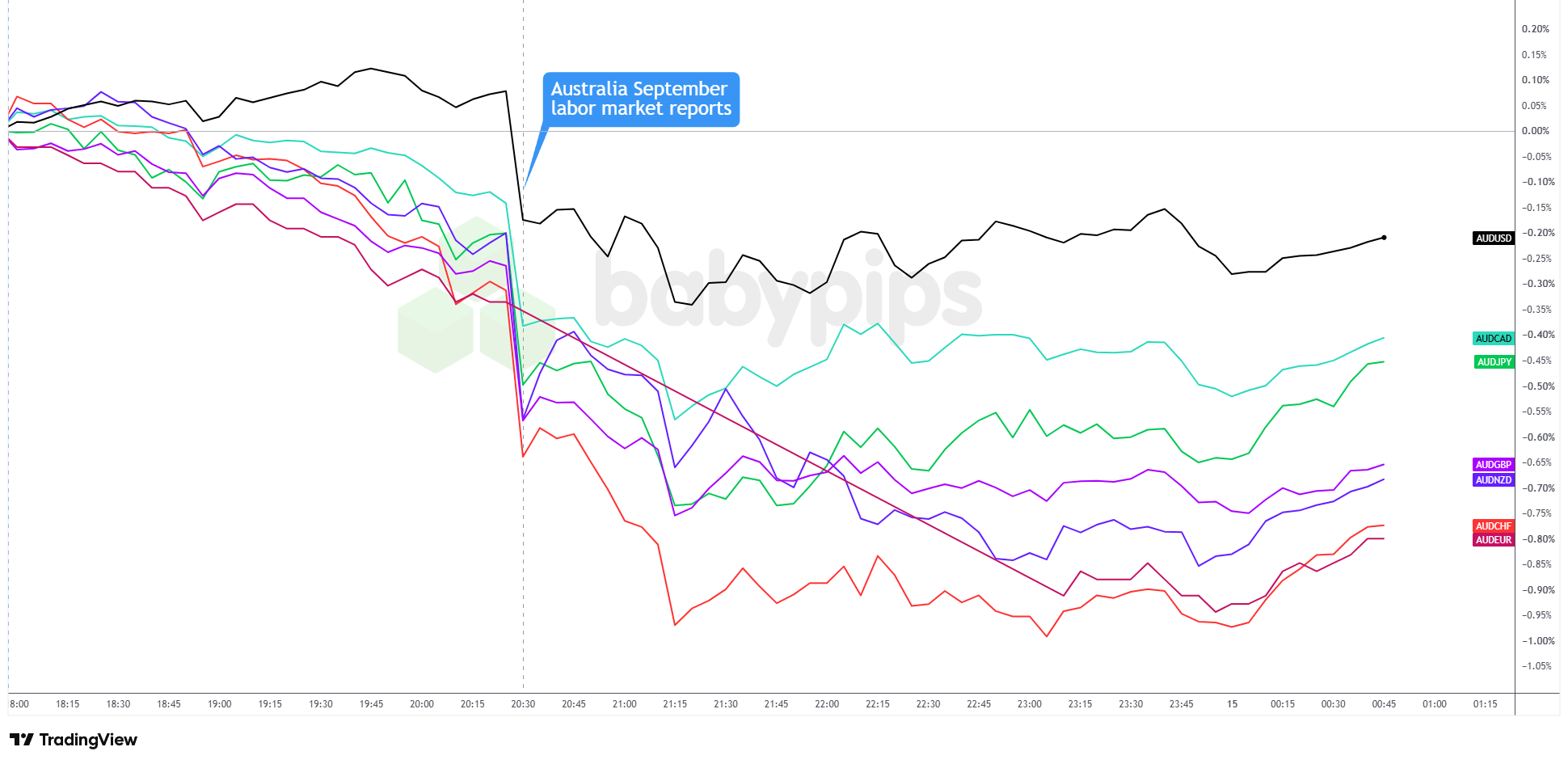
After Australia’s jobs report came out Thursday, AUD/USD fell 0.3% to a one-week low below the mid-0.6900s. Weaker employment data makes another RBA hike less likely, which could narrow Australia’s interest rate advantage over major economies and remove a key source of support for the Australian dollar.
The commodity currency remained lower ahead of the London open, with its steepest losses against European currencies. AUD/USD had pared some of its losses and was down about 0.20%.
Two events will matter more for AUD in the weeks ahead: September-quarter CPI on October 28 and the RBA decision on November 2 and 3. Together, they’ll shape the interest rate outlook for the rest of 2026.
A hot CPI reading that points to another RBA hike could support AUD into year-end. If both the inflation data and the RBA point to a pause, AUD could face extended pressure, especially against a U.S. dollar that’s already pricing in further Fed tightening.
Frequently Asked Questions About Australia’s Labour Force Report
What does Australia’s Labour Force report measure?
The Labour Force report is published monthly by the Australian Bureau of Statistics (ABS). It tracks how many Australians are employed, how many are unemployed, and what share of the working-age population is actively participating in the labour market. The Reserve Bank of Australia uses it as a key input when deciding whether to raise, hold, or cut its cash rate.
Why does Australia’s jobs data matter for forex traders?
Jobs data shapes expectations for RBA rate decisions, which directly move the Australian dollar. Strong employment supports the case for higher rates, which tends to boost AUD. Weak data shifts the balance toward a hold or a cut, putting downward pressure on the currency. Today’s miss pulled AUD/USD lower within minutes of the 12:30 am GMT release.
What happened in Australia’s September 2026 jobs report?
Employment fell 39,300 month-over-month, well below the consensus forecast of a 19,600 gain. The unemployment rate rose to 4.7% from 4.6% in August. Full-time employment rose 34,400, but part-time work fell 73,700, driving the overall decline. Trend employment still rose 15,700, pointing to a labour market that is slowing but not in freefall.
What does the report mean for the RBA’s November rate decision?
The RBA raised its cash rate to 4.60% on September 29 and meets again on November 2-3. Today’s weak jobs data reduces the pressure to hike again, but the September-quarter CPI releasing October 28 carries more weight for the November decision. A hot inflation print could override the jobs miss. Cooling inflation and continued labour market softness would give the Board a stronger case for pausing.
What is the outlook for AUD after this report?
AUD/USD fell 0.3% immediately after the release and hit a one-week low. Near-term direction will hinge on the October 28 CPI print and the November 2-3 RBA decision.
If inflation stays elevated and the RBA hikes, AUD could recover lost ground. If both the CPI and the RBA signal a pause, AUD is likely to face sustained pressure against the dollar and other major currencies where central banks remain hawkish.