How October Fed Rate Hike Odds Shifted after Mixed U.S. Data

Cooler inflation and a stronger Q2 GDP revision pulled the Fed in opposite directions, and the U.S. dollar ended the day about where it started.
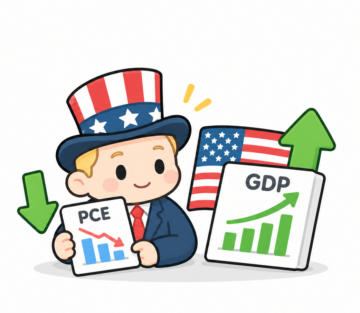
October rate hike odds fell to about 35% after U.S. core PCE inflation came in at 3.0% year-over-year, below the 3.3% forecast. However, a stronger Q2 GDP revision from 1.5% to 2.2% kept a December hike in play.
So how do tightening odds look now, and what does this all mean for USD?
What Did the PCE and GDP Reports Show?
The Bureau of Economic Analysis (BEA) published two big reports on Wednesday.
Core PCE is the inflation gauge the Federal Reserve leans on most, with a 2% target. According to the BEA data, core PCE rose 0.2% month-over-month in August, below the 0.3% forecast. The annual rate held at 3.0%, versus a 3.3% forecast. Headline PCE, which includes food and energy, rose 3.4% year-over-year against a 3.7% forecast.
The BEA raised its estimate of second-quarter GDP to 2.2% annualized, up from 1.5%. “Annualized” means the BEA stretches one quarter’s growth into a yearly pace.
Traders track October rate hike odds with the CME FedWatch tool, which converts Fed funds futures prices into probabilities. The tool showed a 34.9% chance of a 25 basis point hike in October after the data landed, down from 70.9% a week earlier.
But Did Inflation Really Cool, or Did the Math Change?
A bit of both.
On the same morning, the BEA released its annual update and changed how it measures a few price categories, including portfolio management fees and computer software. Analysts noted that the revisions cut July’s core PCE reading from 3.3% to 3.0%.
 Picture swapping your bathroom scale for a lab scale. Your weight stays put, but the number on the display changes because of the equipment switch.
Then came GDP, pushing the other way. Real final sales to private domestic purchasers grew 4.6% in Q2, while August spending jumped 0.9% and income rose 0.2%.
Fed officials who see that kind of demand may worry that inflation sticks around. Spending that outruns paychecks can fade, though, and a 4.1% saving rate leaves households a thin cushion.
Do Lower October Rate Hike Odds Hurt the U.S. Dollar?
Interest rate expectations drive currencies. When traders expect higher U.S. rates, dollar assets pay more, which tends to pull money into the greenback. Lower October rate hike odds pull some of that support away.
The dollar followed that script… for about an hour. The U.S. Dollar Index hit a session low near 101.06 at 8:30 AM ET, then it climbed about 0.45% from that low and closed near 101.5, up about 0.1% on the day.Several forces likely fed the reversal. ADP reported 90,000 new private jobs against a 49,000 forecast. The 10-year Treasury yield rose to near 5.30% after dipping toward 5.22%. WTI crude gained about 1.9% to near $93, and quarter-end flows added noise.
Traders moved the next expected hike from October to December and kept it on the table, so the dollar’s rate support likely stayed in place.
For now, both directions remain open. Hot jobs data or hot prices in upcoming surveys could push October odds back up and lift USD pairs like USD/CHF. Weak hiring could drag the odds lower and give EUR/USD and GBP/USD room to climb.
The Bottom Line
- Expectations move markets. Core PCE at 3.0% still sits a full point above the Fed’s 2% target. The surprise against forecasts moved prices.
- Check for revisions. The BEA’s methodology change lowered the starting point, so part of the “miss” came from new math.
- Read the whole release. Soft inflation and strong GDP landed at the same minute, and the dollar’s round trip reflected that tug-of-war.
- Timing differs from direction. October rate hike odds fell, yet markets still price a December hike, which helps explain why the dollar held up.
What to Watch Next
- September jobs report: Friday, October 2, 8:30 AM ET (12:30 GMT), with economists forecasting about +90,000 payrolls
- Fed decision: Wednesday, October 28, 2:00 PM ET (18:00 GMT)
- September PCE and advance Q3 GDP: Thursday, October 29, 8:30 AM ET (12:30 GMT)