Gold vs. Treasury Yields: 3 Possible Reasons Why the Correlation Snapped
Gold fell 8.9% in the previous week, even as the 10-year U.S. Treasury yield dropped about 24 basis points. That breaks one of the first rules new traders learn about gold and Treasuries, as lower U.S. yields tend to help gold.
A strong U.S. dollar, firm Federal Reserve hike bets, and forced selling during the AI stock rout likely did most of the damage.
Gold is the asset scared investors tend to buy, but that’s not exactly how it panned out recently.
What Happened to Gold and Treasury Yields?
Spot gold settled at $3,538.11 an ounce on Friday, marking a 2.4% drop on the day and its worst week since March. Gold futures fell 9.3%, their worst week since March 2020. Both sat near 14-month lows.
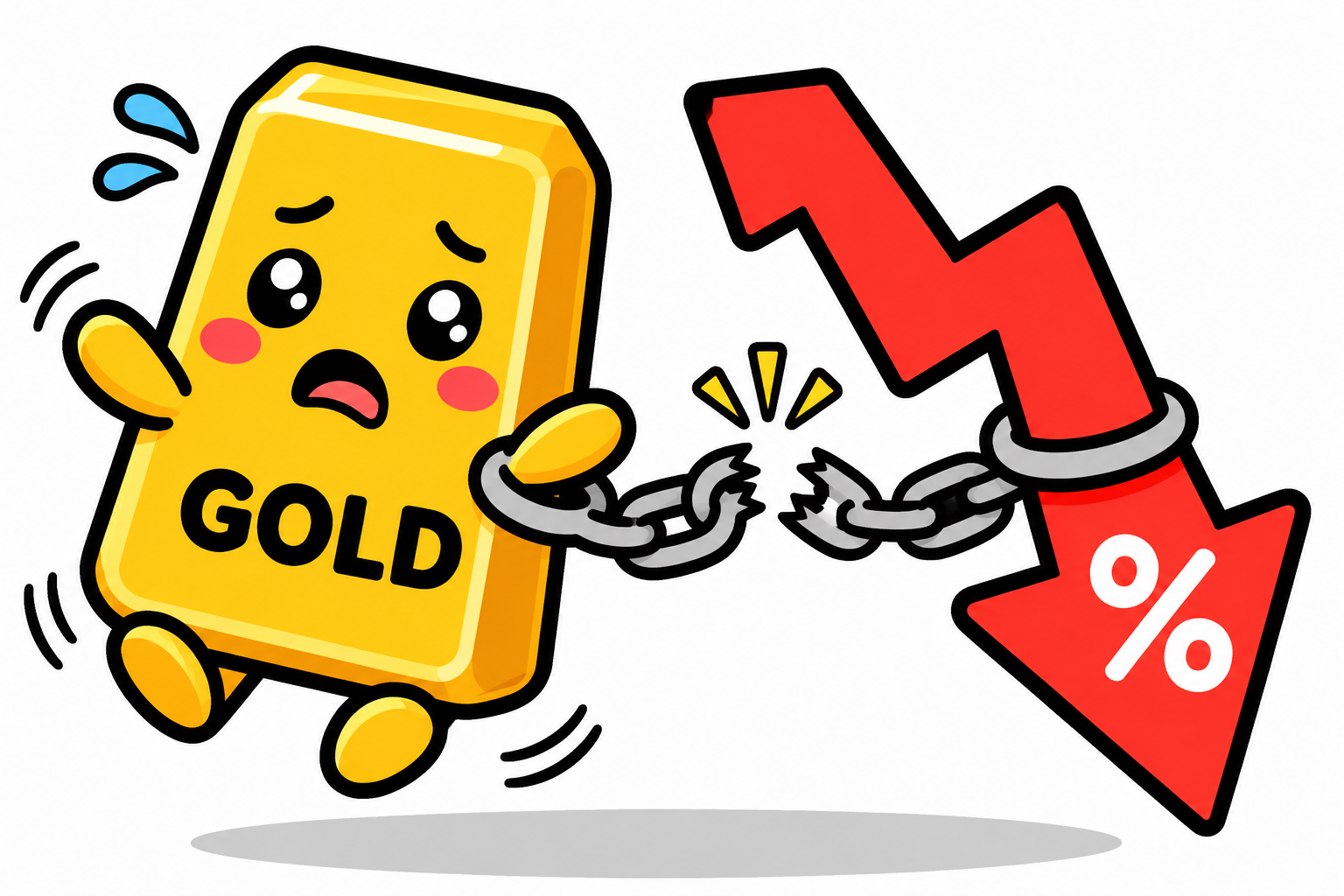 Bonds went the other way. The 10-year Treasury yield (the interest rate the U.S. government pays to borrow for 10 years) slid from about 5.16% to about 4.92% over the week. Bond prices and yields move in opposite directions, so falling yields mean investors are buying bonds.
The textbook says gold should have climbed.
Opportunity cost (a.k.a. what you give up by choosing one asset over another) explains this usual correlation. Gold pays no interest, and let’s say the U.S. government bond pays you 5% a year. Since holding a gold bar pays you nothing, holding it instead of a Treasury costs you that 5%.
Drop the Treasury yield to 2% and the gold bar costs you less to hold. That’s why gold and yields often move in opposite directions.
But last week, they moved together.
Why Did Gold Fall When Yields Dropped?
Three forces likely overpowered the usual relationship:
1. Fed hike narrative remained intact
Scared investors pushed yields down by piling into Treasuries for safety. Traders still expected the Fed to raise rates. Fed Governor Christopher Waller told CNBC last week that December may call for a half-point hike.
Gold tends to track where rates are heading. With the Fed still leaning toward hikes, the cost of holding gold may not have shrunk as much as the 10-year yield suggested.
2. The U.S. dollar got stronger
Markets quote gold in U.S. dollars. When the dollar rises, buyers paying in euros or yen need more of their own currency for the same ounce. The U.S. Dollar Index (DXY, a measure of the dollar against six major currencies) rose about 0.4% last week to near 103.86, close to a 19-month high.
3. Forced selling hit almost everything
The S&P 500 lost about 8.4% for the week as fear about AI spending spread. Many investors trade stocks with borrowed money (leverage). When those bets go bad, brokers send a margin call, a demand to add cash or close positions.
Traders likely sold gold to meet margin calls and cover losses. Gold trades in huge volumes, so you can sell it fast. In a panic, sellers dump what they can, even if they’d rather keep it.
A smaller factor may have chipped in. A University of Michigan survey showed year-ahead inflation expectations falling to 3.7% from 4.7%. Cooler inflation fears can sap demand for gold as a hedge.
What Does This Mean for Markets?
The short-term picture shifted on Monday. Gold rose as much as 1.3% to around $3,582 as traders trimmed bets on near-term Fed hikes, Bloomberg reported. Over the weekend, U.S. Treasury Secretary Scott Bessent also warned that the Fed risked hurting the economy by overtightening.
A bounce after forced selling can go two ways. Sellers who had to raise cash may be done. Or stocks slide again, margin calls return and the bounce fades.The bigger lesson concerns correlations. The gold-yield link holds most of the time, then breaks under stress. Last week, safe havens competed for scared money, and the dollar and Treasuries won.
Analysts also pointed out that gold has fallen by about a third since the U.S.-Iran war began in late February, as higher energy costs fed inflation and rate hikes. More Fed hikes could extend that pressure, though softer inflation data and fading hike bets could give gold room to recover.
The Bottom Line
- Gold and Treasury yields usually move in opposite directions because gold pays no interest. Last week, that link broke.
- Yields fell for safety reasons, while traders kept pricing a December Fed hike. Gold appears to track the expected rate path more than the 10-year yield alone.
- A strong dollar weighs on gold because it makes each ounce pricier for buyers outside the U.S.
- Margin calls can turn safe havens into cash machines. In a panic, investors sell what’s easy to sell.
- Check more than one driver. When yields and the dollar split, the dollar may say more about gold.