Chart Art: GBP/CAD Eyes Break-and-Retest Near 1.8850 Ahead of Canada CPI

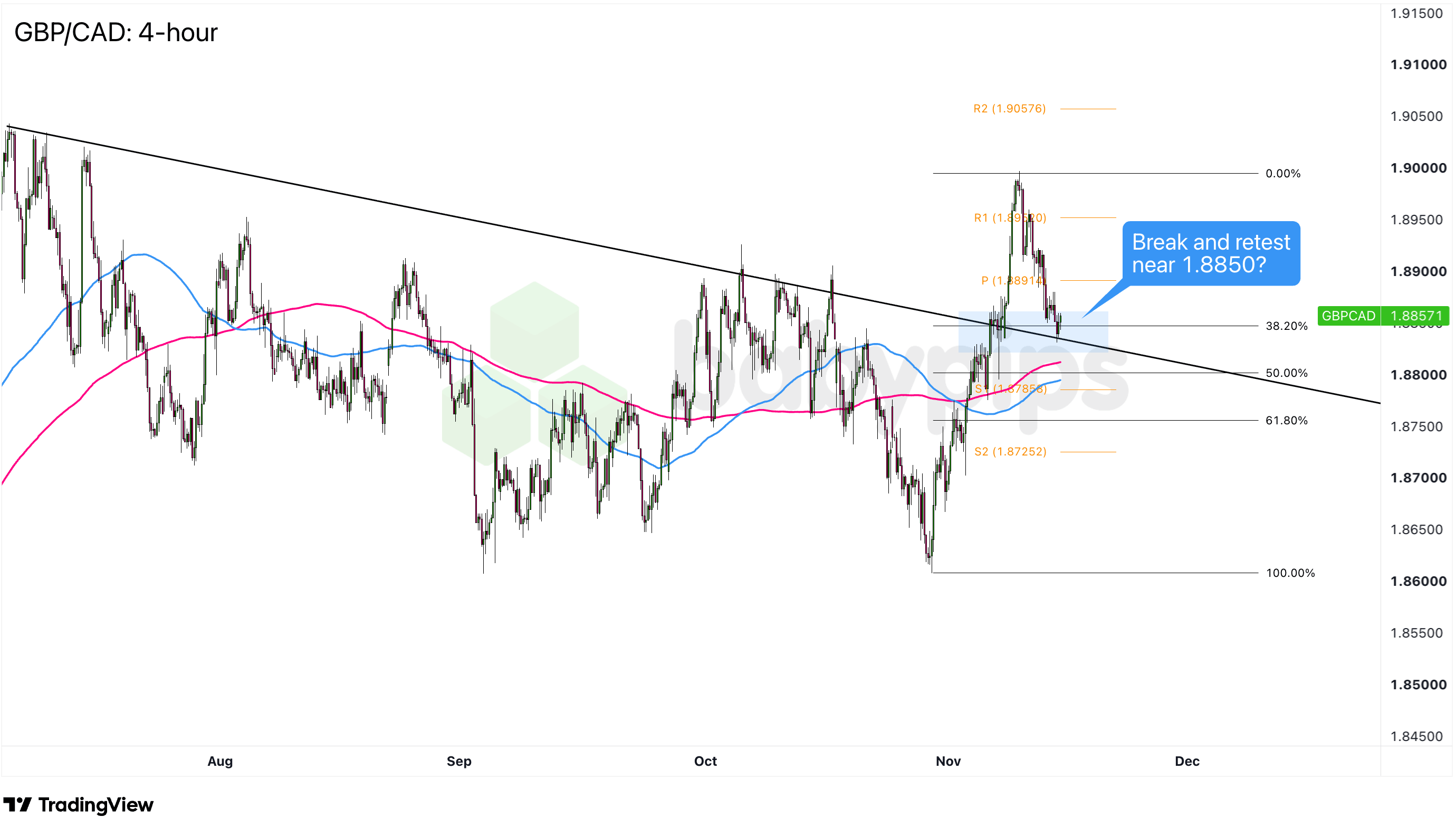
GBP/CAD broke above its long-term downtrend line in early November and rallied to 1.9000 before pulling back to around 1.8850, where the broken trend line, a Fibonacci level, and two key SMAs converge.
Will this support zone hold when Canada’s October CPI report comes out later today?
Here’s what I’m watching on the 4-hour chart.
GBP/CAD: 4-hour
A broadly stronger U.S. dollar kept Sterling under pressure last week, with the pound managing gains only against the Australian dollar and Swiss franc.
Meanwhile, the Canadian dollar could get a fresh boost from today’s October CPI report. Some expect headline inflation to rise to around 3.3% year-over-year from September’s 3.1%, potentially adding fuel to expectations for another Bank of Canada rate hike.
GBP/CAD spent much of the summer and fall trending lower, but buyers made a strong comeback in early November. The pair broke above the long-term trend line and cleared 1.8800 before climbing to the 1.9000 psychological level. Sellers stepped in at that point, pulling GBP/CAD back to around 1.8850, where it’s trading now.The 1.8850 area is worth watching, as it lines up with the broken trend line resistance, which could now act as support, and the 38.2% Fibonacci retracement of November’s rally from 1.8600 to 1.9000. The 100 and 200 SMAs on the 4-hour chart are also sitting just below.
Watch for bullish candlestick patterns around 1.8850 to see if buyers are ready to defend this support zone. A bounce could take GBP/CAD back toward the Pivot Point at 1.8891 and R1 at 1.8910, followed by the 1.9000 handle and R2 at 1.9058 if bullish momentum picks up.
On the other hand, a break below 1.8850 and the trend line could put S1 at 1.8785 and the 50% Fibonacci retracement near 1.8800 in play. If those levels give way, GBP/CAD could eventually revisit November’s swing low near 1.8600.
Whichever bias you end up trading, don’t forget to practice proper risk management and stay aware of top-tier catalysts that could influence overall market sentiment.

Chart Art: USD/CAD Eyes Fresh Highs as Oil Selloff Weighs on CAD
Oil’s sharp selloff has lifted USD/CAD above a key resistance. Can buyers now defend this breakout and target higher inflection points?

Before the Bell: What every Canadian investor needs to know today
A look at Monday morning’s market action

Before the Bell: What every Canadian investor needs to know today
A look at Wednesday morning’s market action

Before the Bell: What every Canadian investor needs to know today
A look at Friday morning’s market action

Before the Bell: What every Canadian investor needs to know today
A look at Thursday morning’s market action