Is China’s uranium procurement strategy a long-term geopolitical game?

Investing.com -- China’s uranium procurement strategy may be driven by long-term geopolitical competition rather than conventional inventory management, with Beijing potentially seeking stockpiles sufficient to support decades of nuclear expansion, according to Jefferies analysts Laurence Alexander and Charles Boakye.
In a November 11 research note, the analysts argued that China’s purchasing decisions should be viewed as a strategic effort to protect its nuclear energy programme against supply disruptions, sanctions and geopolitical instability.
Jefferies estimates China’s operating nuclear capacity at approximately 60 gigawatts, requiring 10,000 to 13,000 tonnes of uranium annually.
Capacity could reach 100 to 110 gigawatts by 2030 and 180 to 200 gigawatts by 2035, potentially lifting annual uranium requirements to 30,000 to 36,000 tonnes.
Against that backdrop, Jefferies considers five to seven years of future demand coverage a plausible strategic objective.
Its base-case scenario points to inventory holdings of 200,000 to 250,000 tonnes of uranium, equivalent to approximately 520 million to 650 million pounds of uranium oxide.
Under severe geopolitical stress, that target could rise to 250,000 to 350,000 tonnes. An extreme scenario involving blockades or greater self-sufficiency could justify inventories exceeding 350,000 tonnes.
The analysts suggested Beijing probably lacks a fixed purchasing target, instead adjusting accumulation according to the strategic value of additional supplies relative to their costs.
China could pursue steady purchases through long-term contracts, mining investments, government agreements and opportunistic spot-market transactions.
Jefferies warned that this strategy could produce a uranium market "bullwhip effect," where relatively modest increases in perceived supply risks trigger disproportionately large procurement responses.
Western utilities could respond by securing additional supplies, encouraging producers to restrict spot-market availability in anticipation of higher prices.
The bank argued that uranium’s relatively low storage costs and the potentially severe consequences of reactor fuel shortages make strategic stockpiling economically defensible.
Its analysis raises questions about how much current global uranium demand reflects reactor consumption versus Chinese inventory accumulation.
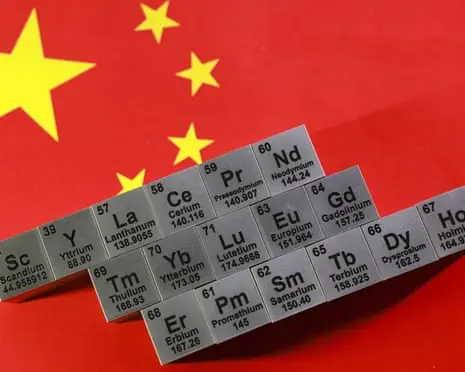
UK found to be ‘dangerously’ reliant on China for critical minerals needed for defence and AI
Delivering net zero also at risk, say MPs as they call for centralised policy and funding for mines and diversification The UK is “dangerously” dependent on China for critical raw materials needed for the military, renewable energy infrastructure and AI, a parliamentary investigation has found. MPs on the business select committee called for an urgent centralised policy and the creation of a...

Lula’s victory is a stress test for the Global South
Trump can still punish Brazil for pursuing an independent course. Can China offer lasting alternatives to US dominance?

Precious metals, resources benefit from geopolitical tailwinds
Investments in gold, silver and oil power award-winning funds