Tether Freezes $182M USDT on Tron Wallets

Tether Freezes $182M USDT on Tron Wallets
- Tether freezes $182 million in USDT on Tron wallets.
- The action complies with U.S. regulations.
- No public statements from Tether or Tron leaders.
Tether has frozen $182 million of USDT in five Tron wallets, reportedly complementing its U.S. regulatory compliance efforts, according to Whale Alert data.
This action underscores Tether’s commitment to U.S. regulations, yet highlights USDT’s centralization, potentially altering stakeholder trust and affecting Tron-based DeFi sector dynamics.
Tether Freezes $182M USDT on Tron Wallets
Tether’s freeze of $182 million in USDT on the Tron wallets aligns with regulatory requirements initiated in December 2023. These measures apply to five wallets, each holding balances between $12 million and $50 million. This decision follows a voluntary policy established to comply with the U.S. Treasury Department’s regulations. The freezing of these assets represents a major coordination compliant with OFAC’s directives, underscoring strict adherence to legal frameworks in the crypto space.
Immediate implications include heightened attention to stablecoin transparency and regulatory compliance. Market participants may respond cautiously to additional wallet freezes and potential liquidity effects in the TRC-20 USDT ecosystem.
No quotes from company leaders or regulatory bodies were available following the $182 million USDT freeze incident; details were primarily based on on-chain analytics and secondary reports.
Tether’s Regulatory Measures Spark Market Speculation
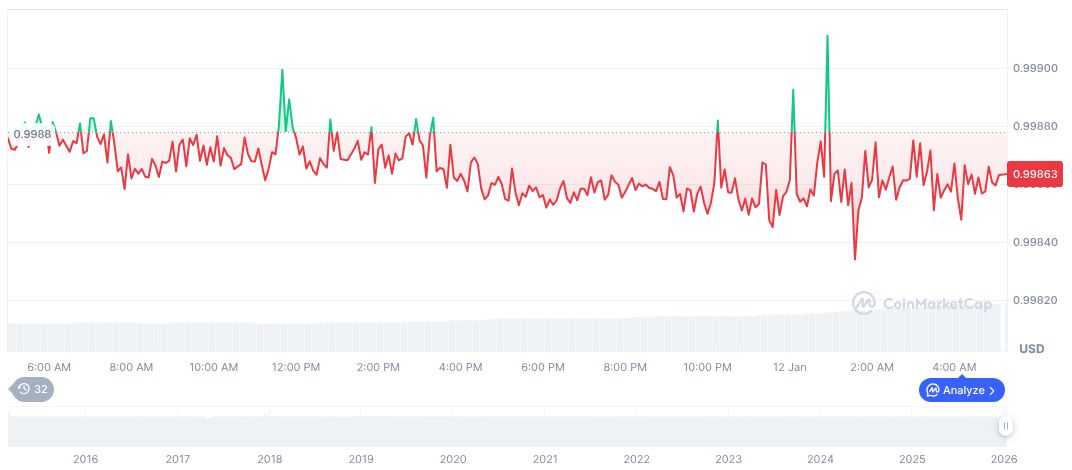
Tether USDt, currently priced at $1.00, holds a market cap of approximately $186.73 billion, representing a 6.01% market dominance. According to CoinMarketCap, its 24-hour trading volume is approximately $66.95 billion, seeing a 1.46% increase in the past day. Recent months depict declining trends, with a 23.06% decrease over the past 90 days.
Research indicates potential financial and regulatory consequences from Tether’s compliance actions, suggesting enhanced scrutiny of stablecoins might drive innovations to bolster transparency. Continued cooperation with regulatory bodies can affirm market confidence but may also encourage other issuers to adopt rigorous compliance strategies.