Japan to Implement Crypto Asset Reporting by 2026

Japan to Implement Crypto Asset Reporting by 2026
- Japan implements OECD’s CARF for global tax data sharing.
- Applies to all crypto exchanges starting January 2026.
- Users must declare tax residency or face penalties.
Japan will introduce the OECD’s Crypto Asset Reporting Framework (CARF) by January 1, 2026, affecting local exchanges and crypto users as part of a tax reform initiative.
This framework enhances global tax oversight on crypto transactions, requiring Japanese exchanges like Coincheck to collect user data for compliance, potentially impacting trading behaviors and market dynamics.
Japan Introduces CARF to Revoke Crypto Tax Avoidance
The reform requires Japanese exchanges like Coincheck to collect user tax information, notifying users of the change. Penalties apply for false information or failure to submit details by the deadline.
Community reactions range from support for better tax compliance to caution over its implementation burdens. However, specific statements from leading figures remain notable by their absence. “The available information primarily consists of factual descriptions and details about the regulations without direct statements from leadership or officials.”
Community reactions range from support for better tax compliance to caution over its implementation burdens. However, specific statements from leading figures remain notable by their absence.
Bitcoin Market Update and Global Regulatory Insights
As of January 6, 2026, Bitcoin’s market stands at a robust $1.87 trillion, according to CoinMarketCap. Trading at $93,727.03, Bitcoin saw a 0.94% uptick in the last 24 hours. Its market dominance is reported at 58.27%, with a trading volume of $44.84 billion.
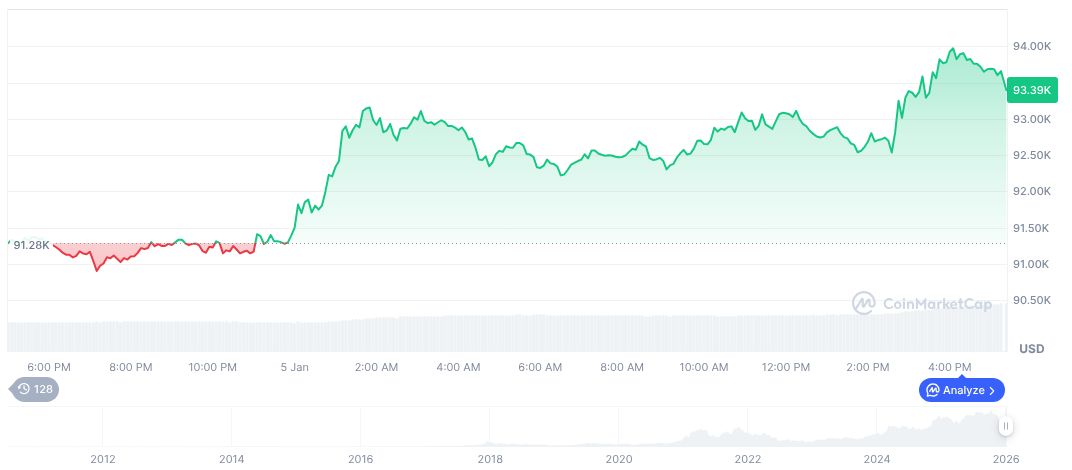
Insights from Coincu suggest Japan’s regulatory move may propel similar globally coordinated efforts, enhancing market transparency. Historical precedents show gradual acceptance and adaptation in regulated frameworks can foster investor confidence and market stability.