Somalia-UAE diplomatic row: Israel's recognition of Somaliland and Yemen conflict fuel tensions

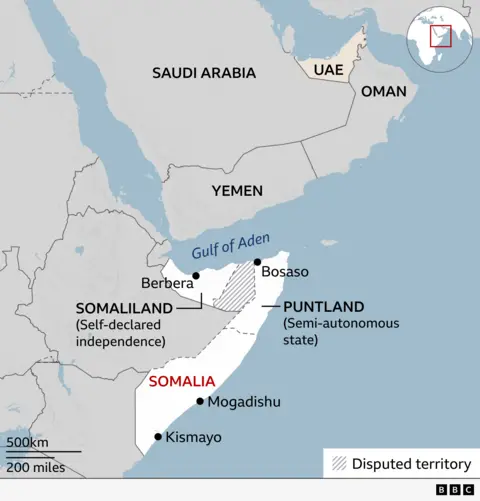
On Monday, The Middle East Eye news site reported that the diplomatic fall-out has led to the UAE evacuating its security personnel and heavy military equipment from the air base in Bosaso.
Mahmoud says that Somalia's relationship with the UAE has been steadily deteriorating since 2024, when Ethiopia - a major ally of the Gulf state in the Horn of Africa - signalled that it was prepared to recognise Somaliland's independence, in a trade-off that would see it establish a navel base along the breakaway state's coast.
"Somali suspicion of the UAE grew following Ethiopia's 2024 memorandum of understanding with Somaliland to swap sea access for recognition, as Somalia saw the UAE as potentially supporting an agreement it strongly opposed.
"But Ethiopia only promised recognition. Israel went ahead and did it, and that raises the stakes," Mahmoud adds.
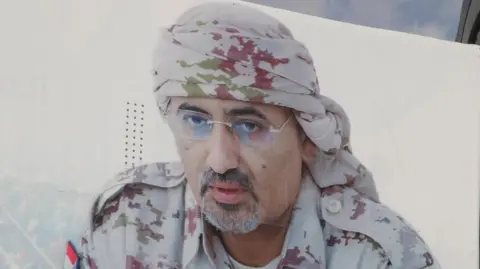
The analyst points out that Somalia has also accused the UAE of using its territory to help Yemeni separatist leader Aidarous al-Zubaidi leave the country, and this was likely to have been "the final straw" that led to the rupture in their relationship.
"Using Somalia's airspace, Somalia's airfields to smuggle a fugitive is not something that Somalia condones," Ali Omar, Somalia's state minister for foreign affairs, told Al Jazeera.
Last week, the Saudi-led coalition in Yemen made a similar accusation, alleging that al-Zubaidi, who heads Yemen's separatist Southern Transitional Council, first crossed into Berbera by ship, and was then flown by a cargo aircraft to Abu Dhabi via Mogadishu under the "supervision" of UAE officers. The UAE denies backing the separatists in Yemen.
This is not the first time diplomatic relations between Somalia and the UAE have soured. In 2018, Somalia, then under President Mohamed Abdullahi Farmajo, severed ties with the UAE, accusing it of interference in Somalia's internal affairs.
At the time, the current president was an opposition figure who strongly defended the UAE's involvement in Somalia, but he has now adopted a sharply different position, trying to exploit differences between the UAE and Saudi Arabia over the war in Yemen to his advantage.
"Regional developments including Israel's recognition of Somaliland and shifting dynamics in Yemen involving Saudi Arabia and the Southern Transitional Council created sufficient pressure for the government to act decisively," Samira Gaid, an analyst with Balqiis Insight think-tank, tells the BBC.
However, Mahmoud says Somalia's federal government lacks the capacity to enforce its decision to cancel port deals with the UAE, as it does not exercise authority over the breakaway state of Somaliland.
Nor does it have much control over the ports in Puntland and Jubaland, two semi-autonomous regions within Somalia.
"The Somali government has little presence on the ground in these areas and is locked into political competition with these administrations over the division of power within Somalia's federal system," Mahmoud says.
The Dubai-based logistics company, DP World, appears to be unperturbed by the federal government's announcement, saying its operations at Berbera port in Somaliland will continue.
"DP World remains focused on the safe, efficient operation of the port and on delivering trade facilitation and economic benefits for Somaliland and the wider Horn of Africa region," it said in a statement to Reuters, adding that questions about "political decisions, intergovernmental discussions, or diplomatic positions should be directed to the relevant authorities".
Its statement came as no surprise as Somaliland said that all its agreements with the UAE "remain lawful and binding".
As for Jubaland, it said it regarded the federal government decision as "null and void", while Puntland condemned it as being "inconsistent with the principles of constitutional governance".
However, Mahmoud says that Somalia still has some leverage over the UAE, and its allies.
"Mogadishu controls the country's airspace and can use that, alongside diplomatic pressure, to push both the UAE and the regional administrations.
"Somalia is also likely to rally partners such as Turkey and Saudi Arabia in support of its position," he adds.
Mahmoud does not see relations between Somalia and the UAE improving in the foreseeable future, as "trust has been lost".
"It would take a great deal of diplomacy and concrete steps to mend that," he says.

Go to BBCAfrica.com for more news from the African continent.
Follow us on Twitter @BBCAfrica, on Facebook at BBC Africa or on Instagram at bbcafrica