WHO considers use of experimental vaccines as Ebola cases and deaths rise in DRC

Global health leaders are considering whether vaccines or medicines still in development could be used to fight Ebola in the Democratic Republic of the Congo, as the World Health Organization’s chief said he was deeply concerned by the outbreak’s speed and scale.
Dr Tedros Adhanom Ghebreyesus said there had been at least 500 suspected cases of Ebola and 130 suspected deaths in DRC since the new outbreak began – up from about 200 cases and 65 deaths when it was announced on Friday.
There are multiple strains of the virus that can cause Ebola. The Bundibugyo strain, which has been identified as responsible for the current outbreak, has no approved vaccine or treatment.
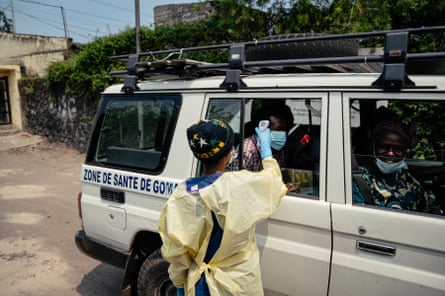
A WHO official on the ground in Ituri province, where most cases have been reported, said the outbreak could take a long time to bring under control.
“I don’t think that in two months we will be done with this outbreak,” Anne Ancia, the WHO’s representative for the DRC, told reporters in Geneva, pointing to a recent Ebola outbreak that “took two years” to end. Nearly 2,300 people died between 2018 and 2020 in the deadliest outbreak in the DRC to date.
“At the international level, (we are) looking at what candidate vaccines or treatment are available and if any could be of use in this outbreak,” Ancia added.
A senior official at Médecins Sans Frontières (MSF) said the response was likely to be complicated by a lack of access to healthcare in the affected area, which has seen a lengthy armed conflict.
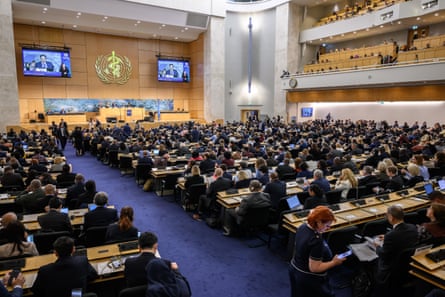
Tedros told the World Health Assembly, meeting this week in Geneva, that the number of cases and deaths would change “as field operations are scaling up, including strengthening surveillance, contact tracing and laboratory testing”.
Thirty cases in Ituri have been confirmed by laboratory testing, and one death and case in Kampala, Uganda. A US citizen has also tested positive and has been transferred to Germany.
The WHO will convene its emergency committee on Tuesday to advise what recommendations it should make to countries affected, their neighbours, and the wider world on how to control the outbreak.
It is also convening a technical group for advice on what tests, vaccines and treatments could be useful.
Vaccines are only available for the Zaire strain, which was identified in 1976. A 2023 campaign in the DRC saw about 55,000 frontline workers in the Ituri and neighbouring North Kivu provinces receive vaccination against that strain.
Ancia said the current expert view was those vaccines “cannot be used in the current response” although “a lot more studies need to be done”.
The outbreak, made public on Friday, was declared a public health emergency of international concern (PHEIC) in the early hours of Sunday morning by Tedros.
On Tuesday, he said: “This is the first time a director general has declared a PHEIC before convening an emergency committee. I did not do this lightly … I’m deeply concerned about the scale and speed of the epidemic.”
The US officially left the WHO in January in a move Donald Trump said was motivated by the organisation’s poor management of the Covid-19 pandemic.
Tedros said reports of cases in urban areas, where the virus typically finds it easier to spread, were cause for concern. Cases among health workers indicated potential spread in clinics and hospitals, he said, and there was “significant population movement in the area” for work and also due to conflict.
The province of Ituri, where most cases have been reported, was “highly insecure”, he added. “Conflict has intensified since late 2025, and the fighting has escalated significantly over the past two months resulting in civilian deaths. Over 100,000 people have been newly displaced. And in Ebola outbreaks, you know what displacement means.”
Dr Maria Guevara, the international medical secretary at MSF, who has worked in the DRC, said: “The fact is the system is broken and the community is not able to access any type of health care.”
She said conflict had made routine immunisation extremely difficult, and that most of the DRC had seen severe outbreaks of cholera only last year.
Speaking at an event in Geneva organised by the Independent Panel on Pandemic Preparedness and Response, she added: “You put Ebola on top and then you want to be able to do the proper protocol and case management, proper case treatment, but they’re inundated with all the other outbreaks, also dying of maternal mortality, from malaria, from everything else. And you’re expecting the community to be able to understand why you’re coming in with a zoot suit [slang for the personal protective gear worn by health workers].”
An Ebola treatment centre had been burned down in 2018 by a community angry that they did not have basics such as clean water or safe places to give birth, she warned.
Ancia said the WHO was rushing to address the current crisis and had deployed more than 40 experts to the field, alongside national responders.
The UN health agency had also sent 12 tonnes of supplies, she said, including personal protective equipment for frontline health workers, from the DRC’s capital, Kinshasa, and Nairobi in Kenya.
Ebola spreads through direct contact with bodily fluids from infected people or animals and causes symptoms that can include high fever, vomiting and internal and external bleeding. According to the WHO, the average fatality rate from Ebola is about 50%, varying from 25% to 90% in past outbreaks. This is the 17th Ebola outbreak in the DRC since the discovery of the virus.